Pakistan Defence Minister Khawaja Asif recently threatened that Islamabad would “take it to Kolkata” in the event of any “misadventure” by India, a highly provocative statement that drew scathing response from Defence Minister Rajnath Singh.
While responding to Asif’s threat, Singh didn’t mince his words and warned the Pakistani defence minister of consequences far greater than in 1971, when the country was broken into two parts.
Advertisement
“Pakistan’s Defence Minister should not have given such a provocative statement. 55 years ago, they suffered the consequences when Pakistan was divided into two parts. If they try to cast an eye on Bengal, only God knows how many parts Pakistan will be divided into this time,” Singh said.
Advertisement
Theoretical Reach
The aerial distance between Lahore and Kolkata is approximately 1,700 km, and from Islamabad it’s over 2,200 km.
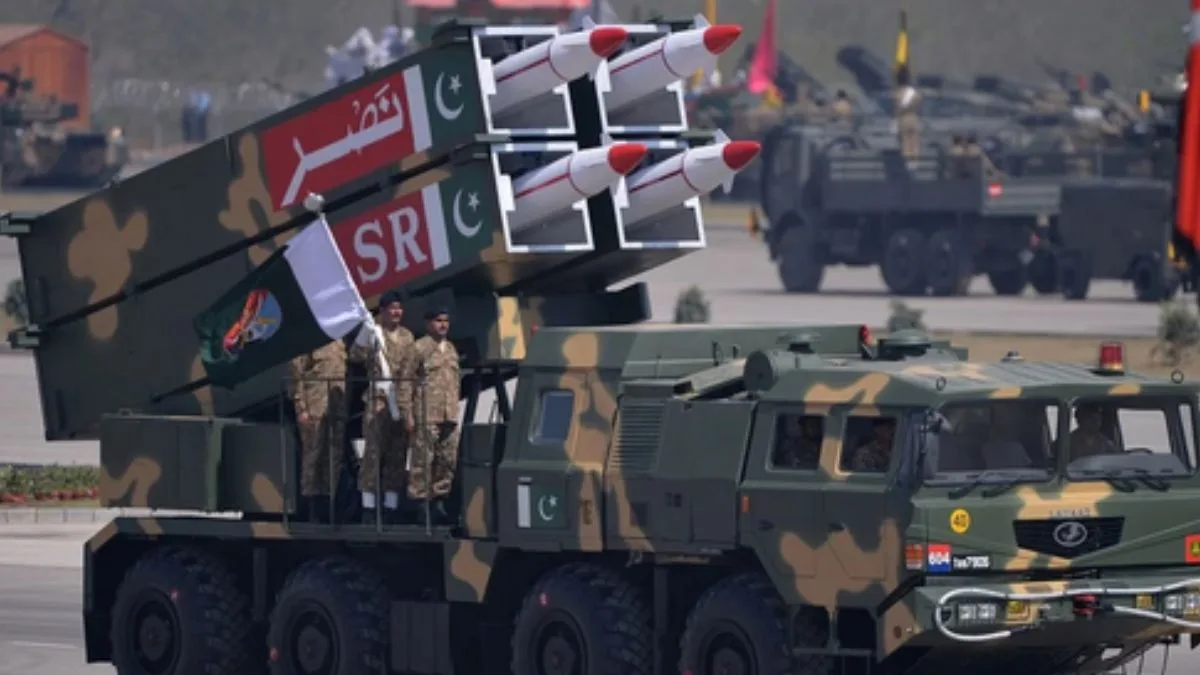
Pakistan’s medium range missiles such as Ghauri (Hatf-5), and Fatah can travel up to a distance of 1,000-1,500 km, which makes Kolkata beyond their reach.
To target the city, it will have to rely on long-range missile like Ababeel with an estimated range of up to 2,200 km if launched from Lahore. From Islamabad, systems like Shaheen-III — a solid-fuel MRBM with an estimated range of 2,750 km — would be required.
But having the theoretical range is not enought as it doesn’t gaurantee impact. To strike the City of Joy, Pakistani missile will have to penetrate India’s strong air defences- a task that is nearly impossible for Islamabad with the existing missile technology.
India’s air defences
For any Pakistani missile to reach Kolkata, it would have to penetrate a layered and integrated advanced air defence grid.
India’s first line of defence is the Russian-made S-400 missile defence system, which serves as the outermost layer, capable of engaging enemy aircraft, missiles, and AWACS from 300-400 km.
If the missile managed to breach this, it will have to face Ballistic Missile Defence (BMD), a two-tier system designed to intercept ballistic missiles. This includes Prithvi Air Defence (PAD) for outside atmosphere interception and Advanced Air Defence (AAD) for inside atmosphere interception.
Akash, the indigenous missile system, and SPYDER, an Israeli short-to-medium range system provide an another layer of security against aerial threats.
Even if the above layers are breached, impact is not gauranteed as very short-range systems, including hand-held air defence weapons and anti-aircraft artillery, remain in place as an additional layer of defence.
The bottom line: Pakistan may have missiles that can theoretically reach Kolkata. But merely having the range doesn’t gaurantee successful strike and Operation Sindoor was a testament to that.
During the Operation Sindoor, most incoming missile and drones were neutralised. The farthest a Pakistani missile could reach was Haryana when it was intercepted near Sirsa before it could reach New Delhi.
And as Rajnath Singh summed up, the consequences for Pakistan would be unpredictable – a country split into god knows how many pieces.
Advertisement