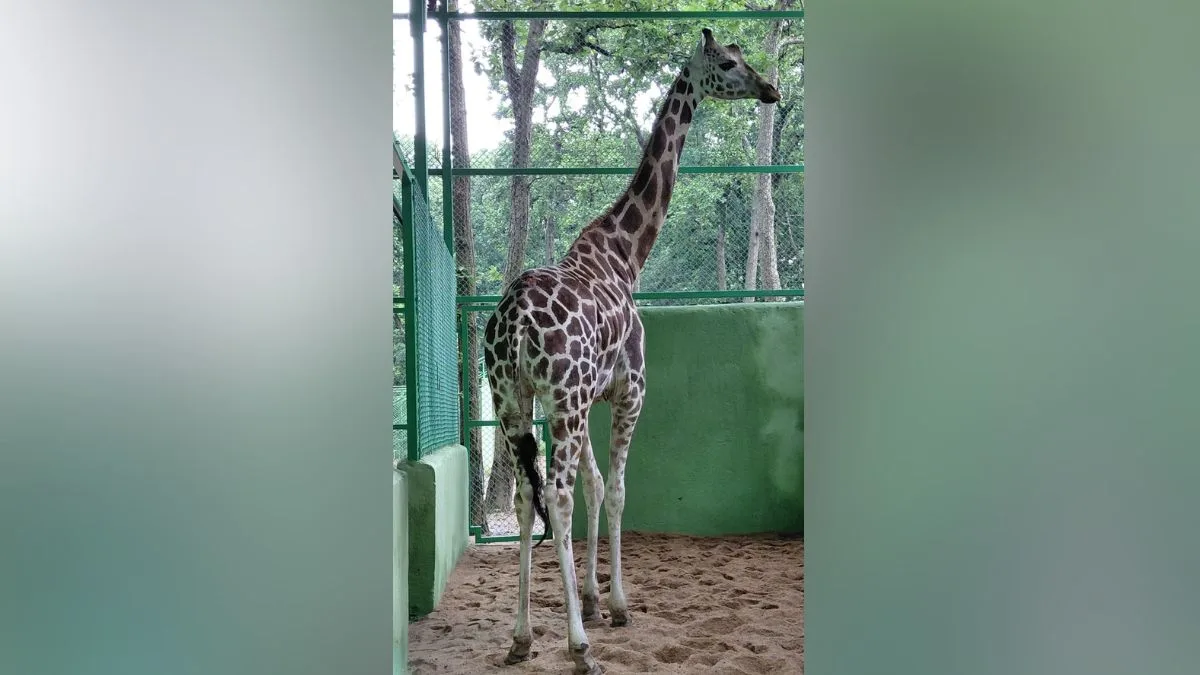
Bhagwan Birsa Biological Park in Ranchi has a new star. Misty, a six-year-old Northern giraffe from Kolkata’s Alipore Zoo, stepped into her specially prepared enclosure, instantly drawing the promise of curious crowds. At over 12 feet tall, Misty towers above her keepers, her gentle gaze meeting the skyline of her new home. Zoo authorities say a male giraffe will join her in the next phase, completing a long-awaited addition to the park’s animal family.
Misty’s arrival is part of an inter-zoo exchange between Ranchi and Kolkata, a collaboration aimed at enriching biodiversity, supporting captive breeding, and enhancing visitor engagement. The agreement, finalised after delays, has already brought a pair of silver pheasants to Ranchi. In return, Ranchi has sent an ostrich to Kolkata, with a hippopotamus, Himalayan black bear, and gharial to follow in later stages.
Advertisement
Getting Misty to Ranchi was no small feat. Even on a low-deck trailer, her height reached 16–17 feet, requiring careful route planning and 24 hours on the road. Veterinary teams monitored her throughout the journey, while keepers prepared a 14-foot-high enclosure to ensure her comfort and safety. “This exchange had been pending for a long time, and it was important for both zoos. The successful completion reflects excellent teamwork,” said Jabbar Singh, Director of Bhagwan Birsa Biological Park.
For Ranchi’s residents, the new arrivals promise more than novelty. Zoo officials expect the additions to boost footfall, making the park a bigger draw for families, school excursions, and wildlife enthusiasts. The silver pheasants — with their striking plumage and calm demeanour — have already found a place in the aviary section, adding variety to the visitor experience.
The exchange also underlines the cooperative spirit between Jharkhand and West Bengal in wildlife management. Principal Chief Conservator of Forests (Wildlife) and Chief Wildlife Warden, Jharkhand, Paritosh Upadhyay, was present during Misty’s unloading and entry into the night shelter. He credited the joint effort of forest officers, veterinarians, biologists, and zoo staff from both states for ensuring the animals’ safety.
Northern giraffes, native to parts of East and Central Africa, live up to 20 years in captivity and are strictly herbivorous, feeding mainly on leaves and tender shoots. The silver pheasant, a forest bird native to Southeast Asia, is known for its striking contrast of black-and-white plumage in males and the quieter brown tones of females.
For now, Misty is settling in, her long neck occasionally bending towards leafy branches placed just out of reach for a natural feeding posture. To the keepers, she is not just a spectacle but a symbol — of patient planning, inter-state cooperation, and the shared responsibility of keeping the wild alive, even within the bounds of a city zoo.