J&K has benefited under Modi government: Jitendra Singh
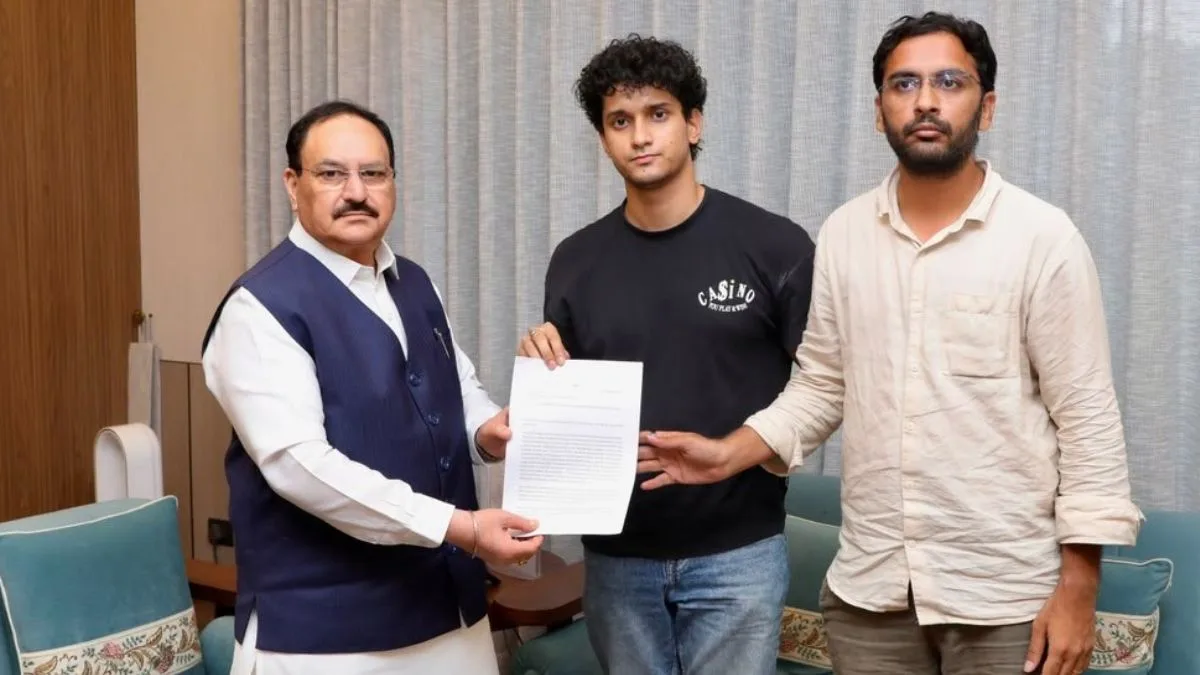
Dr Jitendra Singh was speaking at a special public outreach programme at Hiranagar in Kathua district.
Union Minister Jitendra Singh spotlighted Matsya6000, India’s first human deep-sea submersible, as the project moves forward with successful harbour tests and targets manned dives in 2026.




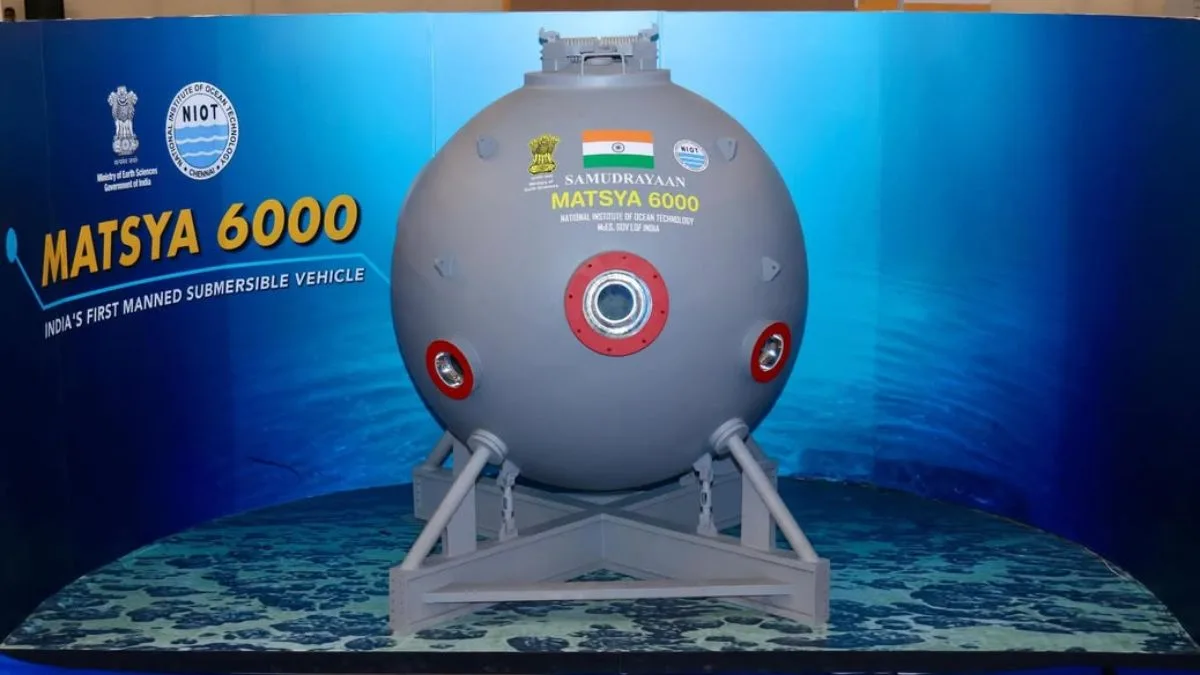
The Matsya6000, India’s first indigenously developed human submersible, on display as part of the Samudrayan Project under the Ministry of Earth Sciences.
Union Minister Jitendra Singh on Tuesday spotlighted India’s progress on its first human deep-sea submersible, Matsya6000, calling it an ambitious step unfolding alongside the country’s preparations to send a human into space.
In a post on Facebook, he wrote, “Here is India’s ambitious plan to send one human deep-sea submersible, providentially around the same time when preparations are in the final stage to send a human into Space.”
Advertisement
Showcased at IISF 2025, Matsya6000 is India’s first “indigenously developed human deep-sea submersible”. The project aims for a 500-metre manned dive by 2026 and a 6,000-metre attempt by 2027, a capability that would place India among the few nations operating at ultra-deep-sea levels.
Advertisement
Under the Government of India’s Deep Ocean Mission, the Ministry of Earth Sciences has tasked the National Institute of Ocean Technology with developing Matsya6000, a 4th-generation human scientific submersible built as part of the Samudrayan Project.
Designed to house three people inside a compact 2.1-metre-diameter spherical hull, the submersible marks a significant jump in India’s ability to undertake deep-ocean scientific work.
After completing the design phase, NIOT identified and built key subsystems required for manned underwater operations. These include a main ballast system for diving, multi-directional thrusters, a battery bank for power, syntactic foam for buoyancy, and a distributed power and control network.
To verify how these systems work together, Matsya6000 was put through integrated dry tests across a 500-metre operational range, followed by wet tests at the L&T Shipbuilding facility at Kattupalli Port, near Chennai, between 27 January and 12 February 2025.
The trials evaluated the strength of its power and control networks, buoyancy performance, vehicle stability, manoeuvrability, and human-support systems. Navigation and communication functions were also closely examined. The scientific payload, comprising multiple oceanographic sensors, was tested and demonstrated for functionality.
The harbour demonstration involved eight dives in all, including five unmanned dives and five manned dives. Each manned dive was qualified to validate the reliability of life-support functions.
Testing in restricted harbour depth revealed limitations in underwater voice communication, which officials noted would require further trials at greater depths. Some areas also need additional work before the submersible is fully ready.
Even so, the successful wet tests have reinforced confidence in Matsya6000’s readiness for shallow-water demonstrations, with plans to attempt dives up to 500 metres by the end of 2025.
Advertisement