The Lok Sabha is set for a crucial vote on Friday on three key legislations, including the Constitution (One Hundred and Thirty-First Amendment) Bill, 2026, that proposes 33 per cent reservation for women in Parliament and State Assemblies, alongside measures on delimitation and Union Territories.
The House will take up the Constitution Amendment Bill, the Delimitation Bill, 2026, and the Union Territories Laws (Amendment) Bill, 2026, together for discussion and passage, marking a significant legislative moment amid sharp political contestation over their implications.
Advertisement
Debate stretches, voting scheduled for Friday
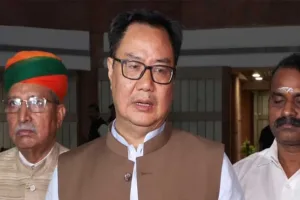
Parliamentary Affairs Minister Kiren Rijiju had informed the House on Thursday that discussions would run for 12 hours, adding, “The discussion will be held for 12 hours. The speaker should have the authority to extend the time for discussion. The voting on the bills will be done tomorrow.”
Speaker Om Birla later indicated flexibility in the schedule, stating that deliberations could extend further if required. He said, “Discussion on these three bills will be held for 15-18 hours. Voting on these bills will be done at 4 pm tomorrow.” He also assured members that each would get “appropriate time” to participate.
Bills introduced after division vote
The Constitution (One Hundred and Thirty-First Amendment) Bill, 2026, which seeks to enable women’s reservation and facilitate delimitation, was introduced in the Lok Sabha on Thursday after a division vote was demanded by the Opposition.
As per the tally announced by the Speaker, 251 members voted in favour while 185 opposed the motion, out of 333 votes cast. No abstentions were recorded in that round.
The House typically clears motions through voice vote, but a division is conducted when the outcome is challenged. In such cases, votes are formally recorded under “Ayes”, “Noes” and “Abstain” using the Automatic Vote Recorder system. Vote slips were also used during the proceedings.
Union Law Minister Arjun Meghwal formally introduced the Bill in the House, while Union Home Minister Amit Shah is expected to move that the amendments be passed.
Opposition raises concerns over delimitation
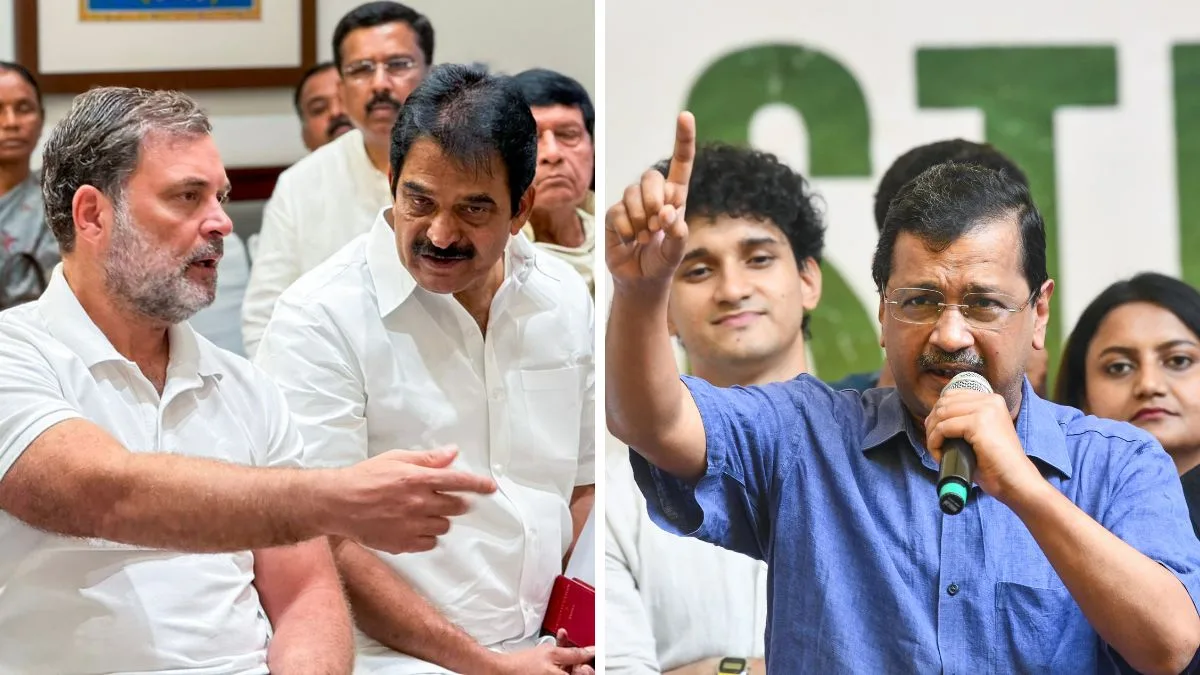
The debate saw participation from several leaders across parties, including Prime Minister Narendra Modi, Amit Shah, AIMIM chief Asaduddin Owaisi, Samajwadi Party chief Akhilesh Yadav, and Congress leader KC Venugopal.
Congress has urged the government to withdraw the Bill in its current form and convene an all-party meeting to build consensus.
Venugopal alleged that the government was using the women’s reservation proposal as a route to push delimitation. Owaisi said, “If these bills become law, the opposition’s voice will be reduced to nothing in this House.”
Concerns were also raised by several Opposition members, including those from the DMK and Congress, that southern states could be adversely impacted in terms of representation if constituencies are redrawn.
Government seeks to reassure southern states
Responding to these concerns, Amit Shah said that while the number of seats would increase, southern states would also see gains. He maintained that there would be around a 50 per cent rise in seats for these states and their overall share would improve.
The Delimitation Bill proposes an expansion and redrawing of Lok Sabha constituencies, taking the total strength to 850 seats.