Extraction of minerals from the Indian offshore: Opportunities and challenges
The mineral economy of India is at a crucial moment of structural transition.
Union Science & Technology Minister Dr Jitendra Singh on Monday reaffirmed the Central government’s commitment to achieving a $300 billion bioeconomy by 2030.




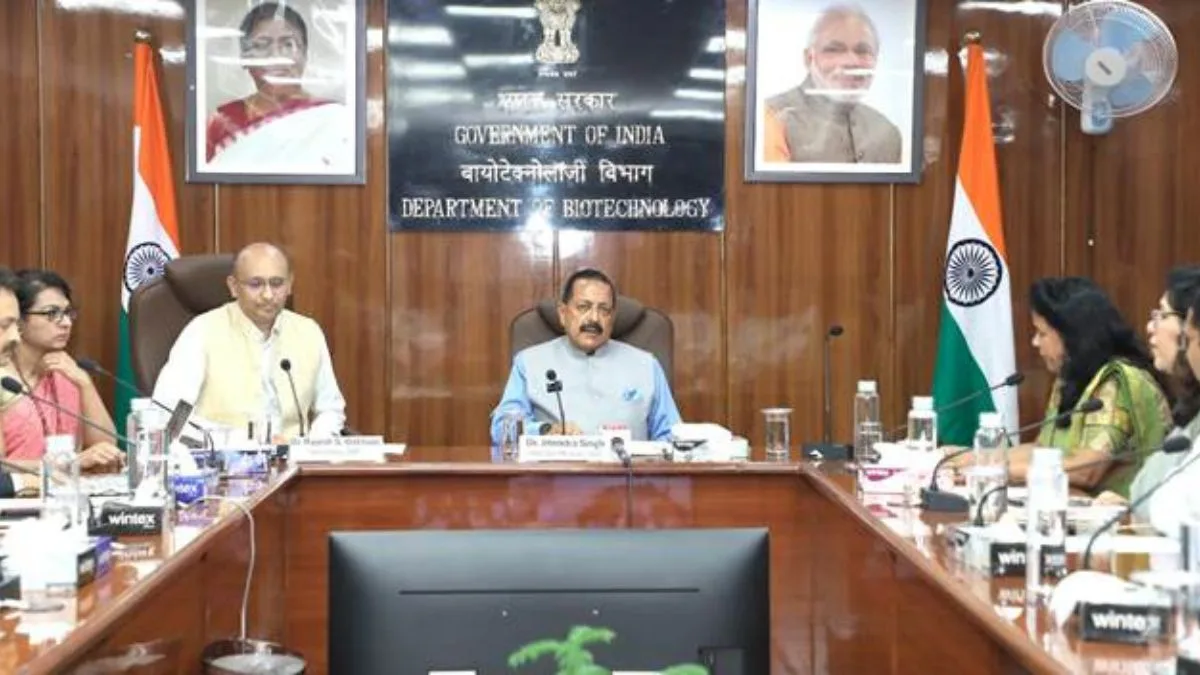
Photo: SNS
Union Science & Technology Minister Dr Jitendra Singh on Monday reaffirmed the Central government’s commitment to achieving a $300 billion bioeconomy by 2030.
Speaking at a Department of Biotechnology event commemorating World Bioproduct Day – The BioE3 Way, he urged for greater public awareness and inclusive participation, stating that every Indian “is a stakeholder in the country’s bioeconomy.”
Advertisement
Throughout the eight-hour event, selected institutes across cities nationwide hosted themed discussions on marine biomass, industrial valorization, forest resources, and agri-residue innovations, showcasing regional strengths in bioproduct development.
Advertisement
Commenting on the format’s success, Dr Singh described it as “a beautiful hybrid model,” praising its decentralized approach. “This is more than a science event. It’s an outreach movement,” he said, adding that the engagement of students, startups, and industry leaders is essential to sustaining India’s biotechnology mission.
He also emphasized the importance of early industry partnerships and consistent financial support to ensure the long-term viability of biotech ventures.
Dr Singh highlighted that the BioE3 Policy has laid the groundwork for India to lead in sustainable biomanufacturing.
“Bioproducts are no longer confined to laboratories; they are shaping livelihoods—from biodegradable packaging and eco-friendly personal care to rural employment and green jobs,” he said. He asserted that the next industrial revolution will be driven by the bioeconomy, and India is already emerging as a global leader.
At another event on Monday, the minister also noted India’s transformative shift in agriculture through the adoption of advanced technologies and enhanced collaboration among stakeholders.
He emphasized that every global technology is now accessible in India. “It’s no longer about whether the technology is available. It is about how fast we can adopt and integrate it into our agricultural ecosystem to add value to our economy,” he said.
Dr Singh underlined how new-age farming techniques—such as satellite imaging, remote-controlled tractors, and order-based crop production—are reshaping Indian agriculture.
“From lavender farming in Bhaderwah to off-season tulips cultivated for temple offerings, we have real-world examples where science and strategy have combined to deliver both income and innovation,” he noted.
Advertisement