‘If Indira Gandhi were alive today, she would have banned BJP’: Ashok Gehlot
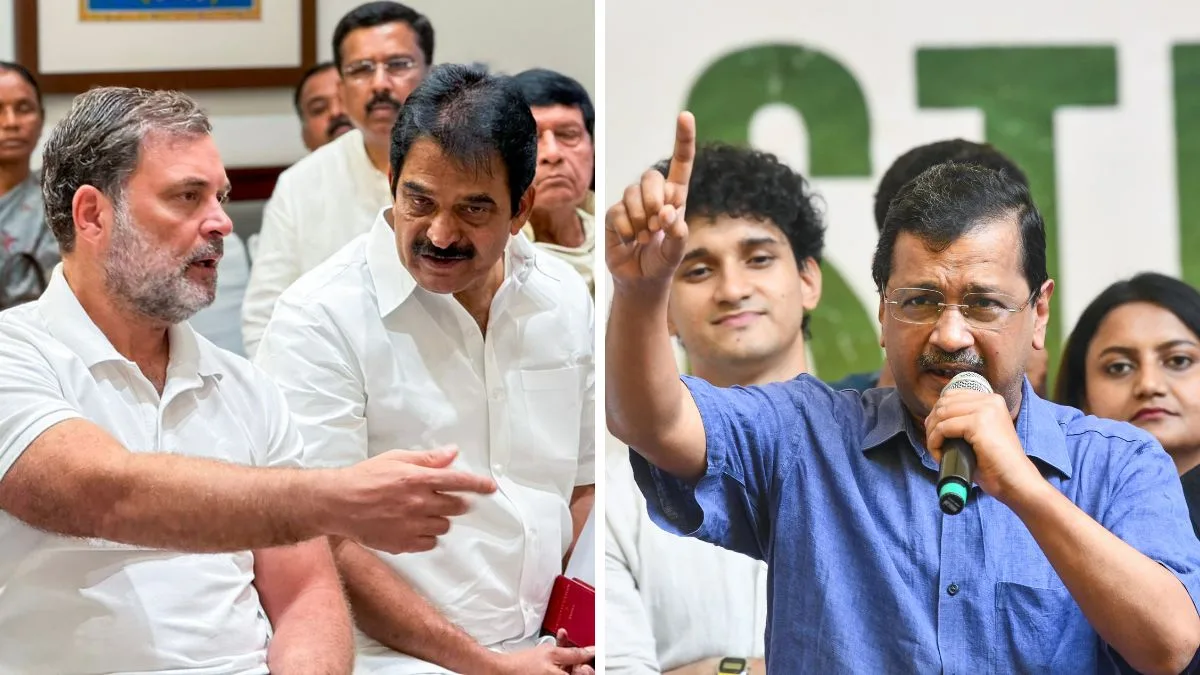
Taking "full responsibility," Ashok Gehlot said that the atmosphere in the country today is "extremely dangerous".
A 107-metre-deep shaft was dug, and a nuclear device measuring 1.25 metres in diameter, placed on a hexagonal metallic tripod, was carefully lowered to the bottom and securely packed by the midnight of May 17–18, 1974.




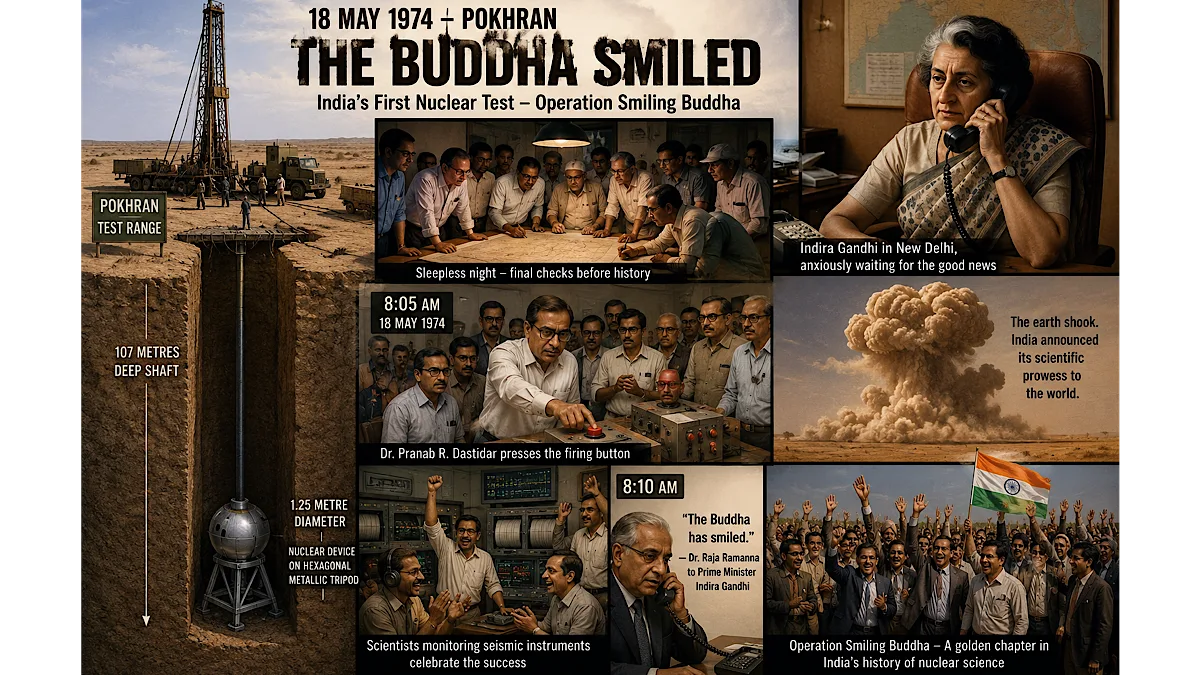
Photo:SNS
A 107-metre-deep shaft was dug, and a nuclear device measuring 1.25 metres in diameter, placed on a hexagonal metallic tripod, was carefully lowered to the bottom and securely packed by the midnight of May 17–18, 1974.
While the team of scientists spent that eventful night sleeplessly, giving final touches to the history-making mission, then Prime Minister Indira Gandhi, who was personally monitoring the entire operation from New Delhi, was also in a similar state of anticipation. Waiting anxiously for the good news, she remained by the telephone in her chamber early that morning, as recollections of the historic moment reveal.
Advertisement
Finally, at around 8:05 am on May 18, 1974, at Pokhran, nuclear scientist Dr. Pranab R. Dastidar pressed the firing button of the 1,400-kg plutonium implosion fission device, triggering jubilation among the team of India’s top scientists who had worked through the night to script a golden chapter in the history of nuclear science.
Advertisement
The earth shook with tremors, and the deafening explosion announced India’s remarkable scientific prowess, enabling the country to join the elite group of nuclear-powered nations — the United States, the United Kingdom, Russia, France and China.
However, people from different walks of life interpreted the happenings at the Army field firing range differently. While local residents in areas adjoining the range mistook the blast for a powerful earthquake, scientists monitoring the seismic instruments burst into celebration over the grand success of Operation Smiling Buddha.
Confirming the success and precision of the test, at around 8:10 am, Dr. Raja Ramanna, Director of India’s Nuclear Programme, called Prime Minister Indira Gandhi and conveyed the historic message: “The Buddha has smiled.”
This was how the news broke to the world. Until then, the ambitious mission of developing a nuclear device — officially intended for peaceful purposes — had remained strictly confined to the Prime Minister, around 75 selected scientists, and senior Army officials throughout the project’s duration, from inception and research to coordination and final preparation, a process that took nearly six to seven years.
India’s journey toward building nuclear capability had begun earlier with the establishment of the Nuclear Energy Commission in 1948. The programme gradually strengthened in phases, focusing on the development of nuclear power plants. The aspiration to develop a nuclear device gained momentum after Indira Gandhi became Prime Minister in 1966.
The political and strategic handling of the post-“Buddha Smiled” situation gave India’s nuclear power programme the desired boost and accelerated the country’s nuclear advancement agenda.
This achievement received further global recognition when then Prime Minister Atal Bihari Vajpayee once again surprised the world in May 1998 by turning “Buddha’s Smile” into a “jolly laugh” through the successful conduct of five more nuclear tests under Pokhran-II.
Advertisement