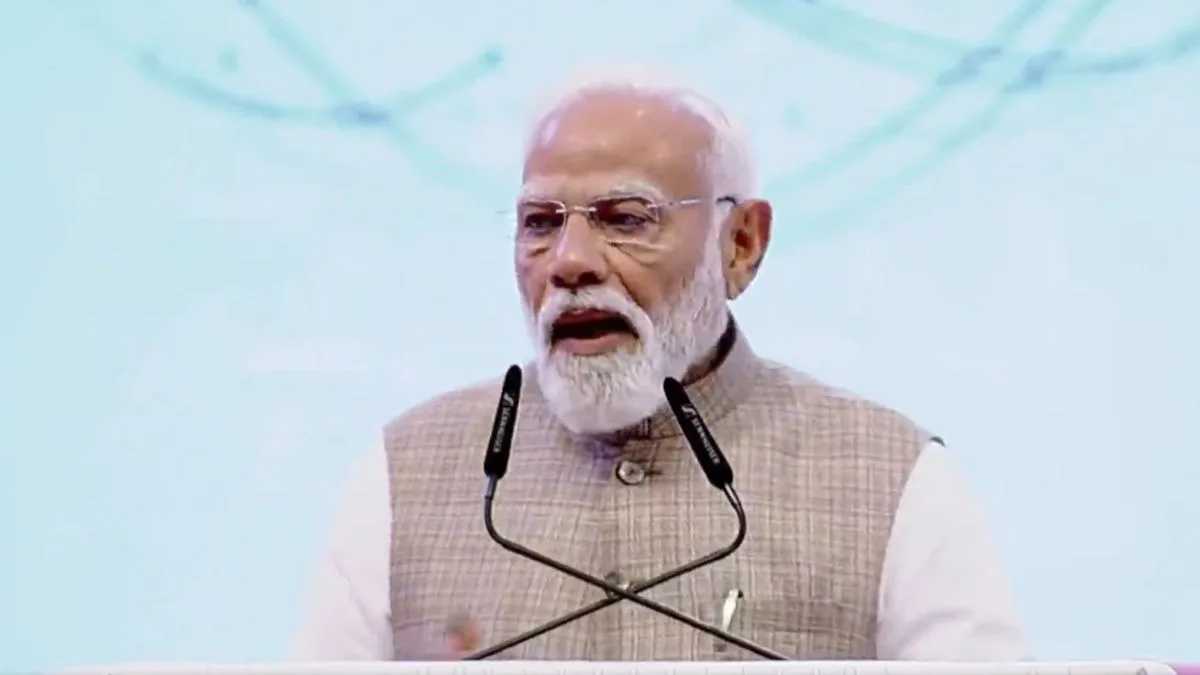
Prime Minister Narendra Modi announced on Monday that India is on the verge of making a historic decision regarding women’s political representation, describing the upcoming legislation for women’s reservation as one of the most significant moves toward gender equality this century.
Speaking at the Nari Shakti Vandan Sammelan in Delhi, Modi highlighted the Bill’s potential to transform India’s governance by firmly embedding social justice and elevating women’s roles in decision-making. “Our Parliament is about to create new history,” Modi declared, emphasizing that this legislation will realize longstanding visions and promises, fostering an India where equality and justice become tangible realities rather than mere rhetoric.
Advertisement
He acknowledged the groundbreaking contributions of Indian women across various fields, noting that “Nari Shakti has made immense contributions” and continues to break new ground in sectors traditionally dominated by men.
Modi pointed to grassroots governance as a shining example of women’s leadership, citing Panchayati Raj institutions where women have played a decisive role in local development and governance. “Women today are excelling even in areas once considered male domains. Their hard work, courage, and confidence have propelled India’s Nari Shakti to new heights,” he said, reaffirming the government’s commitment to supporting women throughout all phases of life.
Acknowledging the long political journey that led to this moment, the Prime Minister noted that the demand for women’s reservation has been part of India’s national discourse for nearly four decades, with contributions from every political party and generation. With Parliament set to begin comprehensive discussions from April 16, Modi expressed hope that political differences would be set aside to ensure the bill’s passage. “With collective efforts, the dignity of the entire House will be elevated. Every woman in the country will take pride in seeing all parties rise above politics to champion this crucial cause,” he stated.
The proposed legislation, linked to the Nari Shakti Vandan Adhiniyam, 2023, aims to reserve seats for women in legislative bodies, a reform widely regarded as a historic correction of their underrepresentation. The government plans to align its implementation with broader electoral and administrative timelines, including delimitation.
Modi framed this decision as both a tribute to women’s strength and dignity and a defining moment in India’s democratic evolution. He called it an overdue yet decisive stride toward a future where women’s voices command their rightful place in shaping the nation’s destiny.