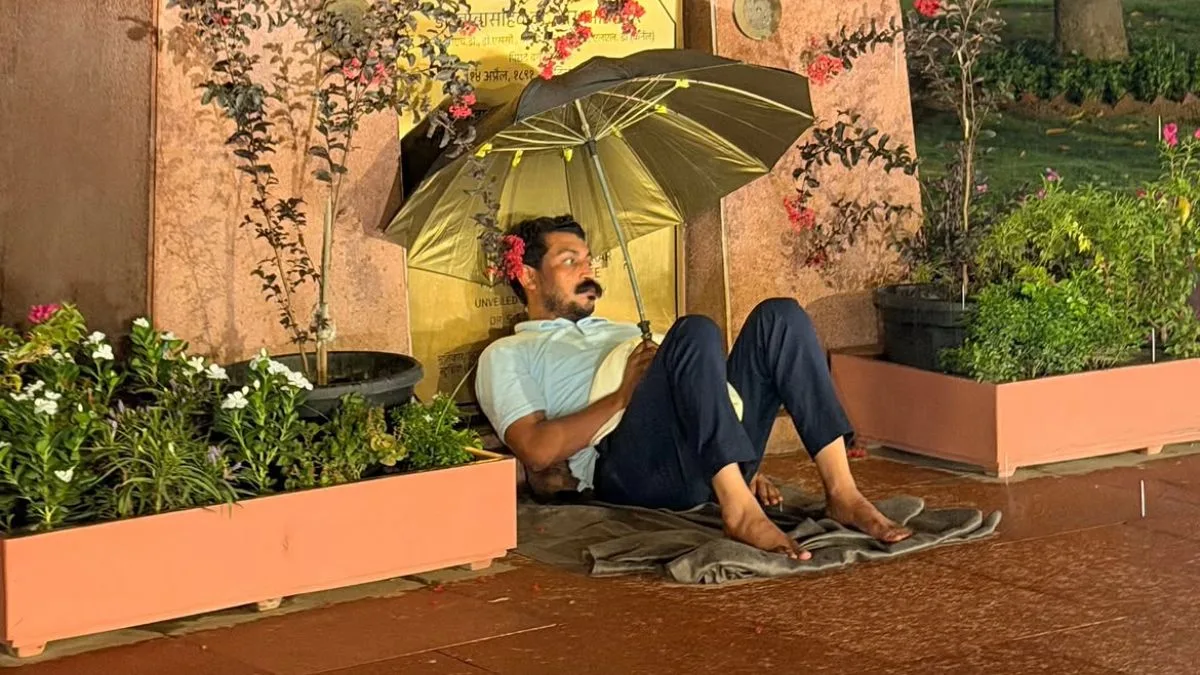
Heavy police deployment outside Shiv Sena (UBT) MP Sanjay Dina Patil’s residence amid defection buzz
The deployment comes amid speculation of his possible defection to Eknath Shinde-led Shiv Sena.
The Supreme Court had on Thursday ordered that Hindus can worship from sunrise to sunset, while Muslims can offer Namaz between 1 pm and 3 pm at the disputed 11th century structure.




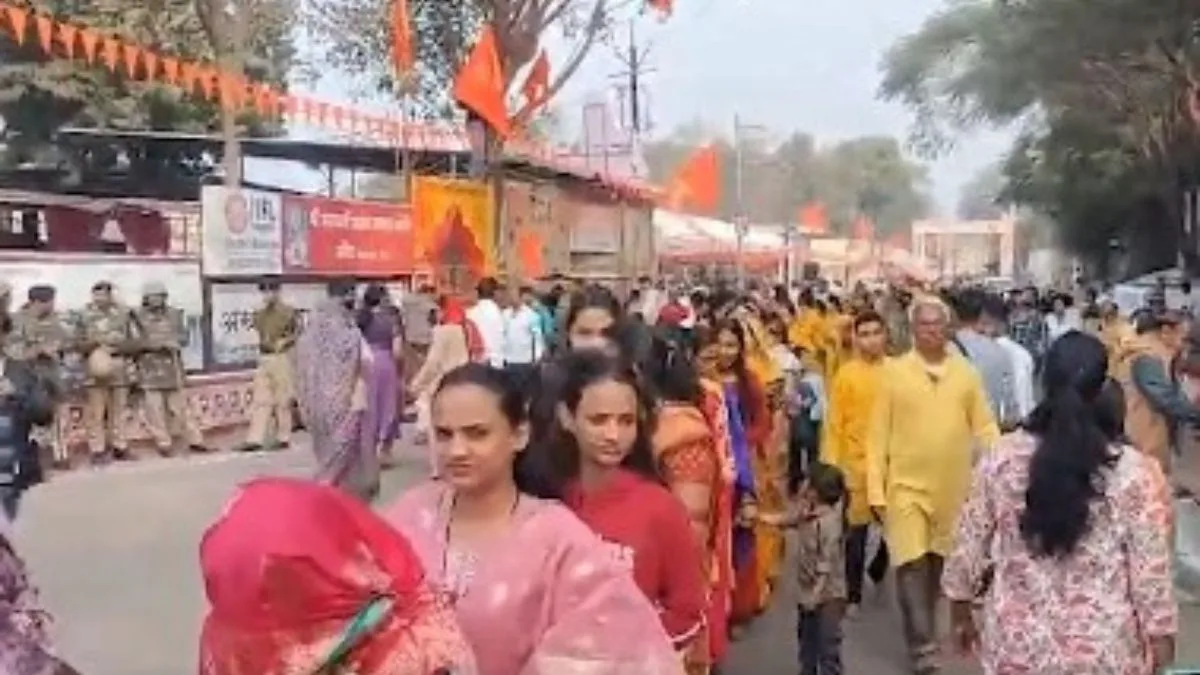
Photo: IANS
Acting on the Supreme Court’s directive, the district administration and police allowed the Hindu community to offer prayers from sunrise to sunset on Vasant Panchami on Friday, while members of the Muslim community were permitted to offer namaz from 1 pm to 3 pm at the designated spot inside the Bhojshala-Kamaal Maula Mosque complex in Dhar district of Madhya Pradesh, officials said.
The Supreme Court had on Thursday ordered that Hindus can worship from sunrise to sunset, while Muslims can offer Namaz between 1 pm and 3 pm at the disputed 11th century structure.
Advertisement
“In compliance with the Supreme Court’s order, we allowed the Hindu community to carry out uninterrupted worship from sunrise to sunset, while members of the Muslim community offered namaz from 1 pm to 3 pm at a separate stage inside the compound of the ASI monument,” Dhar Collector Priyank Mishra told The Statesman and UNI on Friday evening.
Advertisement
“All the proceedings of both communities are being carried out simultaneously and separately without any obstruction. The namaz was offered peacefully and without any dispute during the time designated by the Apex Court,” the Collector maintained.
The structure, an Archaeological Survey of India (ASI)-protected 11th-century monument, is considered by Hindus to be a temple dedicated to Goddess Vagdevi (Saraswati), while the Muslim community regards it as the Kamaal Maula mosque.
A large number of Hindu devotees began converging at the disputed 11th-century site since early this morning, and their numbers increased as the day progressed.
In view of the Hindu festival and Namaz prayers falling on a Friday, around 8,000 police and paramilitary personnel were deployed in the historic city to prevent any untoward incident.
Dhar SP Mayank Awasthi said that the entire city has been mapped and sensitive areas identified.
He said that the disputed complex has been divided into six sectors, while the city has been divided into seven zones, and every street is being monitored.
Awasthi stated that the disputed complex is also being monitored with the help of drones and CCTV cameras.
The SP said that social media is also being monitored to prevent the spread of any inflammatory messages.
A contentious issue emerged as Basant Panchami fell on Friday this year.
The Apex Court heard the matter and passed its order on Thursday, permitting members of both religions to offer prayers at the site the same day.
As per an already existing order of the Archaeological Survey of India (ASI) dated 7 April 2003, Hindus have been given the right to worship every Tuesday at what they claim as Bhojshala, while the Muslim community can offer prayers on Fridays, at what they claim to be the Kamaal Maula Mosque, both names given to the same structure, which has led to a years-long dispute.
Advertisement