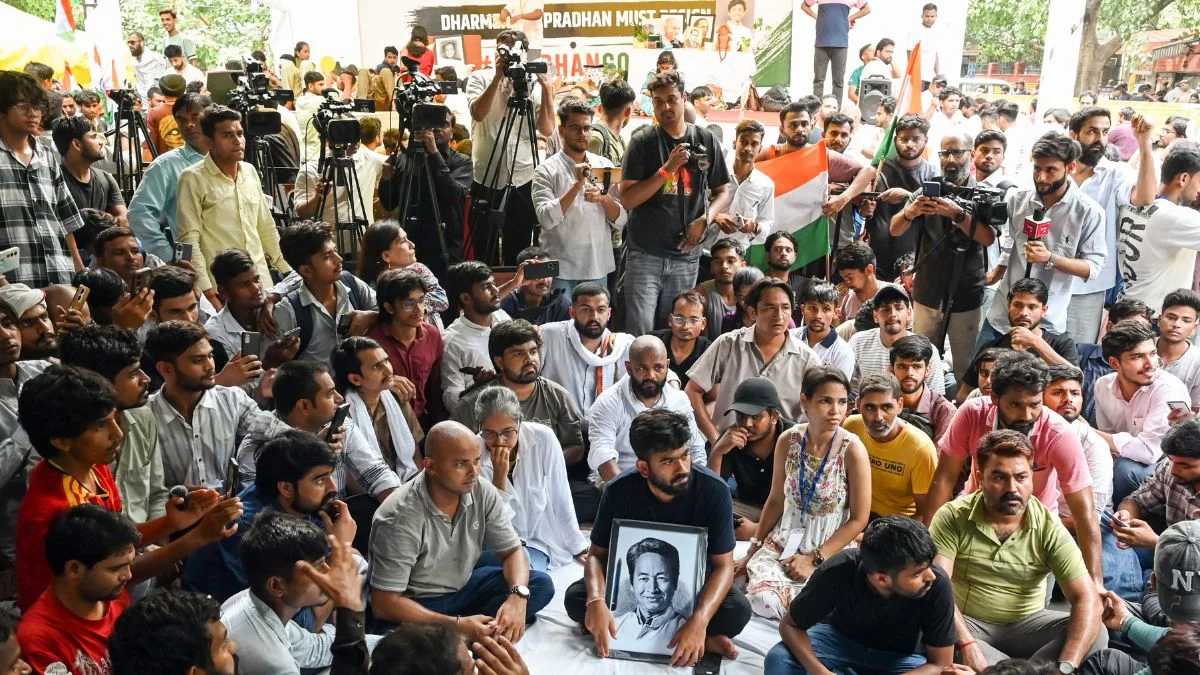
The Communist Party of India (Marxist) on Tuesday adopted a sharply-worded “Resolution on War” at its Jan Aakrosh Rally at Delhi’s Ramlila Maidan, condemning the United States and Israel over their military actions in West Asia and accusing the BJP-led Centre of failing to shield India from the economic fallout, particularly rising prices and fuel shortages.
The resolution said the ongoing conflict has had a direct and severe impact on everyday life in India, linking global tensions to domestic inflation and supply disruptions. “The US-Israel attack on Iran is having a big impact on our lives,” it said, alleging that cooking gas shortages have reached even small villages and that rising fuel costs have driven up prices of essential commodities. “The resulting increase in the price of vegetables, rice and other essential commodities has added to our burdens,” the party said, blaming the government for not anticipating the crisis.
Advertisement
The CPI(M) also made serious allegations about the humanitarian toll of the conflict, claiming that thousands, including political leaders, have been killed and citing incidents such as an alleged attack on a school that led to the deaths of “more than 160 girl students and their teachers.” It further broadened its criticism to US foreign policy, referencing actions in countries like Cuba and Venezuela.
Targeting the Centre’s foreign policy stance, the resolution accused the government of aligning with Washington and Tel Aviv. “Instead of condemning these attacks, the BJP government stood with the US and Israel. Under the BJP, India has become a subordinate ally of the US,” it said, calling for India to return to a more independent and non-aligned approach.
The party demanded that the government formally condemn the attacks on Iran and Palestine and take urgent steps to protect Indian citizens in the Gulf and West Asia. “The war should end immediately,” the resolution said, urging swift diplomatic intervention.
On the domestic front, the CPI(M) warned that the conflict is worsening inflation and deepening supply challenges, especially for fuel and essential goods. It called on the government to take immediate measures to reduce prices and ensure availability. “The government should curb price rise, reduce the price of gas and ensure that cylinders are available to all those who are in need,” it said.
The resolution also argued that the crisis has exposed structural weaknesses in India’s energy preparedness, linking global instability to rising transportation and food costs, and calling for stronger policy responses.
The Jan Aakrosh Rally, part of a nationwide mobilisation campaign by the CPI(M) against what it describes as “anti-people policies,” brought together party workers from across states to protest issues such as inflation, labour policies and energy shortages.
The development comes amid intensifying political debate over India’s handling of the West Asia conflict, which has disrupted key global shipping routes and triggered volatility in energy markets. While the government has maintained that it is addressing the situation through diplomatic engagement and diversification of energy supplies, opposition parties continue to question its preparedness and policy choices as the economic impact becomes increasingly visible.