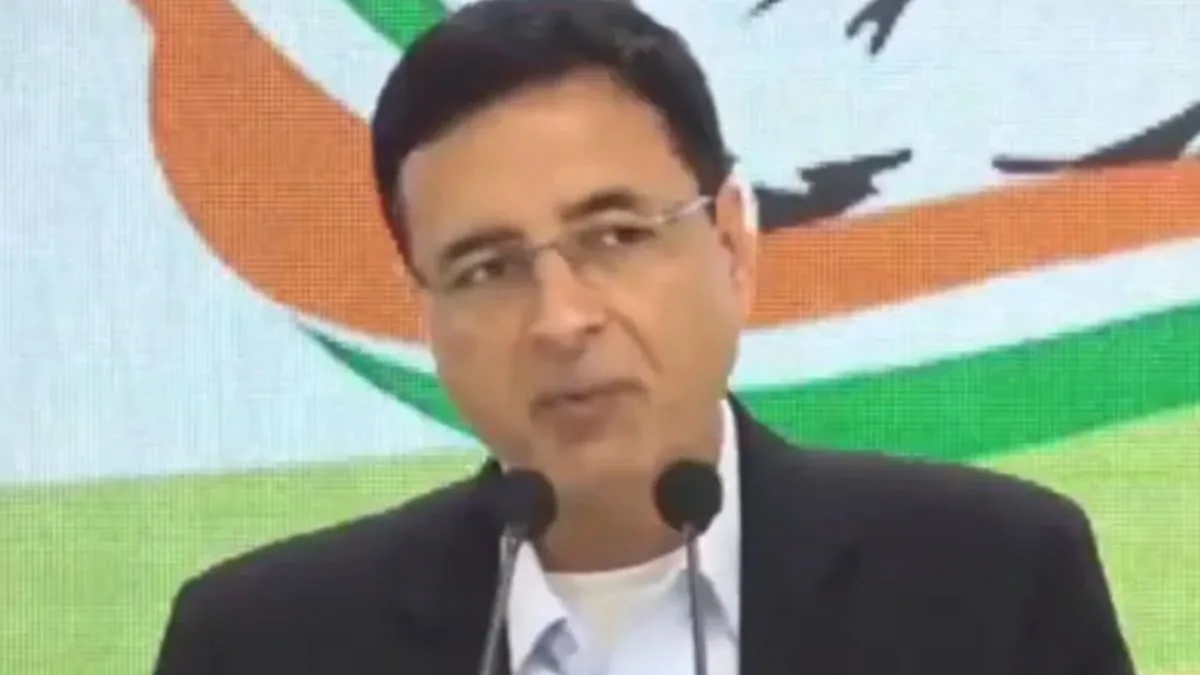
In a scathing critique of the recently announced India-United States trade agreement, Congress leader and MP Randeep Singh Surjewala accused the government of compromising India’s sovereignty and energy security by acquiescing to pressure to curb crude oil purchases from Russia and Iran.
Surjewala highlighted public statements by US officials, including Marco Rubio, who said India had committed to stop buying Russian oil as part of broader discussions tied to the trade framework. Rubio’s remarks came at the Munich Security Conference, where he said Washington had “gotten their commitment to stop buying additional Russian oil” following talks with Indian officials.
Advertisement
“Now, under the US trade agreement, India will be forced to buy crude oil from America and Venezuela at much higher prices… This is a direct compromise of India’s sovereignty and self-reliance,” Surjewala alleged, asserting that such commitments undermine India’s traditional energy procurement strategy.
India is one of the world’s largest crude oil importers, and since early 2022 has sourced significant volumes from Russia and Iran, benefiting from discounted rates. Under pressure from the United States to align its energy purchases with Western sanctions regimes, New Delhi has faced growing scrutiny, though Indian officials have repeatedly emphasised that energy decisions are guided by national interest and strategic autonomy rather than external dictates.
Surjewala also questioned provisions of the trade agreement reportedly requiring India to purchase US goods worth about $100 billion annually over the next five years—a total of $500 billion—without equivalent reciprocal commitments from the United States.
“In 2024, India exported $81 billion worth of goods to America and imported $43 billion, resulting in a trade surplus. Is this new agreement based on equality or coercion?” he asked, reiterating concerns among Opposition leaders that the pact may disproportionately benefit American exporters.
The Congress leader criticised the government for shifting the focus of the trade deal from mutual market access to what he described as one-sided obligations, raising questions about whether the agreement truly reflects India’s economic priorities.
The criticism comes amid broader political debate about the contours of India’s evolving trade and strategic ties with the United States. While the government has defended the deal as a step toward greater market access for Indian goods and diversification of energy and technology supplies, critics have argued that details around oil import conditions and tariff commitments need clearer articulation from New Delhi.
The government has stressed that India maintains a commitment to “strategic autonomy” in foreign and energy policy, with decisions on crude procurement continuing to be shaped by cost, supply reliability and national interest rather than external pressure.
Surjewala posed a pointed critique of the government’s stance: “Is this a ‘strong government’ or a meek, weak, helpless government? Is it ‘Atmanirbhar Bharat’ or ‘America-dependent Bharat’?” His comments reflect intensifying debate over the implications of the trade pact for India’s domestic economy, energy strategy and sovereign decision-making.