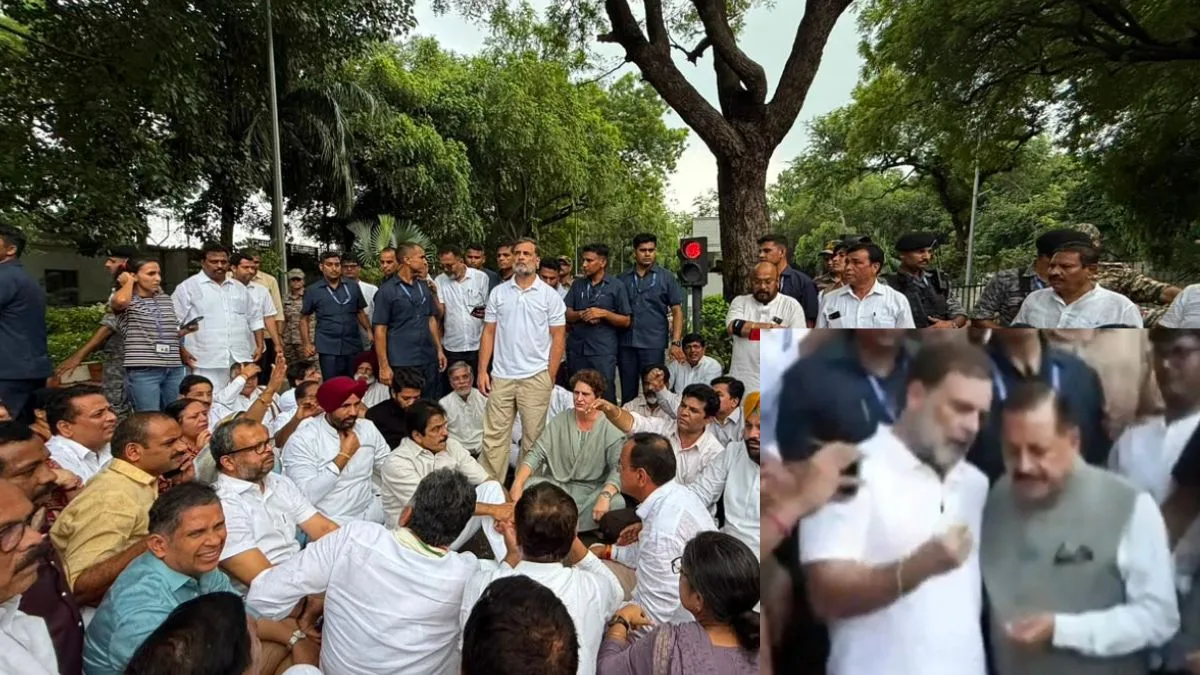
War of words in LS: Priyanka says ‘Rahul Gandhi only person who didn’t bow before govt’; Rijiju targets LoP’s Parliament conduct
Priyanka Gandhi said Rahul Gandhi had remained steadfast despite repeated attacks from the BJP-led government.
Opposition leaders said the motion had the backing of several parties, including the Congress, Samajwadi Party, DMK, Left parties, RJD, Shiv Sena (UBT) and NCP (SP), among others.




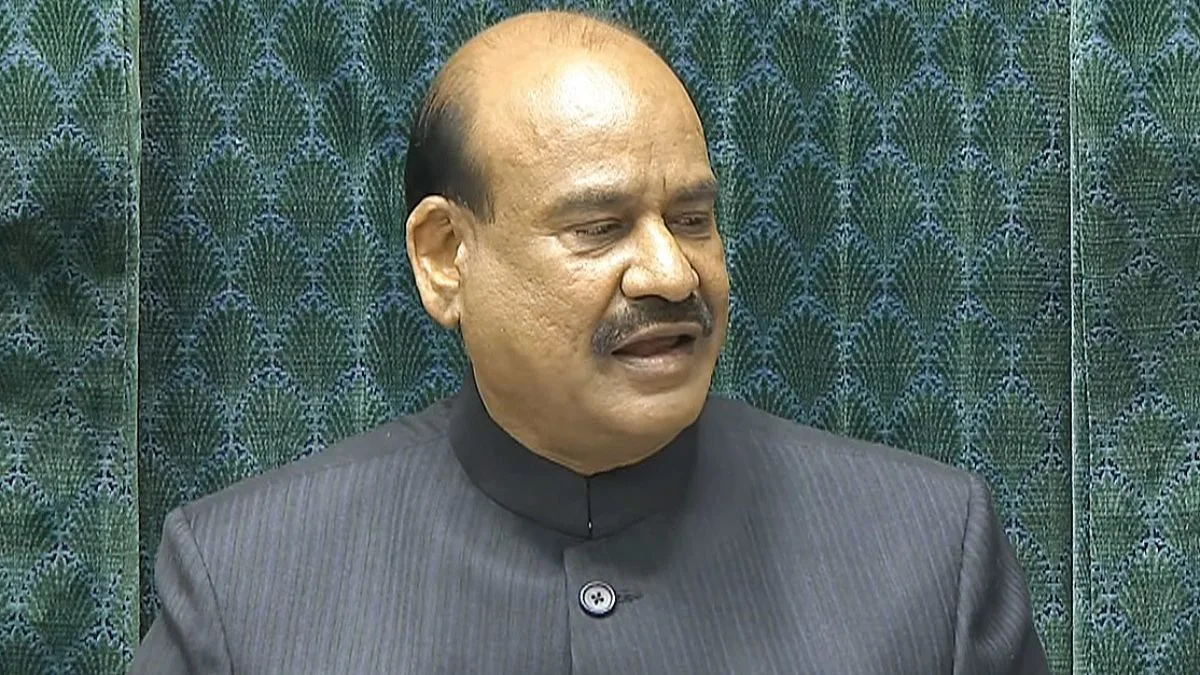
File Photo of Lok Sabha Speaker Om Birla/IANS
Escalating its confrontation with the BJP-led NDA government, the Congress on Tuesday moved a no-confidence notice against Lok Sabha Speaker Om Birla, alleging that he acted in a “blatantly partisan” manner in conducting the business of the House and abused the constitutional office by making “blatantly false” allegations against Congress MPs. Birla responded by asking the Lok Sabha Secretariat “to examine the no-confidence notice and to expedite the process”.
Opposition leaders said the motion had the backing of several parties, including the Congress, Samajwadi Party, DMK, Left parties, RJD, Shiv Sena (UBT) and NCP (SP), among others. The Trinamool Congress said it had advised the Congress to first approach Birla with a formal appeal before moving a no-confidence motion against him. TMC MP Abhishek Banerjee was quoted as saying that his party would back the motion if the Speaker failed to address the Opposition’s concerns within two to three days.
Advertisement
“We, the undersigned, hereby give notice of a resolution for the removal of Shri Om Birla from the office of Speaker Lok Sabha, in terms of the provisions of Article 94(c) of the Constitution of India, because of the blatantly partisan manner in which he has been conducting the business of the Lok Sabha,” the notice said.
Advertisement
On several occasions, leaders of opposition parties have not been allowed to speak, which is their basic democratic right in Parliament, it is alleged.
Carrying around 118 signatures, the letter refers to several instances, including Leader of Opposition in the Lok Sabha Rahul Gandhi not being allowed to complete his speech during the Motion of Thanks discussion, the Speaker not initiating action against BJP MP Nishikant Dubey for making unsubstantiated charges against women MPs of the Congress, and the suspension of eight opposition MPs. “Notice of a resolution for the removal of Om Birla from the office of Speaker Lok Sabha, in terms of the provisions of Article 94(c) of the Constitution of India, has been given because of the blatantly partisan manner in which he has been conducting the business of the Lok Sabha,” the motion stated.
According to Congress leaders, the step has been taken in “extraordinary circumstances”. “While holding the Hon’ble Speaker in personal regard, we are pained and anguished by the consistent denial of opportunities to Opposition MPs to raise issues of public importance,” Congress leader Manickam Tagore said.
Slamming the Congress, Parliamentary Affairs Minister Kiren Rijiju shared a video of a stand-off in the Lok Sabha on February 4 near the Prime Minister’s seat in the House, accusing it of ‘egging on’ its women MPs to block the aisle through which Prime Minister Narendra Modi would have walked. BJP lawmakers displayed maturity and restraint, otherwise the incident could have led the House into complete bedlam, he said.
Under the Rules of Procedure and Conduct of Business in the Lok Sabha, any member of the House can seek the removal of the Speaker. However, even with 118 signatures, the admissibility of the motion depends on many factors. For a resolution to be admitted, it must meet specific conditions laid down in the rules. For example, it must be specific with respect to the charges, clearly and precisely worded, and must not contain arguments, inferences, ironical expressions, imputations or defamatory statements, etc.
Also, for the Speaker’s removal, the resolution must be passed by a majority of the effective strength of the House, excluding vacant seats. The opposition INDIA bloc has around 234 seats in the 543-member Lok Sabha, falling short of the halfway mark of 272 by about 38 seats. In contrast, the BJP-led NDA has a majority with 293 seats, making the motion unlikely to succeed unless there are significant defections from the ruling alliance, which appears almost impossible.
Besides, historically, no motion for the removal of a Lok Sabha Speaker has ever succeeded. The current move, too, is being seen largely as symbolic — a political message reflecting the deepening mistrust and deteriorating relations between the Treasury and the Opposition benches.
Advertisement