All eyes on NDA’s ‘Mangal Milan’ meeting on Tuesday
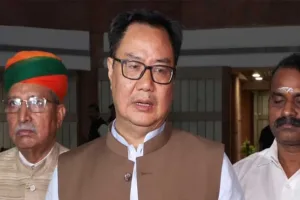
The National Democratic Alliance (NDA) Parliamentary Party meeting, now called 'Mangal Milan', will be held on Tuesday at Parliament House.
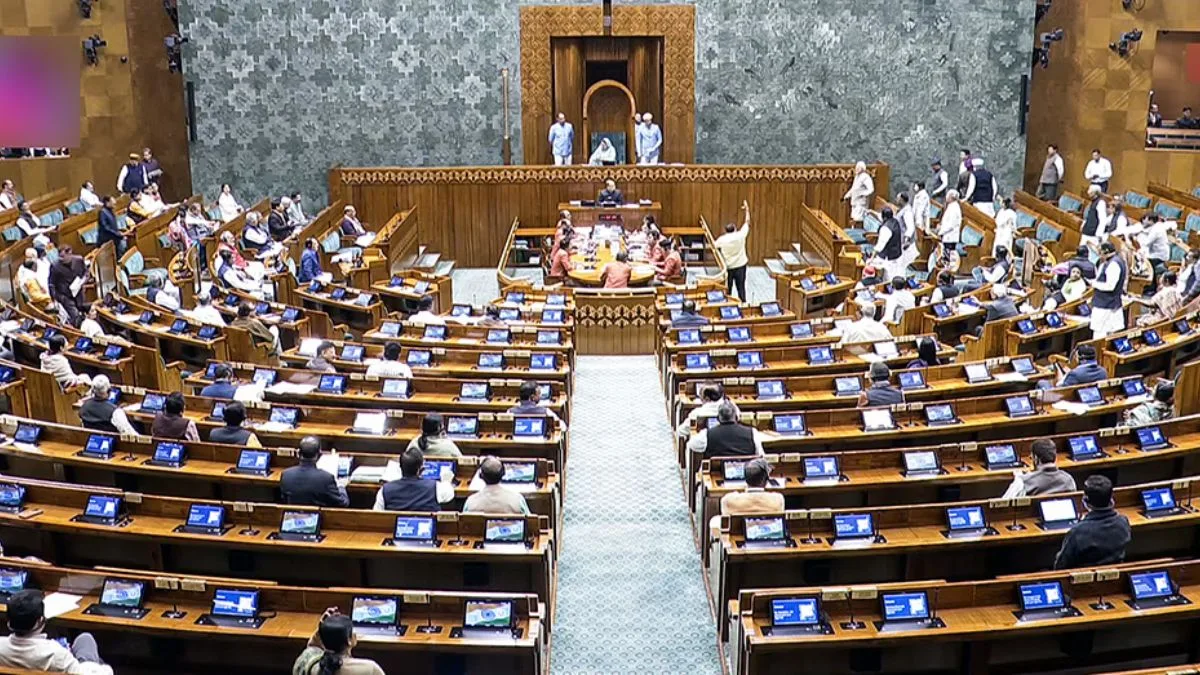
The Union government is set to operationalise the long-pending provision for women’s reservation in legislatures through the introduction of the Constitution (One Hundred and Thirty-First Amendment) Bill, 2026, and the Delimitation Bill, 2026, during a special session of Parliament scheduled from April 16 to 18.




File Photo: ANI
The Union government is set to operationalise the long-pending provision for women’s reservation in legislatures through the introduction of the Constitution (One Hundred and Thirty-First Amendment) Bill, 2026, and the Delimitation Bill, 2026, during a special session of Parliament scheduled from April 16 to 18.
The proposed Constitution Amendment Bill seeks to implement nearly one-third reservation for women in the Lok Sabha and state legislative assemblies, including within seats reserved for Scheduled Castes and Scheduled Tribes, by linking it to a fresh delimitation exercise based on the latest available census data. The move is being projected as a major step to expedite women’s participation in legislative bodies, which has remained pending due to constitutional and procedural requirements tied to census and delimitation timelines.
According to the Statement of Objects and Reasons, the current constitutional framework under Articles 82 and 170 froze the allocation of seats based on the 1971 Census, with no fresh readjustment allowed until after the first census post-2026. While this freeze was intended to serve a broader policy goal, the government argues that India’s demographic landscape has changed significantly, with uneven population growth, migration, and rapid urbanisation leading to disparities in representation across constituencies.
Advertisement
“The objective is to ensure that women’s reservation is implemented without undue delay and that democratic institutions reflect contemporary realities,” a senior government functionary said, underlining the intent to align constitutional provisions with present-day needs.
Advertisement
Union Law Minister Arjun Ram Meghwal, who will introduce the Bills, has said the initiative would “promote inclusivity and strengthen participatory democracy,” in line with the broader vision of Viksit Bharat@2047. The proposal builds on the Constitution (One Hundred and Sixth Amendment) Act, 2023 — popularly known as the Nari Shakti Vandan Adhiniyam — which provided for women’s reservation but linked its implementation to delimitation following a future census.
Alongside the amendment, the Delimitation Bill, 2026 proposes the constitution of a Delimitation Commission to redraw parliamentary and assembly constituencies and determine the allocation of seats reserved for women. The Bill points out that the existing framework relies on outdated data, with seat allocation based on the 1971 Census and constituency boundaries drawn using 2001 figures, resulting in imbalances due to population shifts and migration, particularly from rural to urban areas.
“The growth of population across regions and migration patterns have led to unequal representation, making delimitation an essential exercise,” the Statement notes. The Commission will be tasked with carrying out delimitation and ensuring that reservation for women, including those from Scheduled Castes and Scheduled Tribes, is implemented systematically. The new framework will apply to all future general elections and by-elections once the Commission’s final orders are notified.
The decision to convene a special session from April 16 to 18 underscores the government’s push to fast-track key electoral reforms. Observers expect the session to witness intense debate, with Opposition parties likely to question the timing, scope, and political implications of the proposals, particularly regarding inter-state representation and federal balance.
Delimitation has long been a politically sensitive issue, with concerns that states experiencing higher population growth could gain a larger share of parliamentary seats, potentially altering the existing balance of power. Earlier constitutional amendments in 2001 and 2003 attempted to address such concerns by freezing seat allocation while allowing limited adjustments in constituency boundaries.
With these Bills, the government appears to be pursuing a twin objective—updating the electoral map to reflect current demographic realities while simultaneously operationalising women’s reservation in legislatures. As Parliament meets for the special session, the proposals are expected to mark a significant moment in the evolution of India’s democratic framework, with wide-ranging implications for representation, governance, and gender inclusion.
Advertisement