The reason may be a local body’s election—in this case, the Brihanmumbai Municipal Corporation (BMC) in Mumbai—but the polls to the richest municipal corporation have revived a political firestorm over Mumbai identity between leaders of two states—Maharashtra and Tamil Nadu.
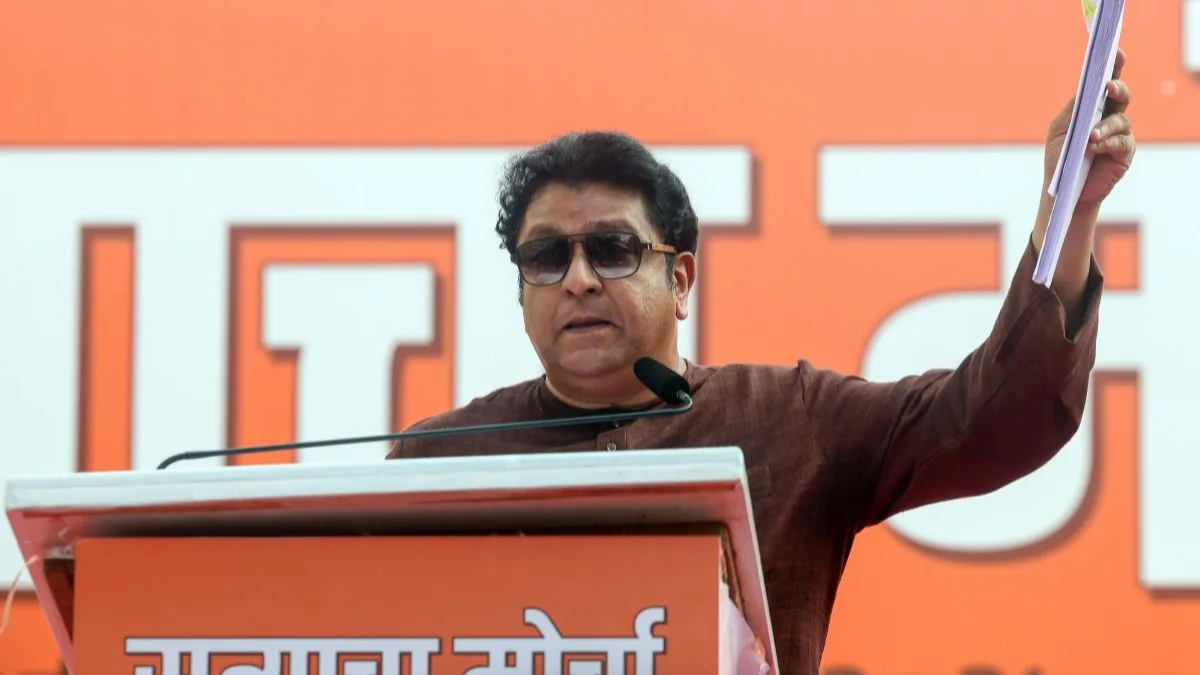
The verbal to-and-fro between Maharashtra Navnirman Sena (MNS) chief Raj Thackeray and former Tamil Nadu BJP president K Annamalai ahead of the high-stakes BMC elections has revived old fault lines over regional identity, migration, and Mumbai’s status as India’s financial capital.
Advertisement
The latest flashpoint came with Thackeray’s sharp attack against Annamalai, whom he mocked as “rasmalai” and targeted with the controversial 1960s slogan “Hatao lungi, bajao pungi”—a phrase used to evoke Marathi sentiment against South Indian migrants. This time, it was in response to Annamalai’s campaign in Mumbai’s Tamil-speaking areas, where he described the maximum city as an “international city”.
Arguing that its growth has been shaped by contributions from people across India, he pitched the BJP’s vision of a “triple-engine government” involving the Centre, state, and civic body. Critics, including Thackeray, accused him of undermining Maharashtra’s claim over Mumbai and favouring industrialists over locals.
Though Annamalai clarified that recognising Mumbai’s global status does not diminish Marathi contributions, Raj Thackeray accused Annamalai of diluting Maharashtra’s claim over Mumbai, framing the BMC as a battle to protect Marathi language, land, and livelihoods from “outsiders.” Annamalai, meanwhile, dared Thackeray to stop him from campaigning in Mumbai and accused his family of targeting Tamils for political gain. Recognising Mumbai’s global character did not diminish Marathi contributions, he said, describing the backlash as a badge of honour. “I will come to Mumbai, do what you want,” he said.
BJP leaders backed him, rejecting claims of any conspiracy to separate Mumbai from Maharashtra. Leaders from across the country had the right to campaign anywhere in India, and regional slurs undermine national unity, they added
However, the clash revived memories of the 1960s and 1970s, when Shiv Sena’s “sons of the soil” politics targeted South Indian migrants during periods of economic stress in Mumbai, then Bombay.
After Gujarat and Maharashtra were separated, Mumbai became a focal point of linguistic and regional politics. Founded by Bal Thackeray, the Shiv Sena used slogans like “Hatao lungi, bajao pungi” to mobilise Marathi workers, leading to violence, riots, and forced migration of Tamil families. Election-time rhetoric periodically reignited tensions over migration and economic competition; however, this BMC election is important because it is the first major political battle in Mumbai after the Shiv Sena split.
Mumbai is the strongest base of the erstwhile Shiv Sena, and control of the BMC has always symbolised its power. With two rival Sena factions now competing, the election will reveal which side has more public support. It is also significant because the BMC is India’s richest civic body, controlling massive funds and key city services. The result will influence future alliances, leadership claims, and the broader political direction of Maharashtra.