Embracing Divinity amidst us: Why a Lonely, Hurried World Needs Rath Yatra Now More Than Ever
Once a year in Puri, the divine abandons its sanctum and rolls into the dust of ordinary life. We have rarely needed that lesson more.
In both TMC and BJD, state-level defeats have exposed problems earlier masked by electoral successes, such as weak second-line leadership, factionalism, cadre drift, and uncertainty over future and succession.




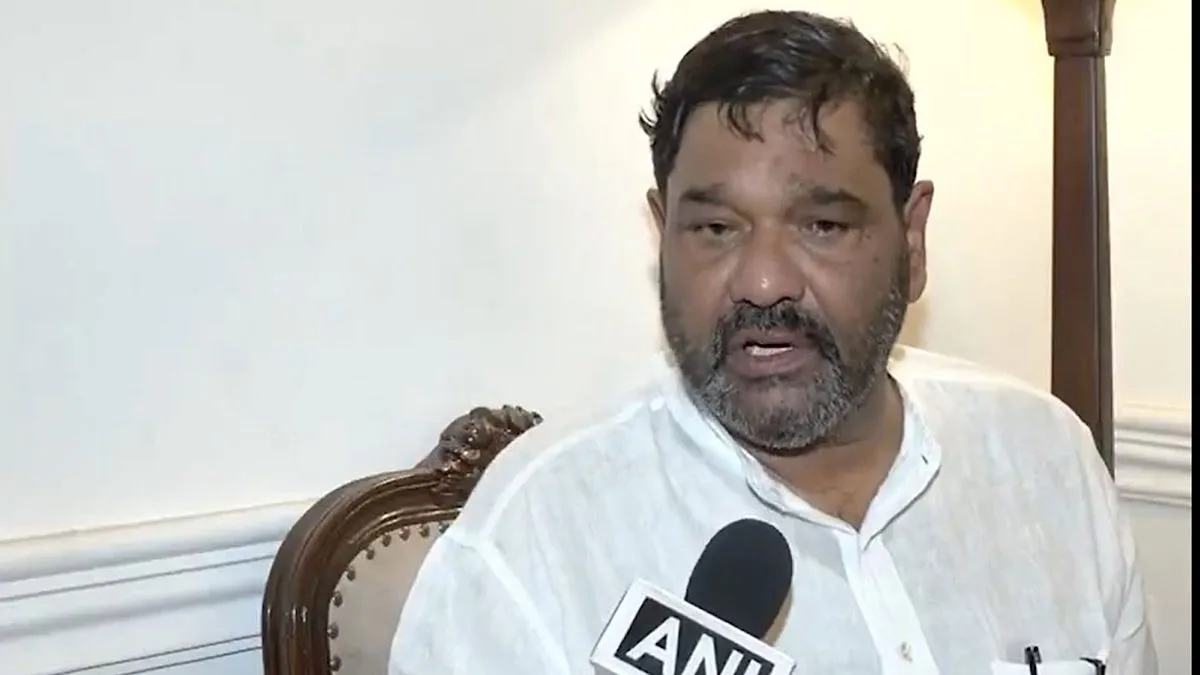
Debashish Samantaray
While in neighbouring West Bengal the Trinamool Congress (TMC) continues to experience deep internal turbulence, in Odisha the once-dominant Biju Janata Dal (BJD) suffered another setback when Rajya Sabha MP Debashish Samantaray on Monday resigned from the party’s primary membership, alleging he was being “systematically belittled”.
Sources said Samantaray was expected to join the BJP.
Advertisement
In a letter to BJD chief Naveen Patnaik, Samantaray said, “Of late, I felt I have been systematically belittled in the party and that it does not require my services. Therefore, I have taken this hard decision in public interest and request you to accept my resignation.”
Advertisement
Regional satrap BJD is facing one of the most turbulent phases in its recent history, exposing growing stress within the party after its electoral defeat in Odisha in 2024. Observers say the latest exit, too, is a reflection of growing unease in the party, seemingly unable to adjust to life in opposition after losing power in the state.
Samantaray’s resignation did not come in isolation. Before him, Rajya Sabha MP Sasmit Patra stepped down as the party’s floor leader in the Upper House following internal friction and restructuring within the parliamentary unit. Earlier, two other Rajya Sabha MPs—Sujeet Kumar and Mamata Mahanta—had also quit the party. They were later elected to the Rajya Sabha on BJP tickets.
Samantaray had also been a known critic of former bureaucrat-turned-politician VK Pandian, who withdrew from active politics after the BJD’s defeat in the 2024 Lok Sabha and Odisha Assembly elections.
Rejecting suggestions that Samantaray’s resignation was a setback, BJD leaders claimed his exit would instead strengthen the organisation in Cuttack. “He left the party to protect his business interests. He was in politics to do business and not to serve the people,” Opposition chief whip Pramila Mallik was quoted as saying.
Once regarded as one of India’s most disciplined regional parties, the BJD ( like the TMC after 2026 Assembly elections) has been undergoing stress at multiple levels. The most immediate factor remains the psychological and organisational impact of the defeat in the 2024 Odisha Assembly elections, which ended party supremo Naveen Patnaik’s nearly 25-year-long uninterrupted rule.
Observers say the BJD functioned through a tightly centralised structure built around Patnaik and a carefully managed chain of command.
Electoral success often suppressed factionalism and dissent, but the loss of power altered that. Leaders who previously remained silent began openly expressing dissatisfaction over access to leadership, political relevance, and internal decision-making. A key factor also is uncertainty over succession and organisational control.
“Turbulence inside the BJD and the TMC proves how regional parties face structural stress once they lose uninterrupted control of state power. Whether they can maintain relevance while rebuilding organisation outside power will determine the future of the two influential regional political formations,” analysts say
In both the BJD and the TMC, state-level defeats have exposed problems earlier masked by electoral victories, such as weak second-line leadership, factionalism, cadre drift, and uncertainty over future and succession, they add
Reflecting growing tensions within the TMC after its recent electoral setback, senior leader and four-time MP Kakoli Ghosh Dastidar resigned as Barasat organisational district president.
Notably, she also raised concerns about corruption and criminalisation within the party, saying these issues had damaged public trust and contributed to the TMC’s declining tally in recent elections.
Advertisement