Chhattisgarh Ropeway Tragedy: 1 dead, 16 injured in cable trolley crash at Khallari Temple in Raipur
Chhattisgarh Chief Minister Vishnu Deo Sai expressed grief over the incident and said a thorough probe would be conducted.
Hosted at the Indian Institute of Management (IIM), Raipur, the three-day gathering brings together the country’s top police leadership to address the evolving challenges confronting India’s internal security framework.




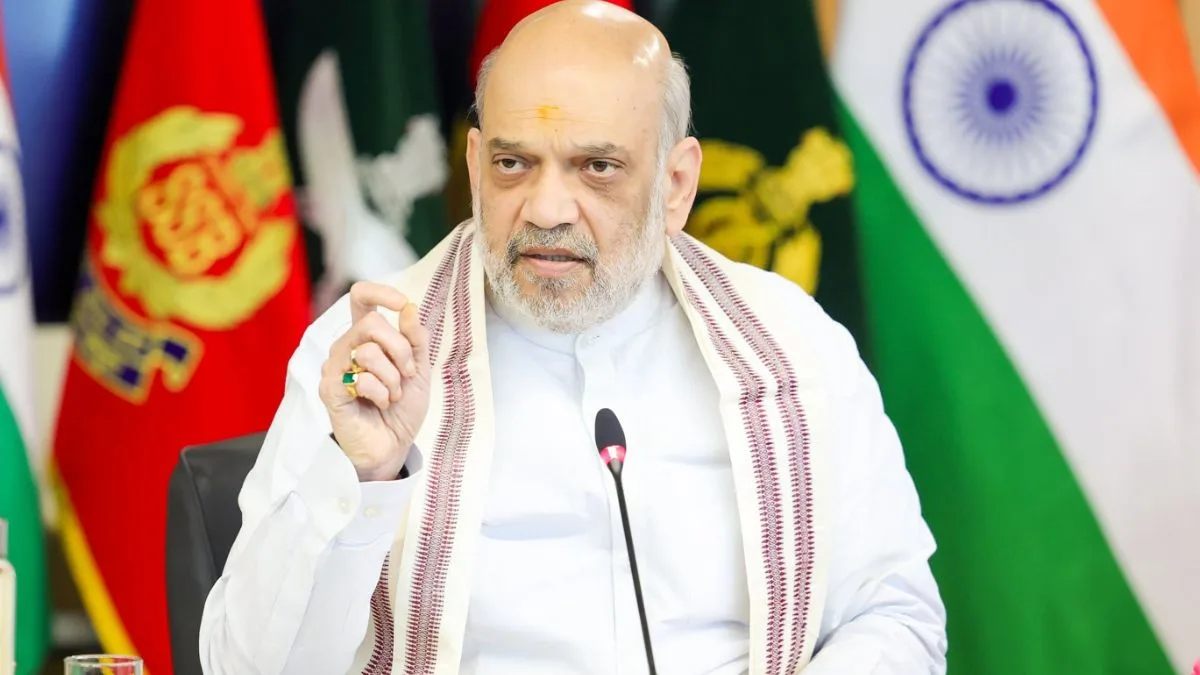
File Photo: IANS
The 60th All India Conference of Directors General and Inspectors General of Police commenced in Naya Raipur on Friday, placing Chhattisgarh’s capital at the centre of national deliberations on internal security, policing reforms and law enforcement strategy.
Hosted at the Indian Institute of Management (IIM), Raipur, the three-day gathering brings together the country’s top police leadership to address the evolving challenges confronting India’s internal security framework.
Advertisement
Union Home Minister Amit Shah formally inaugurated the conference, underscoring the Centre’s renewed focus on cohesive coordination between state police forces and central agencies. The conference is structured into eight sessions, with two held on the opening day, four scheduled for the second day and two reserved for the concluding session.
Advertisement
Prime Minister Narendra Modi is expected to participate in six key deliberations, while the Home Minister will remain present throughout the event.
Proceedings on the first day began with the arrival of delegates, invited officials and award recipients, followed by interactions between the Home Minister and heads of police forces from states and Union Territories, as well as senior officers of Central Armed Police Forces and central police organisations.
During the opening ceremony, Intelligence Bureau officers were honoured for distinguished service, and three police stations were recognised as the best in the country, alongside the release of a national list ranking the top ten police stations.
In his address, Shah emphasised the shifting nature of security threats and the need for a responsive, coordinated and forward looking policing approach.
Discussions during the inaugural sessions focused on strategic interventions in Left Wing Extremism affected areas and the expanding role of police and civil defence mechanisms in disaster preparedness and response.
These were followed by late-evening dialogue sessions involving senior officials and the Union Home Secretary, allowing candid exchanges on operational gaps and institutional challenges.
Senior security and intelligence figures, including National Security Adviser Ajit Doval and the Directors General of several key central forces, are participating alongside state police chiefs, reinforcing the conference’s role as a vital coordination platform for India’s security architecture.
Beyond immediate operational concerns, the forum is also addressing broader issues such as infrastructure modernisation, human resource development, technological integration and strengthening field level effectiveness.
Over the past decade, the conference has steadily evolved into a substantive policy forum under the guidance of the Prime Minister. The practice of rotating its venue across different states has further enhanced its relevance by aligning national security discussions with regional ground realities.
As the deliberations move forward, their importance lies in shaping how India’s policing ecosystem prepares for increasingly complex internal security demands.
With law enforcement expected to navigate conventional threats alongside emerging technological and societal pressures, the outcome of this conference is likely to influence both strategic thinking and operational policy in the years ahead.
Advertisement