The Evolutionary Vanguard: Why the Classroom’s ‘Deficits’ Are Science’s Greatest Assets
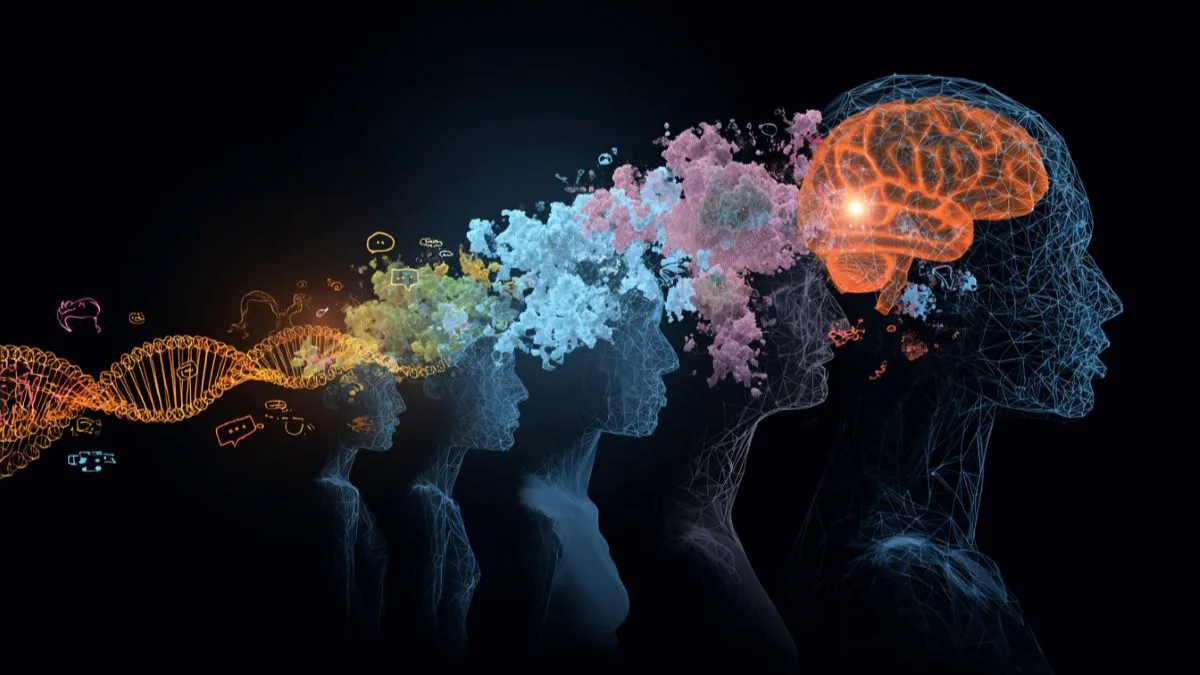
To understand the neurodiversity paradox, one must look past the diagnostic criteria of the DSM-5 and peer into our evolutionary history.
Aishmita Manna | June 8, 2026 6:05 pm
Photo: SNS
For generations, the institutional response to neurodivergence has been framed by a clinical imperative: remediate, normalize, and cure. In the rigid architecture of the modern classroom, conditions like Attention Deficit Hyperactivity Disorder (ADHD) and dyslexia are routinely treated as cognitive pathology glitches in the biological software that require pedagogical patches or pharmaceutical intervention.
Yet, as we stand on the precipice of a new technological frontier, this deficit-based paradigm reveals a profound irony. The very traits we spend billions trying to erase in childhood are the identical cognitive engines driving our most radical scientific breakthroughs. By forcing these distinct cognitive architectures into a homogenized mold, we are not merely stifling individual potential; we are systematically dismantling the evolutionary avant-garde of human innovation.
Advertisement
The Hunter in the Lab: The Adaptive Alchemy of ADHD
To understand the neurodiversity paradox, one must look past the diagnostic criteria of the DSM-5 and peer into our evolutionary history. The hyper-localization of attention demanded by the modern desk is a recent cultural construct, not a biological default.
Advertisement
In an ancestral environment, the restless vigilance of what we now call ADHD was an invaluable survival mechanism. The individual who was easily distracted was, in reality, a high-fidelity sensor, scanning the periphery for threats or opportunities that others missed.
When transposed to the upper echelons of scientific inquiry, this “deficit” undergoes a sublime alchemy. The standard curriculum rewards a steady, linear progression of thought. Science, however, does not advance linearly; it leaps. The ADHD mind possesses an extraordinary capacity for hyper-focus a state of profound cognitive immersion where the outside world recedes, allowing the researcher to pursue anomalous data points with obsessive tenacity.
Where the neurotypical mind seeks the comfort of established consensus, the ADHD mind thrives in the chaotic periphery, transforming what schoolmasters call “distractibility” into a sweeping, divergent search light for novel hypotheses.
Photo: SNS
Dyslexia and the Architecture of the Cosmos
If ADHD is the engine of rapid exploration, dyslexia is the architect of complex synthesis. Our educational systems are fundamentally text-centric, conflating reading speed with raw intelligence. Dyslexia is thus categorized as a language processing disorder. However, neuroimaging studies reveal that the dyslexic brain is frequently characterized by enhanced macro-lateralization, a structural rewiring that prioritizes global, holistic processing over sequential analysis.
The dyslexic mind is structurally optimized for high-dimensional spatial reasoning. It bypasses the micro-details of text to map the macroscopic architecture of systems.
In fields like astrophysics, quantum mechanics, and structural engineering, this is not a disability; it is a supreme cognitive advantage. Breakthroughs in these disciplines rarely emerge from reading manual text; they arise from the ability to manipulate three-dimensional topologies in the mind’s eye or to discern hidden symmetries within massive, disparate datasets.
Photo: SNS
The High Cost of Cognitive Homogeneity
The paradox culminates in an uncomfortable truth: our current educational metrics are actively weeding out the next generation of pioneers. By treating neurodivergence as an illness to be managed, schools cultivate a culture of compliance that favors the aggregator of existing knowledge over the creator of new paradigms.
We have institutionalized a system that pathologized the very traits essential for scientific revolutions:
Impulsivity becomes the courage to test high-risk, high-reward hypotheses.
Non-linear thinking becomes the cross-disciplinary leap that connects biology with quantum computing.
Cognitive restlessness becomes the refusal to accept settled dogmas.
If the history of science teaches us anything, it is that progress is rarely born of conformity.
Re-Engineering the Crucible
To safeguard the future of scientific discovery, we must transition from a model of therapeutic intervention to one of strategic cultivation. This does not imply abandoning children to their struggles, but rather redesigning the classroom to act as a greenhouse for cognitive variance rather than a factory for intellectual uniformity.
We must stop asking how we can fix the neurodivergent child to fit the curriculum, and instead ask how we can adapt the curriculum to unleash the evolutionary variance within. The survival of our species has always depended on our cognitive diversity. If we continue to medicate and educate away our outliers, we may well find ourselves trapped in a stagnation of our own design orderly, quiet, and utterly blind to the next paradigm shift.
The campaign focuses on changing the narrative around Dyslexia — moving away from misconceptions and stigma towards recognizing the unique strengths, creativity, and problem-solving abilities associated with Dyslexic thinking.
In a significant initiative as part of the nation-wide ‘Act4Dyslexia’ campaign, the highest offices of the Government and key monuments in Delhi, including Rashtrapati Bhawan
According to the non-profit organisation Understood.org, about 63 per cent of adults with a learning or thinking difference wish they had been diagnosed earlier in life.