Why Trump – and others –must read Hemingway
21 July marks American Nobel laureate Ernest Hemingway’s (1899 -1961) 127th birth anniversary.
A TV commercial for American Eagles brand jeans, featuring blue-eyed blonde actress Sydney Sweeney, caused a storm of controversies in the US. Many people complained that the tagline “Sydney Sweeney has great jeans” really implies that Sydney has great genes (“jeans” being homophonic with “genes”) – thus promoting white supremacy.




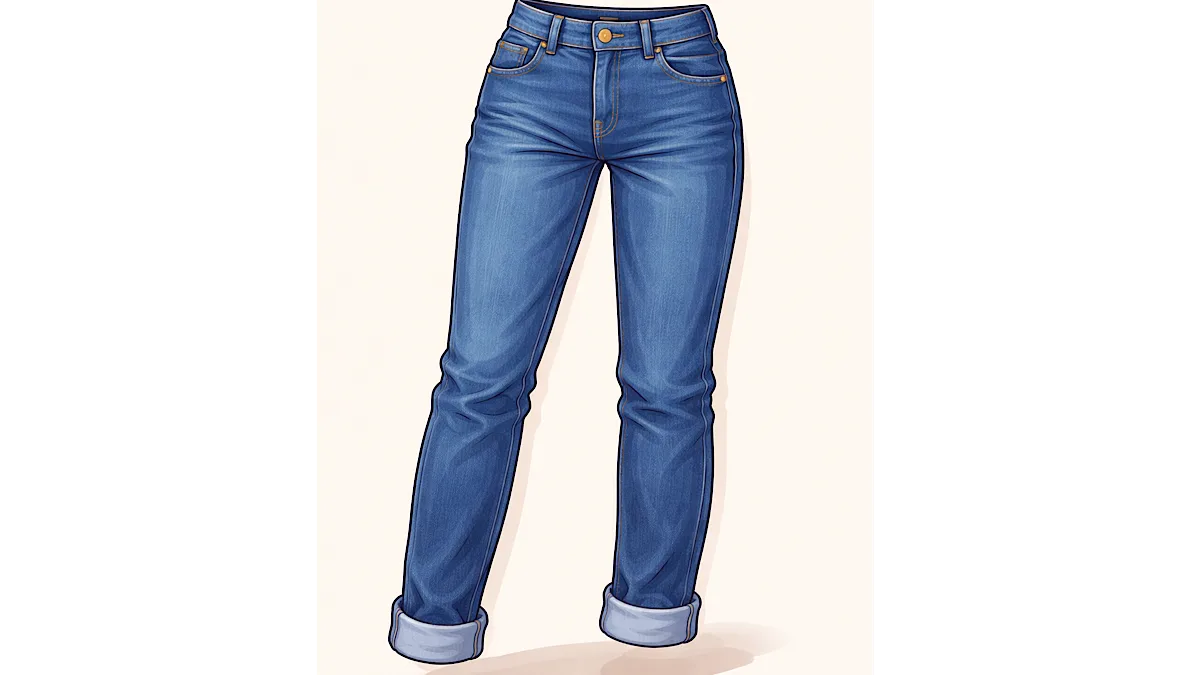
Photo:AI
A TV commercial for American Eagles brand jeans, featuring blue-eyed blonde actress Sydney Sweeney, caused a storm of controversies in the US. Many people complained that the tagline “Sydney Sweeney has great jeans” really implies that Sydney has great genes (“jeans” being homophonic with “genes”) – thus promoting white supremacy. Several decades ago, another ad, featuring Brooke Shields’ line: “There is nothing between me and my Calvin”, promoting Calvin-Klein jeans caused an uproar but for different reasons. Jeans are intimately and uniquely connected with American culture.
Although I have been Americanized in many ways it took me years to start wearing and getting comfortable in jeans. Growing up in India during the fifties and sixties, I did not see anyone wearing jeans. I associated jeans with cowboys in Western movies. Even after coming to this country, I was not impressed by jeans since trousers were surprisingly affordable and available in various styles and colors. Who wants to wear boring blue jeans, especially when they are often more expensive?
Advertisement
I felt confident in pleated rayon trousers with a polyester shirt tucked in it. My Indian friends also dressed in a similar fashion.
Advertisement
I spent my entire life in academia, as a student and faculty, never wearing a pair of jeans. While working in industry, my boss’ secretary commented one day “Basab, I have never seen you in jeans”. That was a moment of awakening for me. I recognized that wearing jeans was essential to complete my Americanization.
A transformation of my wardrobe from pleated trousers to blue jeans started to take place. Over the past several decades, I have worn nothing but jeans except for special occasions when I wore suits or some Indian attire.
Surprisingly, I found jeans to be appealing for several reasons. First, they do not need ironing. I can engage in physical activities without worrying if my pants look crumbled or crinkled. One can wash jeans less frequently. Secondly, jeans are physically more comfortable. They last longer than trousers under the same amount of wear and tear. Jeans go with any style of outfit, formal or casual, from a tee shirt to a fancy sport jacket, from sandals to sneakers to dress shoes.
There are more subtle benefits. Jeans can make a person look more “hip” or “cool”.
Jeans typically get torn with usage at the bottom edge, but one can then easily convert them into shorts by chopping off lower parts of legs and hemming up the edge.
At first, jeans all looked alike to me with straight legs, front pockets and blue color. I was happy with my $16 “Wrangler” jeans from Wal-Mart. I gradually started to appreciate why people spend big money on jeans. It has to do with precise shape/fitting, features (fancy buttons in place of zipper, for example) and image (fashion-conscious people can recognize an expensive pair of jeans). They can be available in a variety of colors, especially black, gray and different shades of blue.
While exploring the history of blue jeans on the internet I was surprised to learn that jeans were created first in Genoa, Italy where these pants were worn mainly by soldiers and in Nimes, France. In fact, the name “Jeans” comes from the French version of Genoa and the name “denim” came from the French word “De Nimes” meaning “from Nimes”.
However, it was not until Levi Strauss, a German young man, moved to California and teamed up with a tailor Jacobs Davis, that the era of blue jeans started to take shape. They even filed a patent on how to insert copper rivets to reinforce certain parts of the trousers.
Initially the jeans were used primarily by the miners in the USA and then became popular with the working class at large. Blue Jeans got more widely accepted in American culture, especially by young men, after movie icons like James Dean and Marlon Brando flaunted them in movies like “Rebel without a Cause” and “Wild Ones”. Blue Jeans gradually became an indispensable part of American life. The USA reportedly uses 39% of all blue jeans made in the world today, while Europe accounts for only 20%. If one is asked to imagine an American, it would be difficult to think of him/her in anything other than blue jeans. This is epitomized by Elton John’s line “Blue Jean baby, LA lady” in his song ‘Tiny Dancer’.
I have seen many style trends in jeans during my lifetime in the USA. First, it was the appearance of acid washed jeans and jeans having a worn-out look. Then came the “ripped look” where jeans have a predetermined hole at one or multiple places. Favorite places are knee areas and thigh areas. Other apparel has been made of denim and become popular, such as shirts, shorts, skirts, jackets and overalls.
I am happy to see that all my Indian friends, relatives and colleagues here have also adapted jeans; I do not stand out as someone desperately trying to copy the Americans. The younger generations of Indian immigrants coming to this country have embraced jeans almost as soon as they arrived. One interesting observation is that use of blue jeans is less common among Indian women in this country. I do not know if it is related to their shyness or difficulty in finding jeans that would make them look good.
Indian men also seem to have issues against women wearing jeans. As recently as 2014, a family court in Mumbai ruled in favor of a wife who claimed that her husband’s insistence that she wear saris instead of kurta and jeans amounted to spousal abuse.
Ironically, during the early years of blue jeans, India supplied almost one hundred percent of the indigo dye needed to color the jeans blue. In fact, indigo was such a profitable import from India that it was termed “Blue gold”.
A more significant aspect of the contribution of Indians to the evolution of blue jeans was the use of a fabric called “Dungri” (or Dungaree) in making coarse attire in the Dungri area of Mumbai long before denim. Dungaree was the precursor to Denim. One key difference between the two fabrics is that denim jeans are dyed after the garment is weaved whereas dungri is made from fabric already colored. Even today, jeans made of dungaree are available side by side with those made from denim.
I now feel proud to wear jeans, not just as a symbol of my Americanization but also as a tribute to my Indian roots. Perhaps, I should be in a commercial saying “Basab Dasgupta has great jeans”, promoting “Brown Supremacy”.
(The writer is a physicist who worked in industry and academia. He is a Bengali settled in the US.)
Advertisement