From Manuscripts to Memory: KCC’s Tribute to Bibhutibhushan Brings a Literary Giant Alive
In a gesture both distinctive and meaningful, the dignitaries were felicitated with garlands crafted from thermocol, a fitting tribute that subtly echoed Bibhutibhushan Bandopadhyay’s profound affinity for nature.
Aishmita Manna | Kolkata | June 6, 2026 6:44 pm
Photo: SNS
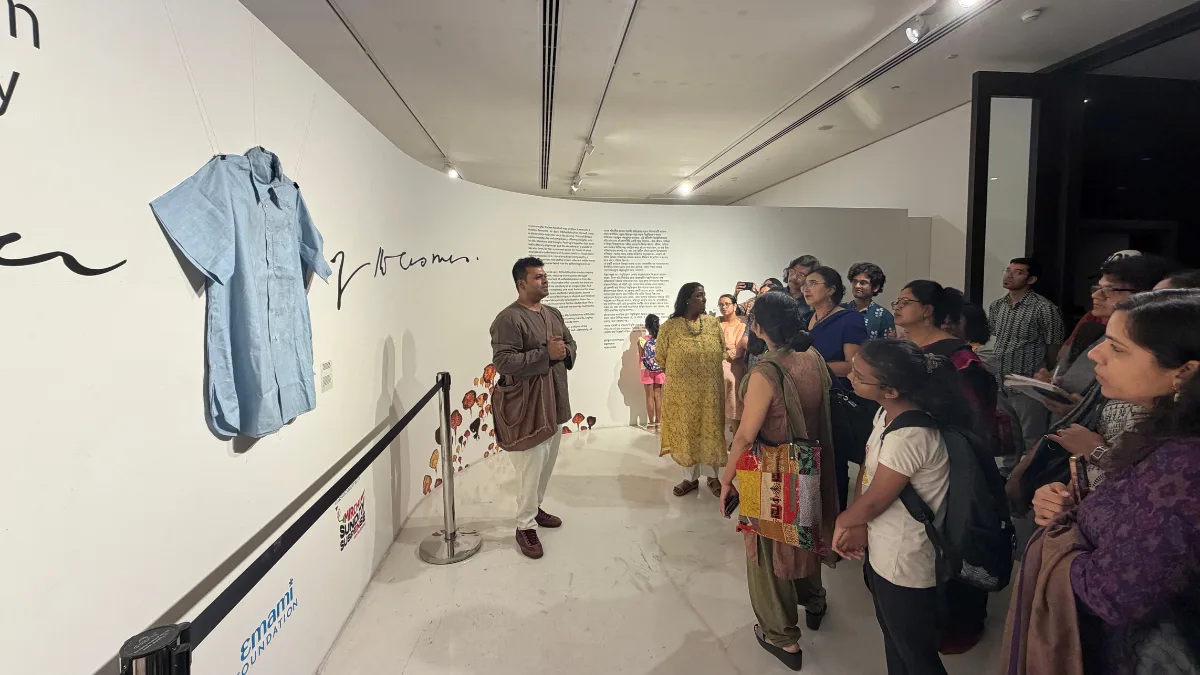
In the quiet interplay between memory and manuscript, where ink outlives its age and stories refuse to fade, Kolkata Centre for Creativity on 24th March 2026 unveils পথের দেবতা-The God of the Little Road, an exhibition dedicated to Bibhutibhushan Bandopadhyay, offering a contemplative portal into the world of the literary luminary which would have never been possible without the ardent support of the chairperson of Kolkata Centre for Creativity, Miss. Richa Agarwal.
An Ode to Legacy – Felicitation, Illumination and Words that Endure
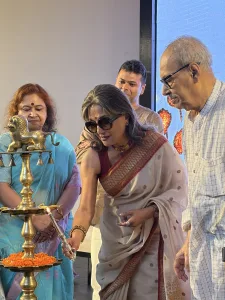
The presence of an accomplished actress like Aparna Sen and the much loved writer Sirshendu Mukhopadhyay lent an added grandeur to the event. The evening commenced with the ceremonial lighting of the lamp, followed by a series of thoughtful speeches, culminating in a truly memorable gathering.
Advertisement
In a gesture both distinctive and meaningful, the dignitaries were felicitated with garlands crafted from thermocol, a fitting tribute that subtly echoed Bibhutibhushan Bandopadhyay’s profound affinity for nature.
Advertisement
Aparna Sen, a veteran actress, during the interview remarked how Bibhutibhushan Babu is intertwined with the fabric of her life as she once played the role of Aparna in the 1959 film Apur Sansar (The World of Apu), which was directed by Satyajit Ray and based on the novel Aparajito by Bibhutibhushan Bandopadhyay. She went on to pose a pertinent question whether the younger generation today still reads his works and gently urged that those who have not yet encountered his writing must certainly do so.
Photo: SNS
In a rare and privileged moment of conversation, Shirshendu Mukhopadhyay, one of the most celebrated voices in Indian Bengali literature, whose works have long shaped the imaginative and cultural landscape of Bengal, during the interview reflected on the towering presence of Bibhutibhushan Bandopadhyay in Bengali literature, acknowledging the profound influence the latter has had on his own life as a writer. He extended his heartfelt gratitude to Trinankur Banerjee and Richa Agarwal for undertaking such a significant initiative, noting that readers are invariably driven by an enduring curiosity about their beloved authors. To encounter not just the literary genius but also the intimate contours of a writer’s personal life, he observed, is an experience both rare and deeply enriching.
Beyond the Written Words – Trinankur Banerjee’s Quest to Rediscover the Legend
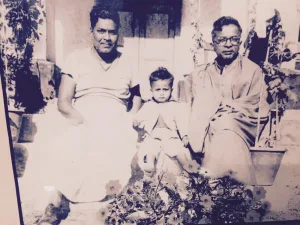
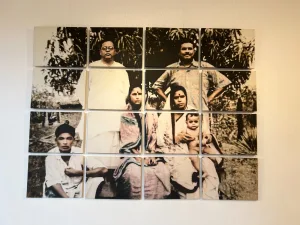
In orchestrating পথের দেবতা-The God of the Little Road, Trinankur Banerjee, the grandson of Bibhutibhushan Bandhopadhyay, undertakes not merely the role of a curator but that of a quiet interlocutor between memory and modernity. As a direct descendant of Bibhutibhushan Bandopadhyay, his engagement bears the quiet weight of inheritance. His transforms the exhibition into a reflective terrain rather than a didactic archive. Through this the world of Pather Panchali is not revisited as nostalgia, but re-experienced as a living sensibility which is timeless and quietly radical. It transforms into a living, intergenerational space of learning, inviting students, scholars and visitors alike to engage with literature beyond the printed page, while ensuring that Bibhutibhushan Bandopadhyay’s legacy continues to resonate with renewed vitality.
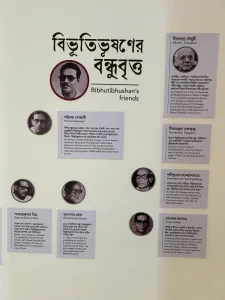
This is not merely an exhibition; it is an immersive chronicle that brings the life of Bibhutibhushan Bandopadhyay vividly before its viewers. Beginning with the journey of his father and tracing the formative years of Bibhutibhushan himself, the curation delicately unfolds moments both intimate and profound, his first earnings, the strings of first love, and the grief of his sister’s death and the haunting memory of witnessing an untimely demise. The exhibition further reveals deeply personal artefacts: letters written to his wife, garments once worn by the author and his spouse and the objects of quiet, everyday significance that he cherished. Equally evocative is the portrayal of his sudden passing at the age of fifty-six, alongside a thoughtful presentation of his lesser known creative pursuits.
Photo: SNS
When Readers Meet the Writer – Visitors Share Their Emotional Resonance
Visitors interviewed at the exhibition expressed overwhelming joy and excitement at witnessing such an initiative. For many, Bibhutibhushan Bandopadhyay is a deeply cherished writer, intimately tied to their childhood memories, beloved stories and enduring sense of nostalgia
Aparajita Basu a visitor remarked: “I am quite astonished to see that since Trinankur has curated this exhibition; elements of world history have also been incorporated allowing the visitors to gain a deeper insight into Bibhutibhushan especially the lesser known aspects of his life. Even those who have not read him before or the ones, who are curious to learn about him, can comprehend and appreciate his work through this exhibition.”
Another lady who is a professor from the Jadavpur University remarked: “There is a strong sense of nostalgia at play. Having grown up reading Bibhutibhushan’s works like Chander Pahar, Aranyak, Megh Mallar, Pather Pachali, takes me back to my childhood days while also getting to know Bibhutibhushan Babu more intimately and in a new light and I would like to thank Trinankur for doing such a wonderful job.”
Photo: SNS
Not an End, But an Echo
Spanning works from Pather Panchali to Aranyak, it captures the rhythms of rural Bengal and philosophical depth that underlies his engagement with memory, environment and existence. The first initiative of its kind in the city, the exhibition not only celebrates his genius but also recontextualizes his legacy within contemporary discourses of mythology, belonging and Bengal’s emotional geography through manuscripts, archival material and visual interpretations.
As the exhibition continues over its thoughtfully curated twenty-one-day span, it transcends the boundaries of a mere cultural event to become a sustained dialogue between past and present. In reanimating the life and legacy of Bibhutibhushan Bandopadhyay, and Mirchi Bangla plays a pivotal role in this. There exists a unique and enduring association between Sunday Suspense of Mirchi Bangla and Bibhutibhushan Bandopadhyay. Over the course of these 21 days, marked by the presence of eminent personalities, literary events, and engaging quizzes, everyone is warmly welcomed to immerse themselves in the life and works of Bibhutibhushan Bandopadhyay.
Photo: SNS
It is, above all, an invitation to every lover of literature, to come together and celebrate once again the legacy of a writer whose words continue to resonate across generations.
The organizer and the curators noted during the interview that the festival’s strength lies in its ability to engage a loyal audience with topics ranging from the Partition to the nuances of Gen-Z culture, effectively blurring the lines between high art and popular discourse.
At a time when India’s rural legacies risk being eclipsed by the noise of hypermodernity, the Kolkata Centre for Creativity (KCC) opened a window to the past, one that feels startlingly alive.
Winters are the hottest season of cultural activities in India, wherein traditional art forms take the lead. This year quite a few brilliant musicians' artistry left a deep impact.