Weather came in the way of tourists visiting Taj Mahal on New Year Day
A large number of tourists came to see the Taj Mahal on New Year's Day but the weather did not allow them to fulfill their wish
As the New Year approaches, we stand once again at that familiar dawn—ready to leave behind what weighed us down and eager to begin afresh.




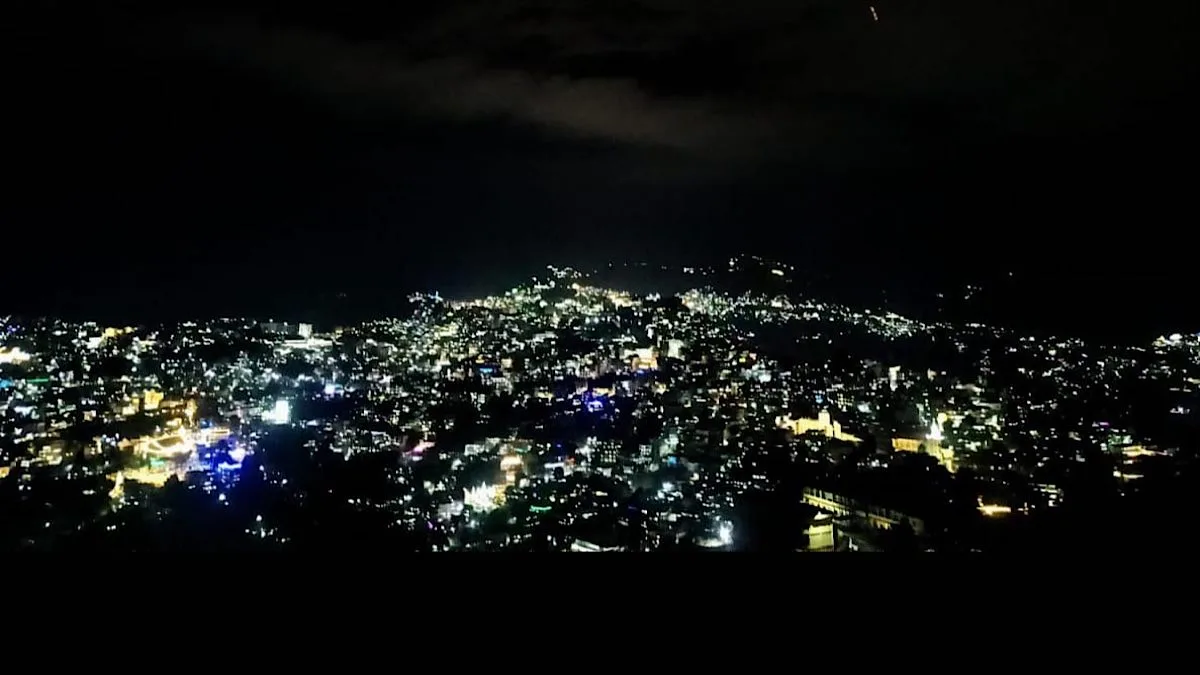
*Picture Credit:* Panaromic View clicked by Author on Last NewYear Eve 2025 from Aizawl Peak
As the New Year approaches, we stand once again at that familiar dawn—ready to leave behind what weighed us down and eager to begin afresh. Ready to bring new resolutions like every year: to be healthier, kinder, more successful, more fulfilled. Most of these promises are deeply personal, rooted in self-improvement and individual growth. Yet, as 2026 begins, perhaps it is time to ask a different question: What if our resolution was not only personal, but collective?
Imagine a society where responsibility is shared, where trust is not an exception but a habit, and where civic sense flows naturally from human values. In fact, it already exists— quietly offering lessons to the rest of the country.
Advertisement
Aizawl, the “city of clouds” known for its breath-taking hills and serene silence, but its true beauty lies in something less visible: its everyday ethics. In a world grappling with mistrust, misinformation, and inexorable speed, Aizawl stands as a reminder that humanity survives through trust.
Advertisement
Living in Aizawl reshaped my understanding of faith in others in ways no formal lesson ever could. The city does not lecture about values; it practises them. Built across steep hills, Aizawl does not permit haste. Stairways replace straight roads, and every movement requires attention. Initially, the terrain feels demanding. Gradually, it becomes instructive. One learns to slow down, to notice others, and to share space carefully. Even geography teaches restraint.
What struck me most was how naturally trust operated. Online orders could be left unattended at the Mizoram University gate for hours—sometimes the entire day. There was no anxiety, no repeated phone calls, no fear of loss. The assumption was simple: it would remain safe. And it did. Trust here was not extraordinary; it was ordinary.
This same ethic shaped daily life. Asking for a lift never felt awkward, and offering one never required calculation. People stopped without suspicion, helped without hesitation, and moved on without expectation. These were not grand gestures of kindness. They were quiet habits, repeated daily and woven into the rhythm of life.
Public spaces reflected this sensibility. Vehicles yielded easily. Horns were rare. Pedestrians moved without fear. Silence did not feel empty; it felt shared. Social order was not imposed through constant surveillance or enforcement. It emerged naturally from mutual respect. The hills slowed the body, and with it, the impulse to dominate space.
Evenings in Aizawl remain etched in memory. As dusk settled, lights appeared gradually across the slopes—home after home, window after window—until the hills glowed softly. From across the valley, it felt as though the city was breathing together. No single light demanded attention. Each simply announced presence and belonging. This New Year, I miss those glowing hills—not out of nostalgia, but for the reassurance they carried.
And then there were the vegetables.
Outside many homes, small baskets of fresh produce were placed without signs, prices, or explanations. Anyone could take what they needed. Giving was quiet. Receiving was dignified. Trust held both sides with grace.
Care in Aizawl was never performative. Streets stayed clean because they were shared. Food circulated easily between households. Help often arrived before it was asked for. Faith in others was not naïve; it was practised daily, strengthened through repetition, and sustained by community.
Being away this New Year sharpens the lesson Aizawl offered. In a world increasingly shaped by suspicion, speed, and self-preservation, this way of life feels almost radical. Yet it rests on something profoundly simple: the belief that most people, when trusted, will respond with care.
As we step into 2026, perhaps the resolution we need is not louder ambition or grander promises, but quieter faith—to help without calculation, to trust without constant fear, and to move gently through shared spaces.
Aizawl reminds us that humanity does not survive through declarations or displays. It survives through everyday trust. That may be the most meaningful New Year resolution we can make—not only to better ourselves, but to rebuild faith in one another.
The writer is an Assistant Professor in Visual Communication, SRM University, Tamil Nadu
Advertisement