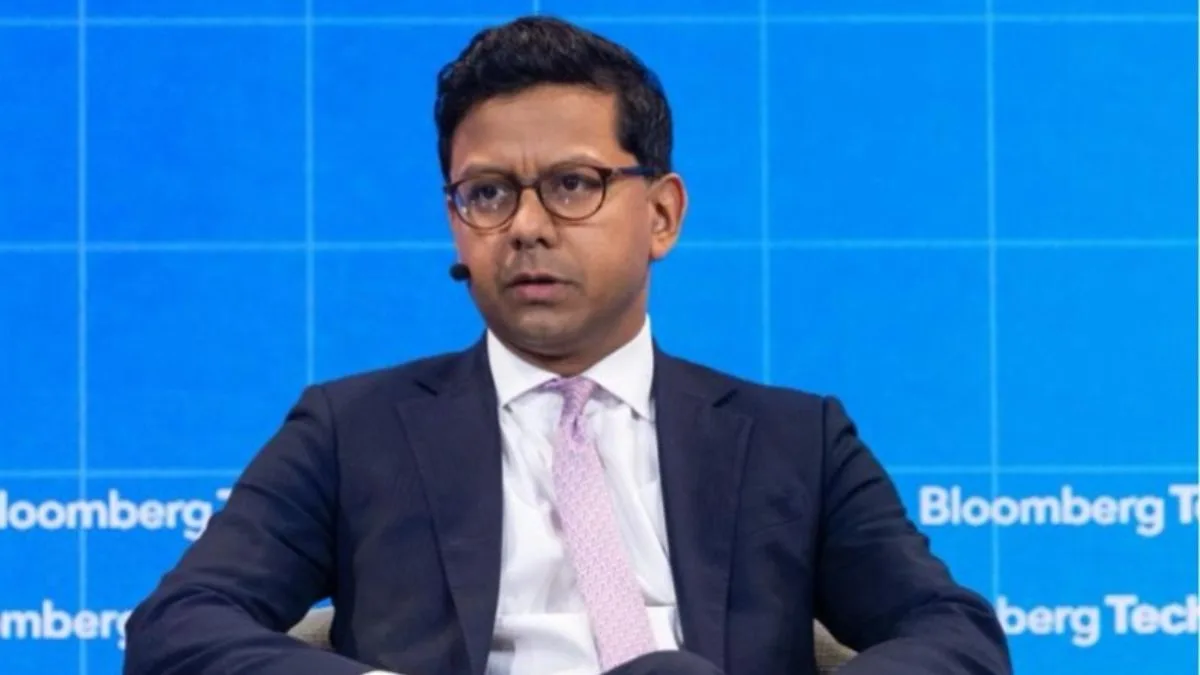
Many people in India may not be familiar with Sujeet Kumar, who was re-nominated to Rajya Sabha from Odisha under the BJP’s banner. He was earlier elected to the Rajya Sabha from BJD, in 2020. In 2024, he resigned from BJD and joined BJP which renominated him to Rajya Sabha for the remainder of his scheduled tenure.
When notification for four vacancies from Odisha in Rajya Sabha were issued in February of this year, political pundits from Odisha were at their wits end as to who the four would be from BJP and BJD. Odisha BJP President Manmohan Samal and Sujeet Kumar were elected from BJP while Santurpta Mishra was elected from BJD.
Advertisement
The fourth seat, however, went to former Union Minister Dilip Roy who contested as an independent candidate with support of BJP. In an interview with Rup Narayan Das, who writes for The Statesman and is a Delhi based scholar and writer, Sujeet Kumar unravels his political journey and his thoughts and ideas of political churning.
Q: Could you please share details of your foray into politics and your educational background?
A: I grew up in Kalahandi district of Odisha, where I completed my schooling. From there, I pursued Engineering and began my professional journey with Infosys Technologies Ltd. after completing my Bachelor’s degree. However, I soon realized that corporate life did not align with my deeper aspirations. Driven by a desire to work more closely with communities, I left Infosys and joined a non-governmental organization in rural Odisha, where I spent about two and a half years working on community livelihood projects. This experience was transformative, as it gave me firsthand exposure to grassroots realities and strengthened my commitment to inclusive development. In 2004, I went on to pursue an MBA at the Saïd Business School, University of Oxford, after being awarded the prestigious Skoll Scholarship for Social Entrepreneurship. Following my MBA, I joined the World Economic Forum (WEF) in Geneva, where I gained valuable global exposure and insights into international development and policy. In 2010, I further strengthened my academic and policy background by pursuing a Master in Public Administration (MPA) at the Harvard Kennedy School. I returned to India in 2011 with a clear sense of purpose and transitioned into public life/politics.
Q: You belong to Kalahandi district of Odisha which was infamous for poverty and hunger. Has the situation improved there?
A: Undivided Kalahandi, until the 1980s, faced severe agrarian distress due to frequent monsoon failures. Over 90 per cent of the population depended on sustenance farming, with almost no irrigation facilities and no alternate livelihood. Change began in the 90s when irrigation projects like the Indravati Dam project, were initiated, to reduce dependency on monsoon. Connectivity and irrigation were expanded further in subsequent years. Today Kalahandi has good canal networks and is amongst the top contributors to the state’s PDS. Prime Minister Atal ji’s Pradhan Mantra Gram Sadak Yojana (PMGSY) was also a game-changer as it connected hitherto remote villages to the mainstream.
Q: Before joining politics, you worked with the Government of Odisha in the State Planning Board in a senior position. How was your experience?
A: My experience with the Odisha State Planning Board from 2016 to 2019 was both enriching and formative, as it gave me a deep insight into the complexities of governance and policy formulation at the state level. Working closely with different departments and the Chief Minister’s Office (CMO), I had the opportunity to contribute to the planning process across key sectors such as infrastructure, social development, agriculture, and industrial growth. It was a period that helped me develop a strong foundation in public policy, evidence-based decision-making, and administrative coordination. This experience has significantly shaped my approach in public life, enabling me to bring a more informed, pragmatic, and solutions-oriented perspective to my work in politics.
Q: How was your equation with Naveen Patnaik and why did you leave BJD and join BJP?
A: I have always had very high regard for Sri Naveen Patnaik, and I have always maintained by deepest gratitude to him for sending me to Parliament in 2020. My decision to leave BJD was not an easy one, but one which I had to take due to some reasons which I would not like to discuss here.
Q: You were one of the youngest chairmen of the Committee on Petitions of Rajya Sabha. Could you please elucidate the role of the Committee your achievement there?
A: The Committee on Petitions plays a vital role in strengthening participatory democracy by providing a structured platform for citizens to directly raise their concerns, grievances, and suggestions before Parliament. The primary function of the Committee is to examine petitions presented or referred to it, which may relate to pending legislation, matters of public interest, or issues requiring policy intervention. After a detailed examination, the Committee makes recommendations to the government, thereby acting as an important bridge between citizens and the executive. During my tenure, I focused on making the Committee more responsive, accessible, and outcome-oriented. One of our key achievements was enhancing the visibility and effectiveness of the Committee’s recommendations. We also emphasized transparency and accountability, ensuring that the Committee’s work translated into tangible governance outcomes. For instance, the Committee actively engaged with the Finance Ministry to reduce GST on cancer and other life-saving drugs, and with various Ministries for rejuvenating our water bodies.
Q: Did you ever expect to get nominated to Rajya Sabha from Odisha considering that many BJP leaders from State were aspirants?
A: Honestly, I see this not as a matter of personal expectation, but as a responsibility entrusted to me by the leadership of the Bharatiya Janata Party. I am deeply grateful and humbled by the confidence reposed in me.
Q: You have been a strong supporter of both Tibet and Taiwan. How you explain your interest and concerns for these two political entities. How can India calibrate its relationship with both Tibet and Taiwan in view of its ‘One China Policy’?
A: India’s approach to both Tibet and Taiwan has always been guided by a careful balance of its civilizational values, strategic interests, and commitment to regional stability. My interest in Tibet stems from its deep historical, cultural, and spiritual links with India. The presence of His Holiness the Dalai Lama and the Tibetan community in India is not just a political matter, but a reflection of India’s long-standing tradition of offering refuge and upholding human dignity. Supporting the preservation of Tibetan culture, identity, and religious freedom is consistent with India’s values, and it is rather concerning to see the cultural genocide that PRC has unleashed on Tibetan culture and identity. I think the whole world needs to call out China for this. With regard to Taiwan, India’s engagement has been pragmatic and forward-looking. While India adheres to the One China policy, it has steadily expanded economic, technological, and people-to-people ties with Taiwan in areas such as trade, education, and innovation. Taiwan is an important partner in global supply chains, particularly in high-technology sectors, and maintaining robust engagement serves India’s developmental and strategic priorities.