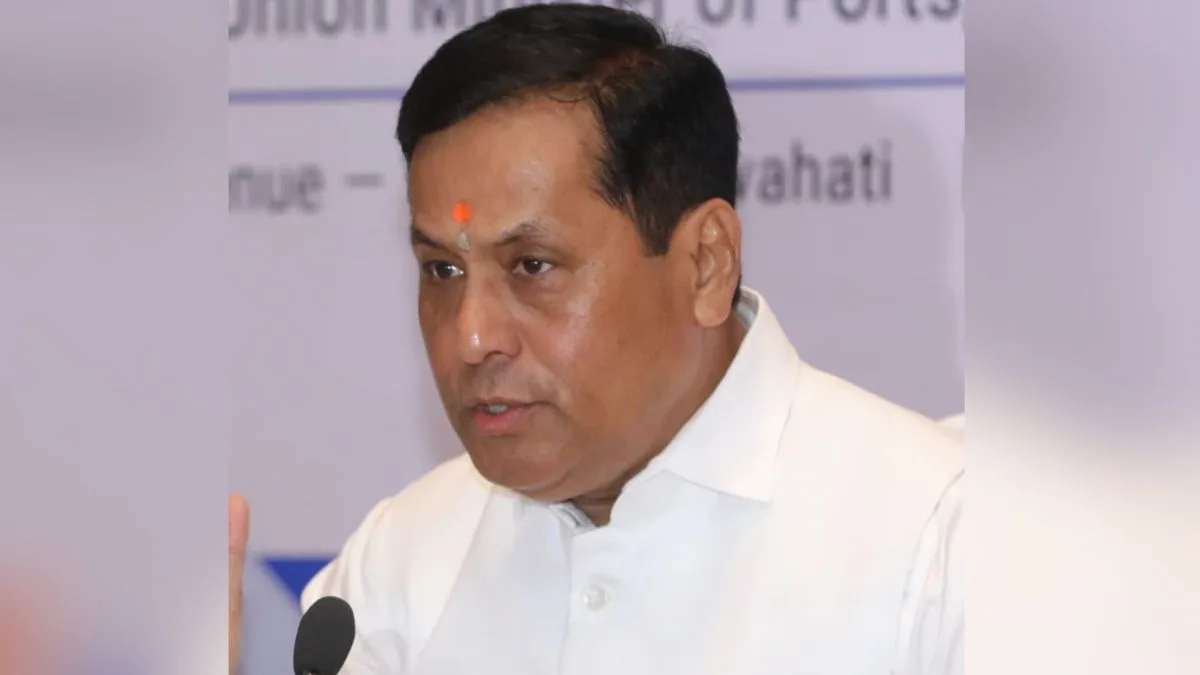
Sarbananda Sonowal, Union Minister for Ports, Shipping and Waterways and senior BJP leader from Assam, wears two hats with ease—championing national maritime reforms while looking after the Northeast’s development.
In a conversation with Abhijit Deb of The Statesman, he speaks about balancing local aspirations with national responsibilities, expanding inland waterways in Assam, aligning maritime infrastructure with India’s global ambitions, and deepening strategic partnerships with Japan.
Advertisement
Question: As a senior BJP leader from Assam and currently Minister for Ports, Shipping and Waterways, how do you balance the expectations of local constituents from Northeast India with your national-level ministerial responsibilities?
Our region — the Northeast — is rich with potential and possibilities. Prime Minister Narendra Modi ji has recognised this, and under his dynamic leadership, the government has been working relentlessly to realise them.
For far too long, our beautiful region was neglected, especially during the Congress regime. Our riches lay in ruins, and our possibilities went in vain. However, this changed under the BJP-led NDA governments. As a member of this government, my intent aligns with its broader vision — to power the engine of growth in the region and strengthen the Act East Policy.
Our goal is to build a prosperous Northeast by unearthing opportunities and unlocking its immense potential. As a son of the soil, I commit myself to the welfare of the people and do utmost to fulfil their expectation in line with the cause of nation building.
Question: As a member of the Cabinet Committee on Political Affairs (CCPA), what issues are you championing to ensure that maritime infrastructure aligns with broader political-economic strategies, both domestically and with neighbouring coastal countries?
The development of maritime infrastructure is crucial for advancement of national growth, and regional cooperation. Our work like modernisation of port along with port led development initiatives, enabling coastal connectivity, empowering inland waterways and green shipping are in sync with our nation’s broader political-economic strategies.
By emboldening the maritime sector, India aims to become a top maritime nation globally so that the Viksit Bharat is also an Atmanirbhar one when it comes to supply chain management.
By boosting trade, commerce, security and resilience, the maritime sector brings synergy to an integrated approach that not only drives economic development but also strengthen’s our global position through maritime diplomacy and regional leadership.
Question: You recently addressed newly elected panchayat representatives in Assam, urging them to uphold Viksit Bharat 2047. How do you ensure that infrastructure projects translate into tangible benefits at the grassroots level in rural areas?
Panchayat representatives are the backbone of rural transformation, of India’s democracy. By empowering them with resources, training, and decision-making authority, we ensure that infrastructure projects meet local needs effectively.
Every initiative—be it roads, digital connectivity, education, irrigation, or healthcare—is aligned with grassroots priorities. Guided by Prime Minister Narendra Modi ji’s vision of inclusive development, we are converging central and state schemes to ensure last-mile delivery and real impact. This bottom-up approach is key to realising the Viksit Bharat 2047 vision, where rural India stands at par and the crucial pillar of an Atmanirbhar Bharat.
Question: With speculation about Assam assembly polls ahead, what are the BJP’s strategies in the Northeast, and do you foresee any return to state political leadership for yourself as the party prepares for a third consecutive term?
Our party’s strategy is very clear — to build a new Bharat: a Viksit Bharat, an Atmanirbhar Bharat. This vision can only be realised when we have a Viksit Assam and an Atmanirbhar Assam. Every state must reach this stage for India to emerge as a strong, self-reliant nation powered by innovation-driven development.
We aim to achieve this by reinventing governance through the principle of maximum governance, minimum government. Our focus is on broad-based economic empowerment across all sections of society, transforming India into an open, competitive, and opportunity-driven economy.
By strengthening independent institutions and upholding the Rule of Law, we are reforming governance to align with people’s aspirations and minimise corruption. Through investments in education, skill development, and healthcare, we are empowering society and laying the foundation for rich social development and stronger human capital.
Question: The central government has invested over ₹44,859 crore in more than 3,600 projects across the Northeast over the past decade. Can you detail the key achievements so far under your ministry and how they have enhanced regional connectivity?
As per the National Waterways Act 2016, 20 rivers of NER have been declared as National Waterways (NWs). Out of these 20 NWs, 04 NWs viz. i) River Brahmaputra (NW-2), ii) River Barak (NW-16), iii) River Dhansiri (NW-31) & iv) River Kopili (NW-57) are being developed for movement of Cargo. The other National Waterways are being developed as per the projects proposals received from the concerned States under Central Sector Scheme for NER.
Inland Waterways has major projects in the Northeast. A ₹ 5,000 crore roadmap is planned over the next five years. On NW-2 (Brahmaputra), four permanent terminals—Dhubri, Jogighopa, Pandu, and Bogibeel—and 13 floating terminals are supported by fairway and navigation upgrades. A ₹ 208 crore ship repair facility at Pandu and a ₹180 crore alternative road are set for completion by 2026 and 2025, respectively.
On NW-16 (Barak), terminals at Karimganj and Badarpur are active, while NW-31 (Dhansiri) is being developed to support NRL’s expansion.
By strengthening urban water transport through water metro projects and promoting eco-friendly cruise tourism, we are paving the way for a cleaner, greener future in inland waterways transportation. Urban Water Transport on the lines of the Kochi Water Metro is being planned in Guwahati, Tezpur and Dibrugarh.
The Regional Waterways Grid aims to seamlessly connect Assam and the Northeast with the rest of India through an integrated network of inland waterways.
This will boost regional trade, tourism, and connectivity while unlocking economic potential across the Brahmaputra and Barak River systems.
Government is also working on a ₹5,000 crore roadmap for Inland Waterways Development in Northeast Over Next 5 Year.
Six projects worth Rs 763 crore have been incorporated under the Sagarmala Programme for the development of inland water transport (IWT) infrastructure on National Waterways in the northeastern region.
Rs. 461 crore has been allocated for the comprehensive development of National Waterway (NW)-2 (the Brahmaputra river), Rs 103 crore for the multimodal terminal at Pandu across NW-2, Rs 48 crore for the intermodal terminal at Dhubri across NW-2, Rs 3 crore for the intermodal terminal at Badarpur across NW-16, Rs 3 crore for the intermodal terminal at Sribhumi across NW-16, and Rs 145 crore for the comprehensive development of NW-16 (the Barak river) and the Indian portion of the Indo-Bangladesh route.
Question: Could you elaborate on the “One Nation–One Port” process and how it is expected to streamline port operations and improve ease of doing business in India?
The Ministry of Ports, Shipping and Waterways launched ‘One Nation One Port Process (ONOP)’ initiative which focuses on mapping and standardizing port processes and documentation.
This involves conducting a comprehensive review of the existing procedures and documents exchanged within the port value chain across all major ports which cover various cargo types, including containers, dry bulk, and liquid bulk, as well as different movement categories such as export-import, transshipment, and coastal operations.
The implementation of ONOP initiative will reduce the processing time of documentation which will lead to a reduction in logistics cost.
The Ministry of Ports, Shipping and Waterways has prioritized the digitization and automation of port processes and documentation through the National Logistics Portal – Marine (NLP-Marine) which also integrates the Enterprise Business System (EBS) as the port operating system.
A review has been conducted to assess the implementation of ONOP initiatives at major ports which showed substantial improvement in port process documentation.
Ministry of Ports, Shipping and Waterways has taken various steps to enhance efficiency and competitiveness of ports in maritime sector which include development of new ports, terminals and berths, modernization, mechanization, digitalization, development of connectivity infrastructure for road and rail etc.
Further, “Sagar Aankalan” guidelines have been launched by the Ministry for enhancing efficiency and competitiveness of Indian ports in the global maritime sector.
Significant features of One Nation One Port Process Documentation (ONOP)
* Standardize and harmonize port processes across all major ports in India.
* Eliminate inefficiencies and inconsistencies arising from local considerations and legacy systems.
* Reduce variability in operational procedures impacting trade efficiency.
* Standardization of documentation with Immigration, Port Health Organization, and Port Authorities.
* Reduction of container operation documents by 33% (from 143 to 96) and bulk cargo documents by 29% (from 150 to 106).
* Simplification of processes to enhance efficiency, reduce complexity, and improve trade competitiveness.
* Enhanced operational efficiency and cost reduction in cargo handling.
* Faster clearance and streamlined workflows benefiting shipping agents, customs authorities, and government agencies.
* Strengthen India’s position as a global maritime hub, aligned with the Maritime Amrit Kaal Vision 2047.
* Commitment to continuous process optimization, transparency, and efficiency.
Question: During your recent engagement with Japan’s Vice Minister, both countries agreed to deepen maritime relations. What specific areas of collaboration—such as shipbuilding, port digitisation, or skill development—are being prioritised under this partnership?
India and Japan have had discussions on multiple levels on various aspects of shipbuilding, specifically around green/ eco-friendly ships. Indian shipyards are keen to partner with leading Japanese shipbuilders—such as Imabari Shipbuilding, JMUC, Kanagawa Dockyard, and Mitsubishi Heavy Industries and can explore joint ventures and collaborative arrangements.
Japan may also look to employ skilled Indian seafarers, tapping into India’s pool of over 1.5 lakh trained maritime professionals. Joint training programs and certification pathways are being considered by both nations.
Indian and Japanese industry and academia can work together in areas of ship design and R&D.