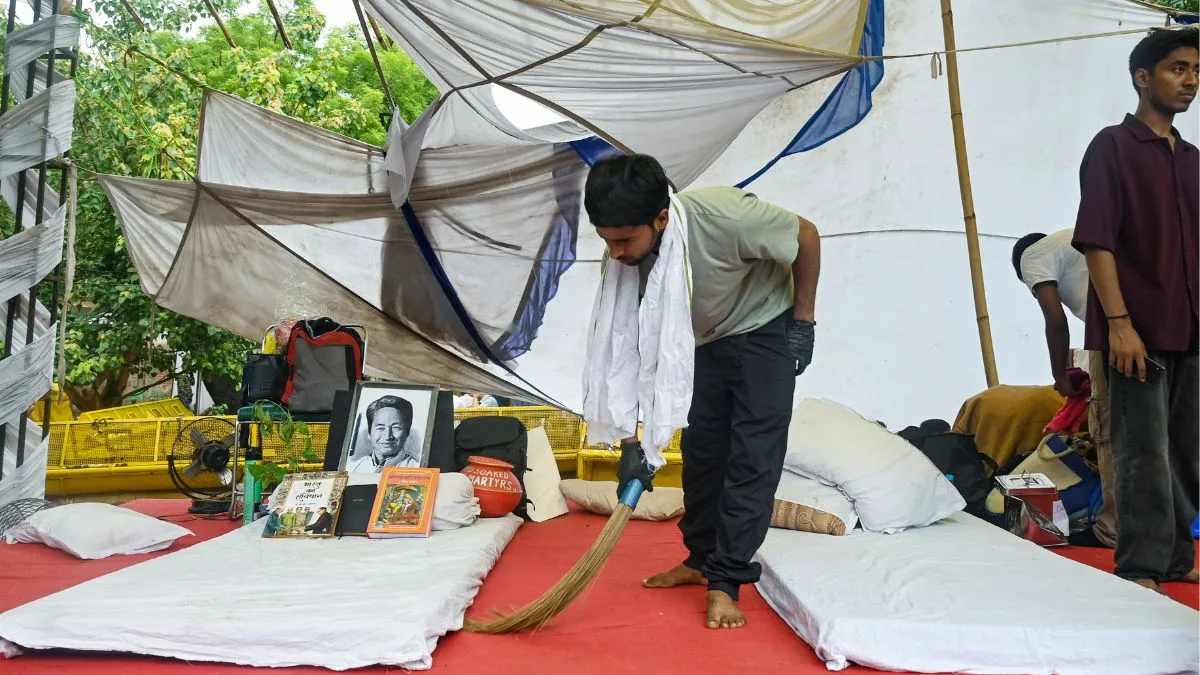
Under the Bharatiya Janata Party’s Pandit Deendayal Upadhyaya Training Mega Campaign, night-stay training camps were organised in 79 mandals on Saturday as part of the second phase of the Delhi BJP’s mandal-level training programme.
Guided by Delhi BJP president Virendra Sachdeva and conducted under the supervision of campaign convenor and MP Kamaljeet Sehrawat, state office-bearers and senior leaders participated as keynote speakers in training sessions organised across several mandals in the city.
Advertisement
As part of the campaign covering 79 mandals across 13 organizational districts of Delhi, Sachdeva primarily addressed the training camp in New Ashok Nagar.
Sehrawat addressed training camps in Moti Nagar and Karol Bagh, while former Delhi BJP president Satish Upadhyay spoke at camps in Tughlaqabad Extension and RK Puram.
Delhi Mayor Sardar Raja Iqbal Singh addressed workers in Burari and Sant Nagar mandals and Delhi BJP media head Praveen Shankar Kapoor addressed camps in Rajnagar and Vasant Kunj.
During the sessions, speakers interacted with party workers on the history and evolution of the BJP from the Jan Sangh era, the party’s organizational structure and working methodology, its ideological foundations, the concept of Antyodaya to saturation, and the achievements of BJP-led governments.
Sachdeva said that Pandit Deendayal Upadhyaya’s philosophy of Integral Humanism emphasizes the holistic development of every section of society, and the BJP is working towards nation-building based on this ideology.
He added that both the government led by former Prime Minister Atal Bihari Vajpayee between 1999 and 2004 and the government under Prime Minister Narendra Modi since 2014 have drawn inspiration from Pandit Deendayal Upadhyaya’s philosophy of Integral Humanism.
On the occasion, Sachdeva urged party workers to remain committed to the party’s ideology, discipline and spirit of public service.
He said trained workers play a crucial role in building a strong and effective organisation.
Through training programmes, he noted, party workers gain a deeper understanding of the party’s policies, programmes and functioning, enabling them to engage more effectively with the public.