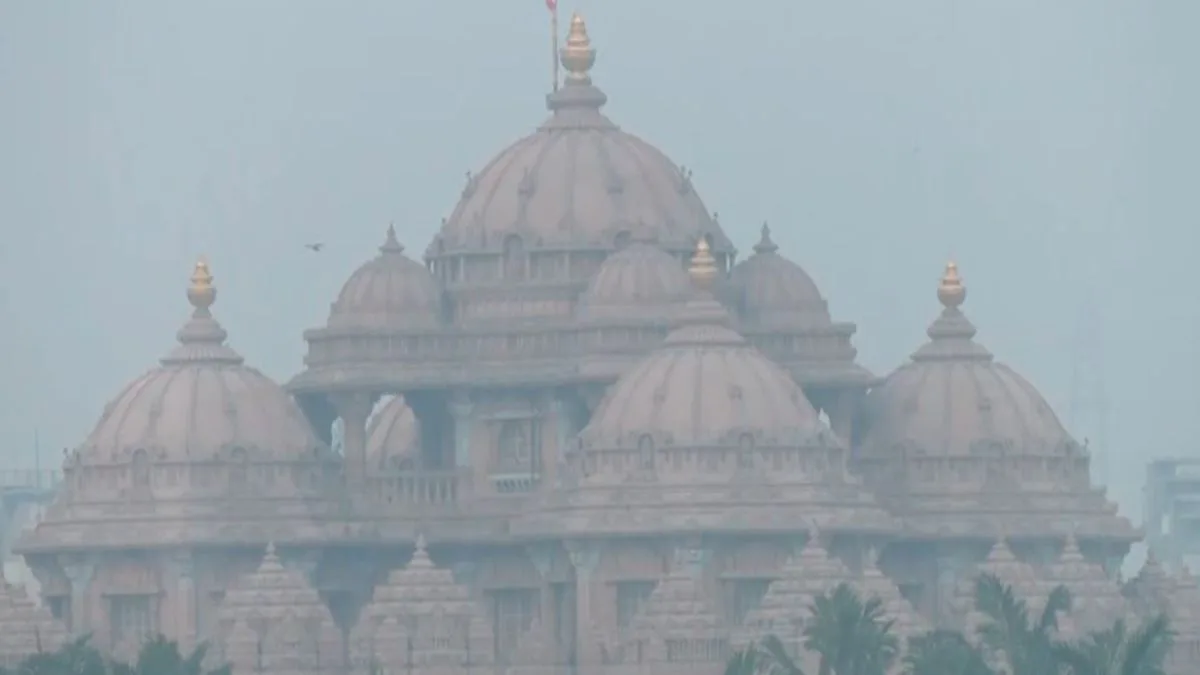
Residents of Delhi-NCR have been waking up to smog-laden mornings in recent days as stagnant winds, falling temperatures, road dust, and emissions from bumper-to-bumper traffic continue to choke the city’s air amid the festive rush.
Over the past 24 hours, air quality in the National Capital Region has deteriorated further, with Ghaziabad recording the worst levels in the country. The city’s Air Quality Index (AQI) rose sharply to 324 — deep in the ‘very poor’ category — according to data from the Central Pollution Control Board (CPCB). Noida followed closely, registering values at the upper end of the ‘poor’ category.
Advertisement
While Delhi, Gurugram, and Greater Noida fared only slightly better on Saturday, their AQI values stood at 268, 258, and 248 respectively — all in the ‘poor’ category as of 4 p.m. Faridabad, meanwhile, recorded a comparatively better AQI of 190, falling in the ‘moderate’ range.
Experts from the Air Quality Early Warning System have forecast that pollution levels are likely to worsen further after Diwali.
“The air quality is very likely to be in the ‘poor’ category on October 18, in the upper end of the ‘poor’ category on October 19, and in the upper end of the ‘very poor’ category on October 20. It may reach the ‘severe’ category on October 21 in case of enhanced emissions from firecrackers,” the statement said.
According to data from the Decision Support System for Air Quality Management in Delhi, the contribution of stubble burning to the capital’s pollution is expected to rise over the next few days, hovering between 2 and 5 per cent on Monday and Tuesday.
Transport emissions remain among the top contributors, accounting for nearly 16 percent of Delhi’s pollution on Saturday, a trend likely to continue in the coming days, the data showed.
Meanwhile, the weather department has predicted smog and shallow fog across the capital over the next five days, with feeble western disturbances expected from Tuesday onwards