Kolkata pavements to be free of hawkers soon: Dilip Ghosh
Dilip Ghosh said that the pavements and footpaths in the state should be freed for the pedestrians as they pay tax to the government or civic bodies.
The bill further proposes that financial liability would not be restricted only to those directly involved in acts of destruction.




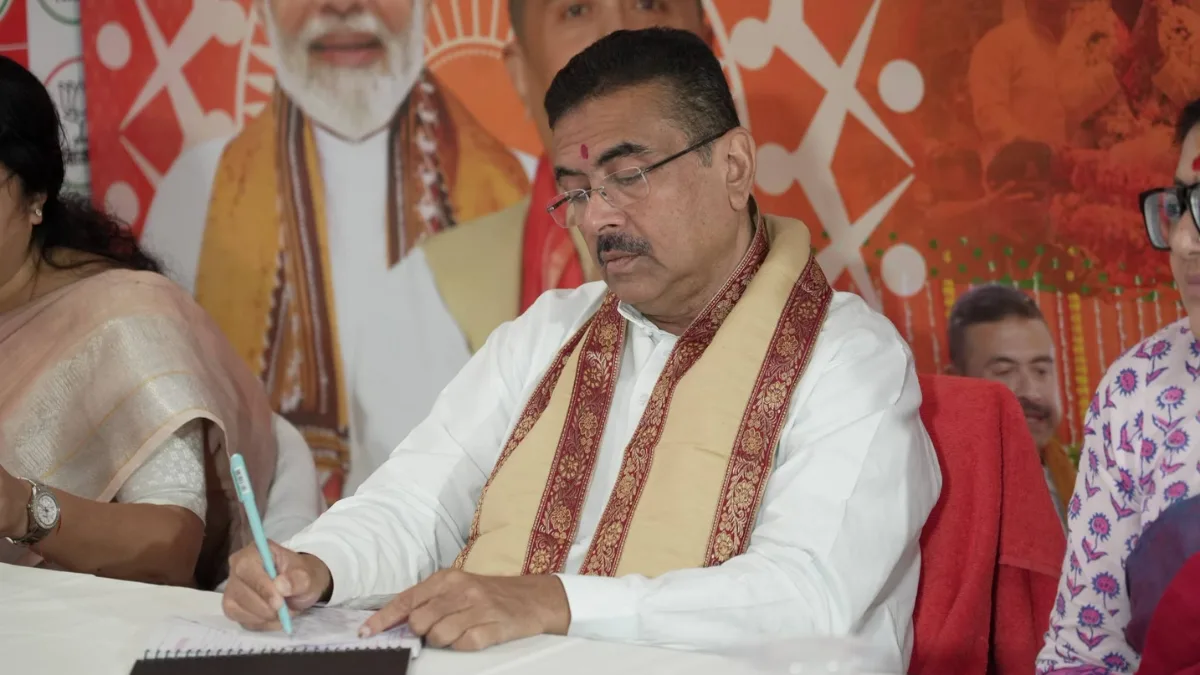
Photo: Facebook
The Suvendu Adhikari government in West Bengal seems to have taken a leaf straight out of Uttar Pradesh’s playbook and is all set to introduce a stricter legal framework that would allow authorities to recover compensation directly from accused persons for damage caused to public and private property.
In an effort to hold those involved in violent protests, riots, political demonstrations and acts of vandalism accountable, these proposed changes would permit the recovery of dues with interest and empower the administration to collect unpaid amounts through mechanisms similar to land revenue recovery.
Advertisement
The West Bengal Maintenance of Public Order (Amendment) Bill, 2026, which is scheduled to be tabled in the Assembly on Monday, if passed, would provide for the establishment of an independent Claims Commission to determine the extent of losses caused during incidents of violence, identify those responsible and fix compensation liabilities.
Advertisement
The proposed legislation mentioned that compensation claims may be raised in cases involving arson, vandalism, sabotage, unlawful assembly, riots, mob violence, protests and incidents leading to public disorder that result in damage to public or private property.
The ambit of the law would include roads, bridges, government offices, buses, trams, hospitals, educational institutions and civic properties, along with shops, homes, factories, business establishments and other privately owned assets.
The bill further proposes that financial liability would not be restricted only to those directly involved in acts of destruction.
Individuals accused of organising, instigating, funding, supporting or providing shelter to those involved in such incidents could also be held liable for compensation.
Government departments and agencies would be required to submit reports on damage to district authorities, based on which compensation claims would be placed before the proposed commission.
Private individuals whose properties suffer damage would also be allowed to directly approach the commission seeking compensation.
The proposed Claims Commission would be granted powers similar to a civil court, including summoning witnesses, calling for records, examining government documents, inspecting sites and engaging experts to assess damage. Engineers, valuers and other specialists could also be consulted where necessary.
While determining compensation amounts, the commission would consider market value of the property, nature of damage, repair costs, evidence linking accused persons to the incident, photographs, videos, police reports and other relevant materials.
The bill also allows for exemplary damages, which could be imposed in addition to actual losses but would not exceed twice the amount of the original damage.
One of the stricter provisions of the proposed amendment allows the commission to impose simple interest on compensation amounts from the date of filing the claim until the payment is made. Delays in payment would therefore increase the financial burden on those held liable.
The bill also provides that if compensation is not paid as directed, authorities would be empowered to recover the amount in the same manner as arrears of land revenue or government dues.
The compensation process would continue independently even if criminal proceedings related to the same incident are underway.
Advertisement