The Suvendu Adhikari government in West Bengal passed two bills related to Other Backward Classes (OBC) in the assembly on Monday effectively removing the 113 communities who were earlier included under its ambit by the erstwhile TrinamooL Congress government.
The Bharatiya Janata Party (BJP) had claimed that the decision to include these 113 communities by the earlier dispensation was in favour towards a particular community, hinting at the minorities.
Advertisement
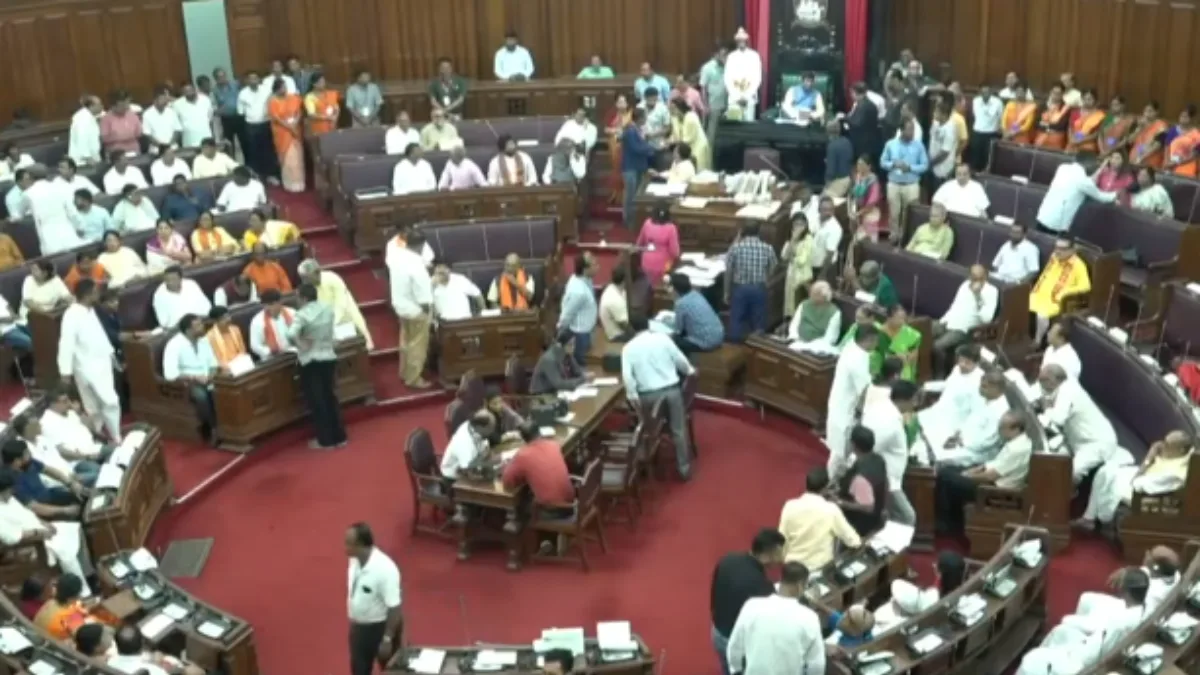
The two Bills namely, The West Bengal Backward Classes (Other than SC and ST) Reservation of Vacancies in Services and Posts Amendment Bill, 2026′ and the West Bengal Backward Classes Commission (Amendment) Bill, 2026 was passed by a majority, with 186 votes in favor, 17 against, and six members abstaining.
The Bill introduced by State Backward Classes Welfare Minister Gourishankar Ghosh mentioned that 63 communities were included in the list in 1993 in accordance with the prescribed criteria. He said that the current amendment retains these 63 communities, in line with those recommendations.
“During the tenure of the previous government, there were instances of extreme nepotism and deprivation regarding the inclusion of groups in the OBC list. People belonging to truly backward classes, particularly the marginalised sections of the Hindu society, had been deprived of their legitimate rights. This new amendment bill aims to put an end to that deprivation,” Ghosh said while tabling the Bill.
Moreover, the Bill contains a provision to raise objections to inclusion or exclusion of any community in the Backward Classes Commission’s list.
A heated debate between the ruling and opposition parties ensued immediately after the bill was tabled. TMC MLAs belonging to the Ritabrata faction staged a walkout, while MLAs from the ‘Kalighat’ faction remained seated.
The ruling BJP claimed that reservation benefits had previously been granted to the minority community while depriving Hindus and these two bill have been brought about to “rectify the errors” made by the Left Front and the Trinamool Congress governments.
It alleged that the erstwhile TMC government passed the Backward Classes Bill in 2012 in a completely unilateral manner depriving the state’s Hindu community of reservation rights and appeasing a specific community.
Indian Secular Front MLA Naushad Siddique opposed the amendment bill and demanded a vote. Assembly Speaker Rathindra Basu acceded to his request.
It should be mentioned that a total of 65 communities fell under Category ‘A’ for OBC reservation while 78 were listed under Category ‘B’, a new segregation that came into place during the TMC regime. The new bill excludes the communities mentioned under Category B.
The Left Front government had introduced OBC reservation in West Bengal following the release of the Ranganath Misra Commission report. Based on the criteria of backwardness, reservation quotas of 10% and 7% were fixed for ‘Category A’ and ‘Category B’, respectively.
Jogesh Chandra Barman, a minister in former Chief Minister Buddhadeb Bhattacharjee’s cabinet, had introduced the bill in 2010. The TMC government amended that bill in 2012.
The BJP maintained that OBC certificates should be issued based on actual social and educational backwardness rather than religion.
Under the new bill, ‘Schedule-1’ that was in place during the erstwhile Left regime (which corresponded to ‘Schedule-2’ in the previous TMC government’s legislation) is being reinstated as ‘Schedule-1’. Meanwhile, ‘Schedule-1’ and ‘Schedule-3’ introduced during the TMC regime are being repealed.
This bill stipulates that the state government will determine the percentage of posts reserved for OBCs in consultation with the Backward Classes Commission. The reservation quota may be increased periodically, provided the total reservation does not exceed 50 percent.
The tenure of the OBC Commission members has been fixed at three years.