Unique tradition of Guptipara follows Puri temple ritual
Every year, the quiet town of Guptipara in Hooghly district transforms into a vibrant centre of devotion and festivity during Rath Yatra, a celebration deeply-rooted in Jagannath culture.
According to scholars, the ceremony stands out as a symbolic expression of communal participation and social solidarity.




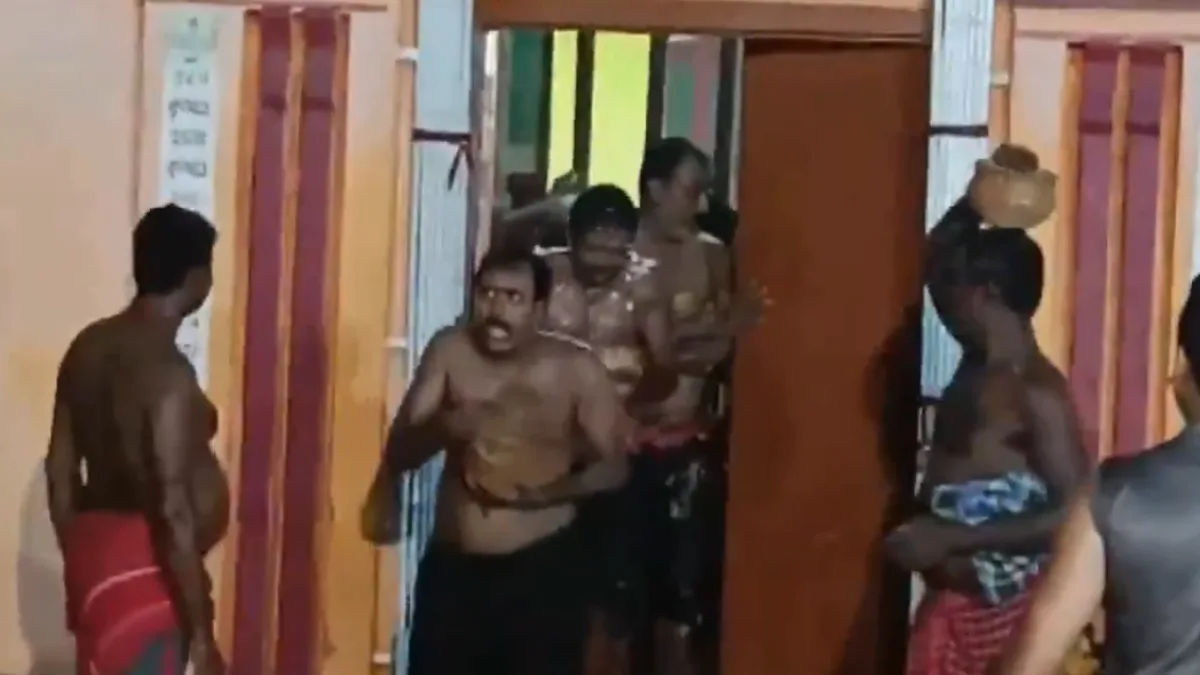
Photo: X/@ANI
As the West Bengal government ramps up its efforts to preserve the state’s religious heritage and support the annual chariot festival, the historic Guptipara Rath Yatra in Bengal’s Hooghly district stands out as one of the state’s most significant traditions.
The Guptipara Rath Yatra traces its origin to 1740 CE, when the Vaishnava saint Madhusudananda started the annual chariot festival centred on Sri Vrindabanchandra Jiu. Unlike the famous Rath Yatra of Puri, the festival in Guptipara is popularly known as the Rath of Vrindabanchandra Jiu, which reflects the distinctive religious identity of the region.
Advertisement
Over the centuries, the festival has evolved into one of Bengal’s oldest surviving expressions of intangible cultural heritage.
Advertisement
Equally distinctive is the celebrated ritual of Bhandar Loot, observed during the return journey of the deities. Local tradition mentions that Lord Jagannath became so delighted with the hospitality at the Gundicha Temple that he was reluctant to return.
This prompted the arrival of Sri Vrindabanchandra Jiu along with his attendants and ceremonially “looted” the divine offerings, giving rise to the unique ritual that continues to this day.
According to scholars, the ceremony stands out as a symbolic expression of communal participation and social solidarity.
As Bengal Chief Minister Suvendu Adhikari has taken the initiative to uphold centuries-old temples and historic Rath Yatras across the state, he has also taken a keen interest in the Bhandar Loot religious ceremony held at Guptipara, a day before the Ulto Rath Yatra.
The Chief Minister is also expected to visit Guptipara on 23 July in the afternoon to participate in the religious ceremony.
Legend states that Lakshmi, the wife of Lord Jagannath, was displeased with His prolonged stay at Mashir Bari and wanted Him to return home. It is believed that when She went there to bring Him back, Jagannath was so engrossed in the lavish feast that he refused to leave.
On her return, Lakshmi came up with a plan. She decided to raid the kitchen of Jagannath’s Mashir Bari with the help of Vrindabanchandra and Krishnachandra. The next day, a group of men armed with sticks stormed the kitchen and looted its stores. Deprived of the grand feast He had been enjoying for a week, Jagannath had no choice but to return home the next day.
Preparations for the Bhandar Loot start with the cooking of bhog behind the temple. The offerings include khichuri, labra, along with an assortment of sweets and fruits. The bhog is then packed into earthen pots, and around 500 pots are placed inside the temple.
Meanwhile, preparations also begin at the Vrindabanchandra Temple Complex. The idols of Radha-Krishna are ceremonially taken out from the Vrindabanchandra and Krishnachandra temples and placed in beautifully decorated palanquins. The deities then proceed to Mashir Bari to symbolically loot the Bhandar.
When the doors of the temple are finally thrown open, men rush inside to collect the bhog stored in the earthen pots. This symbolic ritual is popularly known as Bhandar Loot.
It is believed that the more bhog a devotee is able to collect, the more he is blessed. When the offerings are brought out, they are shared with other devotees who do not take part in this ritual.
After this Bhandar Loot, Vrindabanchandra and Krishnachandra return to their temples. The next day, Lord Jagannath and his siblings make their journey back home in the Ulto Rath Yatra.
Advertisement