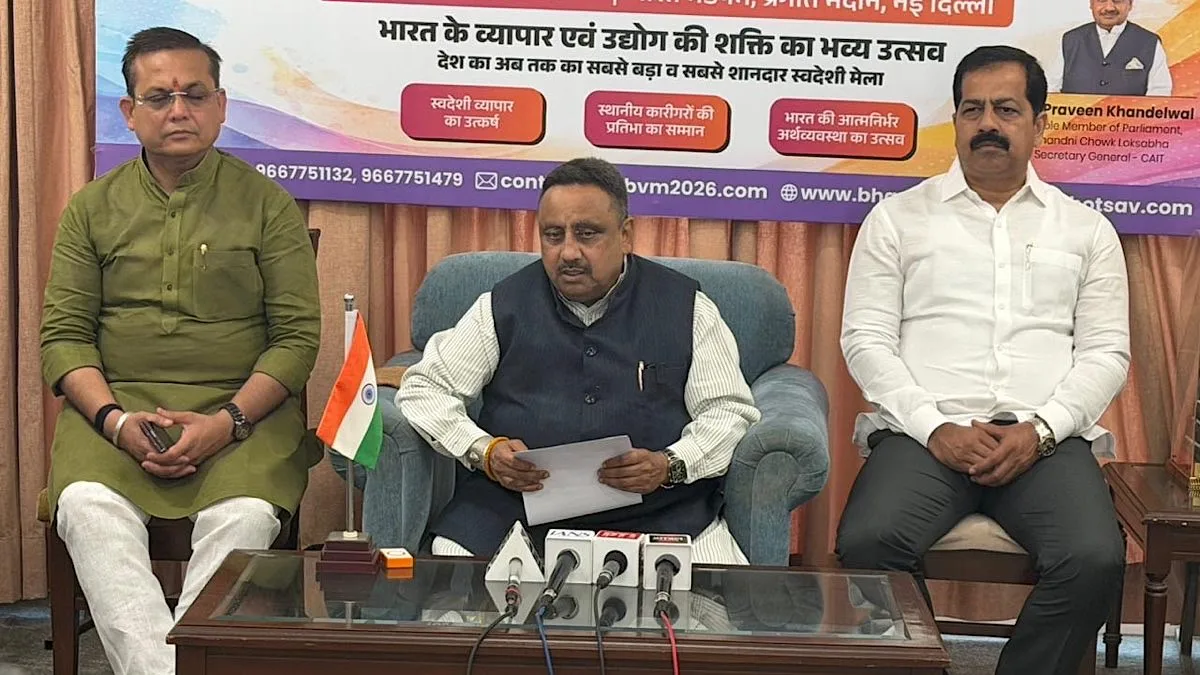
Member of Parliament from the Chandni Chowk parliamentary constituency in Delhi Praveen Khandelwal on Wednesday described the failure to pass the Women’s Reservation Bill in Parliament as a “dark chapter” in the history of India’s democracy.
Launching a sharp attack on the Congress, Rahul Gandhi, and the entire Opposition during a press conference here, , Khandelwal said this is not just the defeat of a Bill, but a betrayal of the rights, dignity, and future of women in country.
Chandni Chowk District BJP President Arvind Garg, and Keshavpuram District BJP President Ajay Khatana were also present in the press conference.
Advertisement
Khandelwal alleged that under the leadership of Rahul Gandhi, the Congress and its allied parties, the TMC, DMK, SP, and Aam Aadmi Party, have collectively and deliberately conspired to bring down this historic legislation. He accused Rahul Gandhi of opposing the Bill due to personal and political interests, which, he said, had become the biggest obstacle in the path of women’s empowerment. “This conduct reflects a failure of leadership, lack of foresight, and insensitivity toward women’s dignity,” the Chandni Chowk MP said.
Khandelwal remarked that the very Lok Sabha where Rahul Gandhi dared to defeat the Women’s Reservation Bill will, in the future, correct this historic wrong and script a new chapter by granting women their due rights. Had the Bill been passed, Congress leader Priyanka Gandhi Vadra would have emerged as a more powerful and influential leader within the grand old party.
According to Khandelwal, Rahul and the Opposition, driven by narrow political interests, have crushed the aspirations of the women in the country, which the nation is not going to forget. He accused the Congress of historically treating women as a mere “vote bank,” and that delaying this crucial issue for decades and opposing it when the time came for implementation exposes their double standards, opportunistic politics, and anti-women mindset.
He added that the women’s reservation in governance is not just about political representation, but a cornerstone of social justice, equal opportunity, and national development.