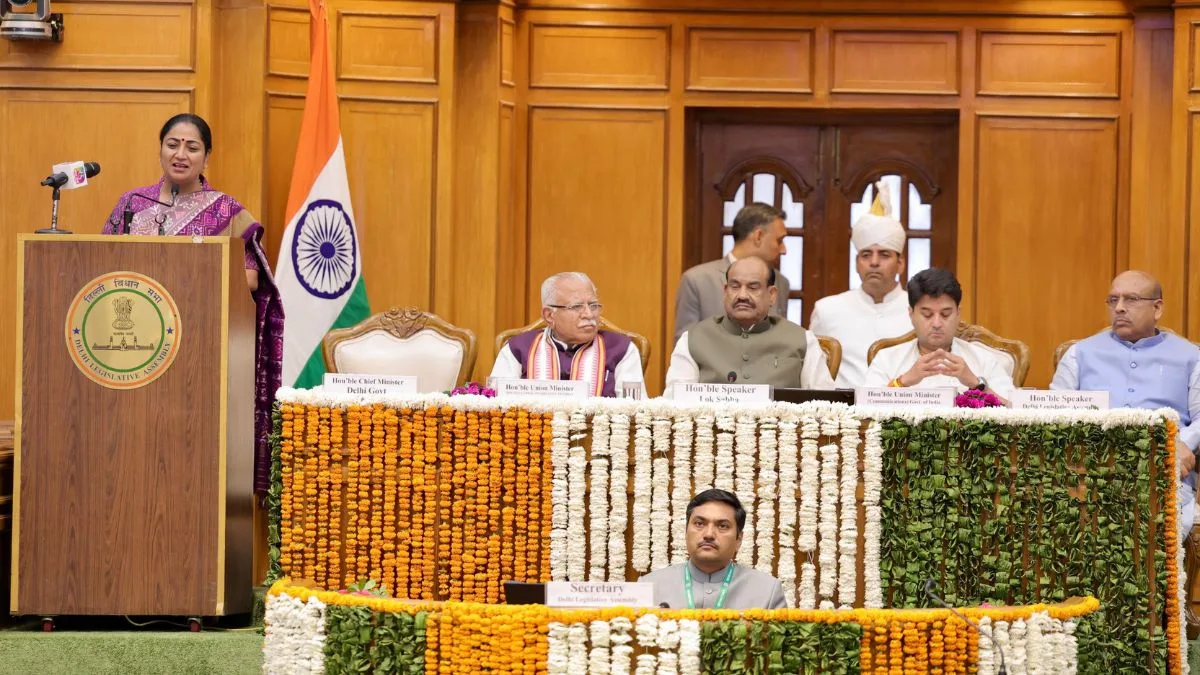
Delhi Chief Minister Rekha Gupta on Monday said diversity of opinion is the lifeblood of democracy, adding that political parties must stand united in matters of public welfare and national interest.
Speaking on the second day of the All Indian Speakers Conference at the Delhi Vidhan Sabha, she extended a warm welcome to Lok Sabha Speaker Om Birla, Union ministers Manohar Lal Khattar and Jyotiraditya Scindia, and Delhi Assembly Speaker Vijender Gupta, along with other distinguished guests on the dais.
Advertisement
She observed that the conference provided all the speakers and deputy speakers from across the country an opportunity to reaffirm their duty and commitment, and described the participation of women presiding officers of the Houses as particularly inspiring.
On the historic occasion of 100 years since Veer Vithabhai Patel was elected as first Indian speaker of the Central Legislative Assembly, CM observed that the moment when Indians themselves presided over the House, it marked the true beginning of the nation’s democratic journey.
Paying homage to the sacrifices of freedom fighters, she underlined that today, with the privilege of leading an independent nation under the Constitution and democratic institutions, the greatest responsibility is to uphold and strengthen the dignity of that freedom.
The CM made it clear that elected representatives must always act according to the principle of ‘Nation First, Party Second, Self Last’.
Referring to the legacy of freedom fighter Vitthalbhai Patel, she noted that he set enduring ideals of democracy and legislative conduct, even in the most adverse circumstances.
She emphasised that debates and discussions in legislatures must always remain centred on public welfare and the dignity of democracy.
Gupta observed that when citizens watch their elected representatives in the chambers, they expect them to voice their concerns and take decisions in the national interest.