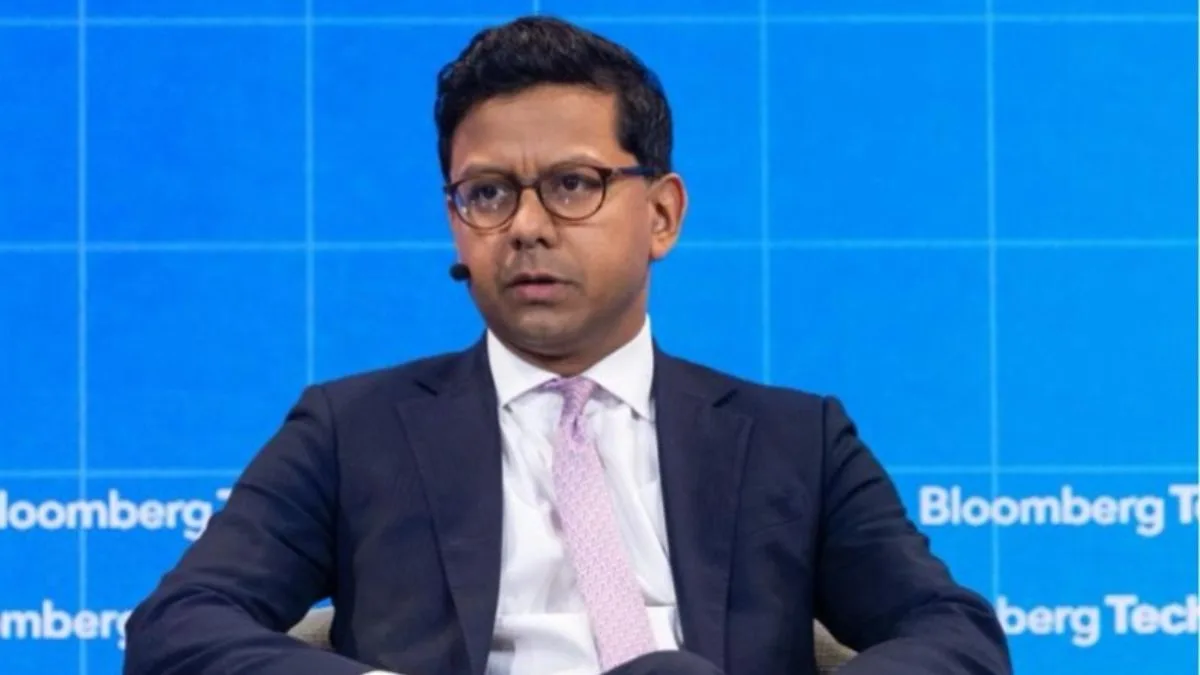
Just weeks after Anthropic appointed Irina Ghose as its Managing Director of India, the Artificial Intelligence firm has officially opened its first office in the country.
The leading AI firm’s India office, located in Bengaluru, is its second in the Asia-Pacific region after Tokyo, Japan. Irina Ghose will be in charge of the India office.
Advertisement
The news also comes close on the heels of India becoming Anthropic’s second-biggest market for its artificial intelligence assistant, Claude.ai.
According to the company, the Indian developer community is involved in accomplishing some of the most technically intense AI work anywhere across the world.
Further, the Claude.ai assistant is being used in India to build applications and modernise systems.
Anthropic’s launch of its India office follows the company’s report of a 100% increase in run-rate revenue in India since October 2025.
The launch of the India office also coincides with the company forging deals with companies across the enterprise, education and agriculture sectors. These include Air India, Cognizant, Razorpay and CRED, which are using the AI tool for various tasks, including software development and empowering employees to modernise legacy systems.
At AI Impact Summit, Govt envisions global AI service provider role for India
10 Indian languages’ support for Claude.ai
Understanding the needs of Indian consumers who speak multiple languages, Anthropic is also training its assistant in at least 10 widely-spoken Indian languages.
“More than a billion people in India speak one of over a dozen officially recognised languages, but AI models continue to perform better in English than they do in other languages. Six months ago, we launched a company-wide effort to narrow this gap by curating higher-quality, more representative training data in 10 of the most widely spoken languages throughout India: Hindi, Bengali, Marathi, Telugu, Tamil, Punjabi, Gujarati, Kannada, Malayalam, and Urdu. This resulted in improvements to our models, and we continue to work on enhancing their fluency,” the company said in its announcement.
In the education sector, Claude.ai is making inroads in India, with the company saying educational and instructional tasks make up 12 per cent of the assistant’s use in the country.
“Pratham, one of India’s largest education nonprofits, chose Anthropic as its first strategic AI lab partner because of our shared focus on safety and educational rigour. Their Anytime Testing Machine, powered by Claude, is currently being piloted with 1,500 students across 20 schools, with plans to expand to 100 schools by the end of 2026,” said the company.
Supporting a legal information revolution
Anthropic is also helping litigants in accessing information about their pending court cases, which total about 5 crore pending court cases.
“Accessing case information typically requires repeated court visits or intermediaries to navigate paper files and legal jargon. Anthropic is supporting Adalat AI to improve access to judicial services with a national WhatsApp helpline, launching today. Using Claude, it provides instant case updates as well as translation, document summarisation, and interactive querying of legal documents in native Indian languages,” a company release said.
Speaking on the developments, Ghose said, “India represents one of the world’s most promising opportunities to bring the benefits of responsible AI to vastly more people and enterprises. Already, it’s home to extraordinary technical talent, digital infrastructure at scale, and a proven track record of using technology to improve people’s lives. That’s exactly the foundation you need to make sure this technology reaches the people who can benefit from it most.”