Delhi to expand EV charging network to 32,000 stations in four years
The Delhi Government has started chalking out a comprehensive roadmap to develop a strong and reliable charging network for electric vehicles (EVs) across the national capital.
In the backdrop of this rapid adoption, manufacturers want the government to continue with the electric vehicle subsidies, ensure supply chain costs are stabilised, and enhance investment in charging infrastructure to accelerate conversion to electric passenger vehicles from petrol or diesel powered ones.




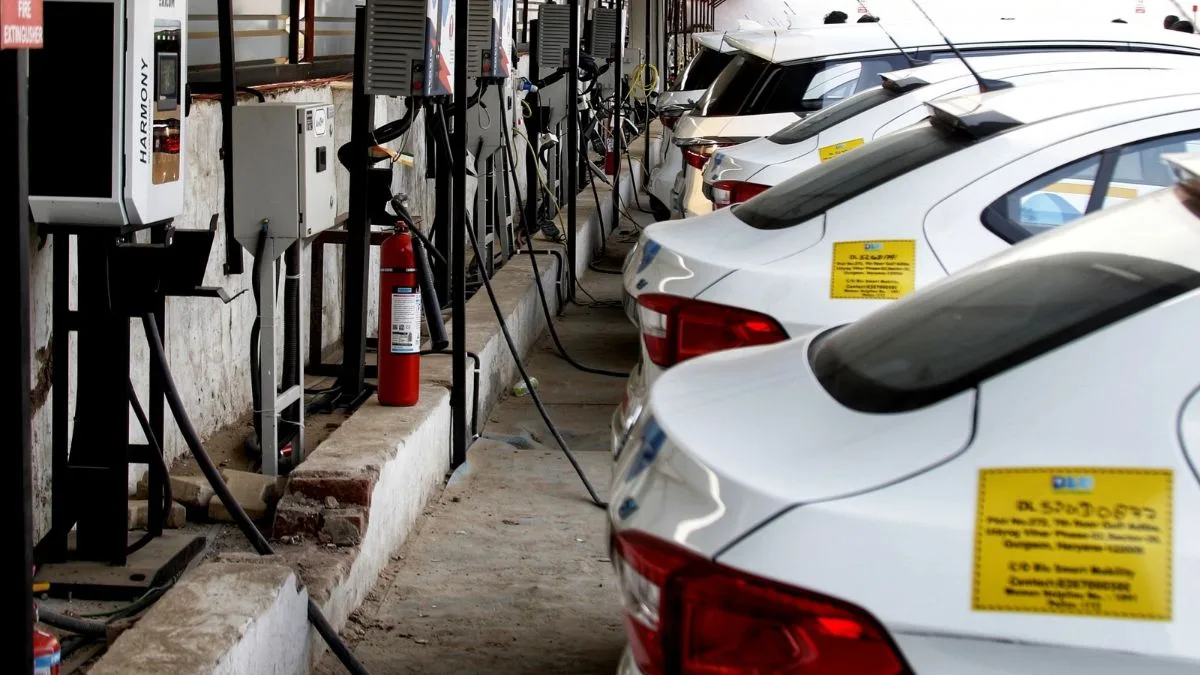
File Photo: IANS
Electric vehicle sales in India touched an all-time high of over 1.76 lakh units in 2025, representing a massive 77 per cent year-on-year (YoY) increase and the manufacturers and the domain experts expect this year’s budget to deliver a package of incentives which could further boost adoption of green vehicles in the country.
In the backdrop of this rapid adoption, manufacturers want the government to continue with the electric vehicle subsidies, ensure supply chain costs are stabilised, and enhance investment in charging infrastructure to accelerate conversion to electric passenger vehicles from petrol or diesel powered ones.
Advertisement
Affordability, especially in the entry-level segments, remains a major expectation among buyers, with industry stakeholders looking to the government for policy support to bring down costs.
Advertisement
“Incentives and schemes for manufacturers would help scale up production and make EVs more affordable. Policies enabling lower-interest loans, tax rebates and better land allocation would also contribute to reducing production costs and encouraging investment in the sector,” Rachna Ahuja, Director, INGAR Electronics, a manufacturer of EV components, told UNI.
Ahuja also said that expansion of charging infrastructure is another critical requirement, as “range anxiety” continues to influence purchase decisions. Lack of critical charging infrastructure means that EVs can only be driven within major city limits.
At the policy level, the Centre has rolled out flagship initiatives such as FAME-II (Faster Adoption and Manufacturing of Electric Vehicles in India), PM E-Drive (Electric Drive Revolution), Production-Linked Incentive (PLI) schemes and PM e-Bus Sewa, aimed at boosting adoption, attracting investment and promoting localisation. Industry expects this to augmented and extended.
“The union Budget should extend PM E-Drive subsidies to fleet EVs, as it ensures green mobility,” said Avijit Bhatt, a merchant banker specialising in green finance.
Ahuja pointed out that global market trends, including spikes in copper prices and other raw materials, are also impacting manufacturing costs and while admitting that these cannot be mitigated, said the subsidies scheme could help offset some of the cost hikes to ensure EVs remain within the reach of the Indian middle class.
Currently, the EV penetration is the highest in the three-wheeler segment, and, with better financing options from banks, attractive discounts, and incentives, experts observe that adoption can be enhanced across segments, starting from entry-level models to mid-size SUVs to premium luxury vehicles.
However, while existing schemes will certainly be maintained, officials said that the Centre is now placing greater emphasis on electrification of public transport, as this will cover larger sections of the urban populace.
In Delhi, many new buses inducted into the transport corporation’s fleet under the FAME scheme are electric, while smaller DEVi (Delhi Electric Vehicle Interconnector) buses are being deployed to improve last-mile connectivity to metro stations.
The government will however continue to work on targets of around 30 per cent EV penetration in private cars, 80 per cent in two and three-wheelers, and 70 per cent in commercial vehicles by 2030.
Advertisement