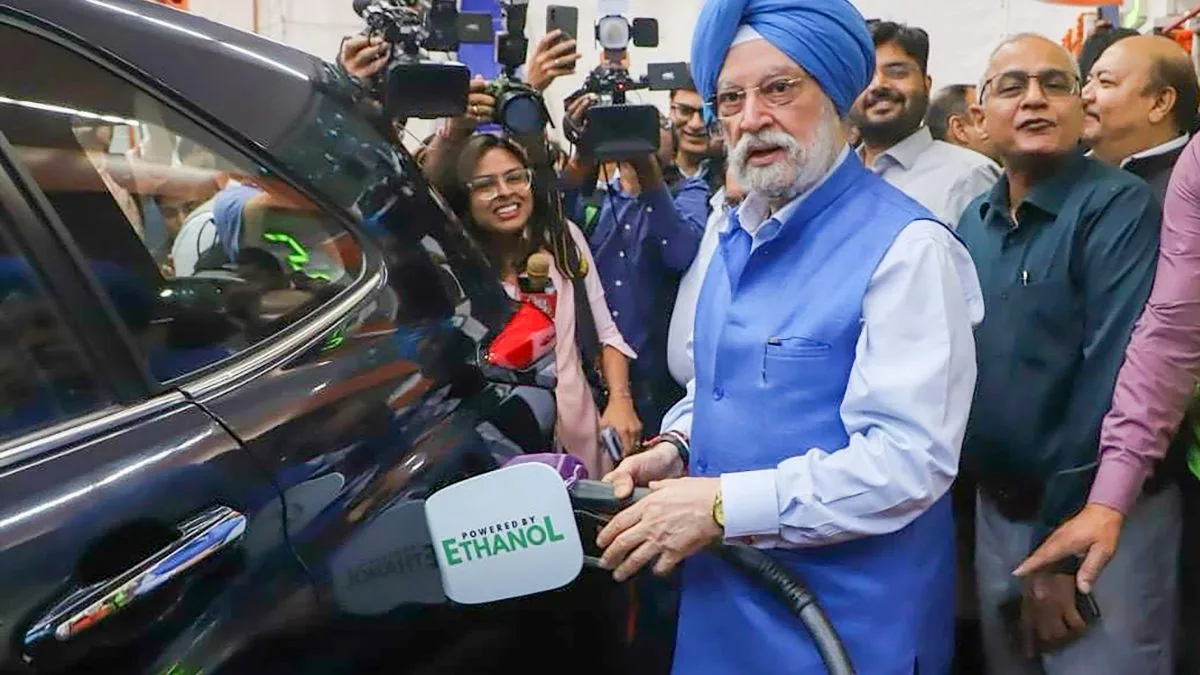
Consumers are unlikely to get a choice between pure petrol, E10 and E20 at fuel stations anytime soon, with the Ministry of Petroleum and Natural Gas saying such a system would be too complex and expensive to operate across India’s fuel distribution network.
The Ministry said the nationwide transition to E20 petrol followed extensive consultations with automobile manufacturers, testing agencies and other stakeholders. According to the government, the move was supported by technical assessments on vehicle compatibility, engine performance, emissions and fuel efficiency.
Advertisement
Centre cites nationwide logistics behind E20 decision
Responding to concerns over the absence of multiple petrol options at retail outlets, the Ministry said India’s fuel infrastructure is built around a single nationwide distribution system.
It said the country operates more than one lakh fuel retail outlets that are supplied through an extensive network of refineries, terminals, depots and pipelines.
Maintaining separate supply chains for pure petrol, E10 and E20 would increase handling costs, complicate inventory management and reduce operational efficiency, the Ministry said.
It also dismissed comparisons with premium petrol, saying those fuels cater to a limited market and use specialised additives rather than separate nationwide fuel supply systems.
Ministry cites industry support for E20 compatibility
The Ministry said automobile manufacturers were involved before higher ethanol blends were introduced and continued to support the transition.
“Had automobile manufacturers not been fully satisfied with the results, they would never have stood behind the product or honoured vehicle warranties. The fact that virtually every manufacturer today is honouring warranty for all vehicles (old or new) is because they have been part of the consultation,” the Ministry said.
Referring to field data, the Ministry said Maruti Suzuki serviced 2.84 crore vehicles during FY 2025-26, including 1.5 crore older vehicles that were not originally certified for E20. It said no E20-related problems such as corrosion, abnormal wear or component damage were reported.
The Ministry added that Hero MotoCorp had reported similar experience.
Government acknowledges mileage impact, highlights other benefits
The Ministry acknowledged that some vehicles may experience a 3-5 per cent drop in fuel economy when using E20.
However, it said mileage should not be the sole measure of fuel quality.
According to the Ministry, E20 offers a higher octane rating, better combustion, smoother acceleration, cleaner engine operation and lower lifecycle carbon emissions.
It added that the shift to E20 is also intended to reduce India’s dependence on crude oil imports, improve energy security and support farmers through higher ethanol production.