A story of Padma Shri Anke Gowda
In an era when mobile phones have replaced books as the preferred companions of many, one man from rural Karnataka has spent more than half a century proving that the printed word still matters.
The elegance of cursive writing and fine calligraphy, interwoven with hand-drawn images, can create a wondrous text dramatically different from modern publications.




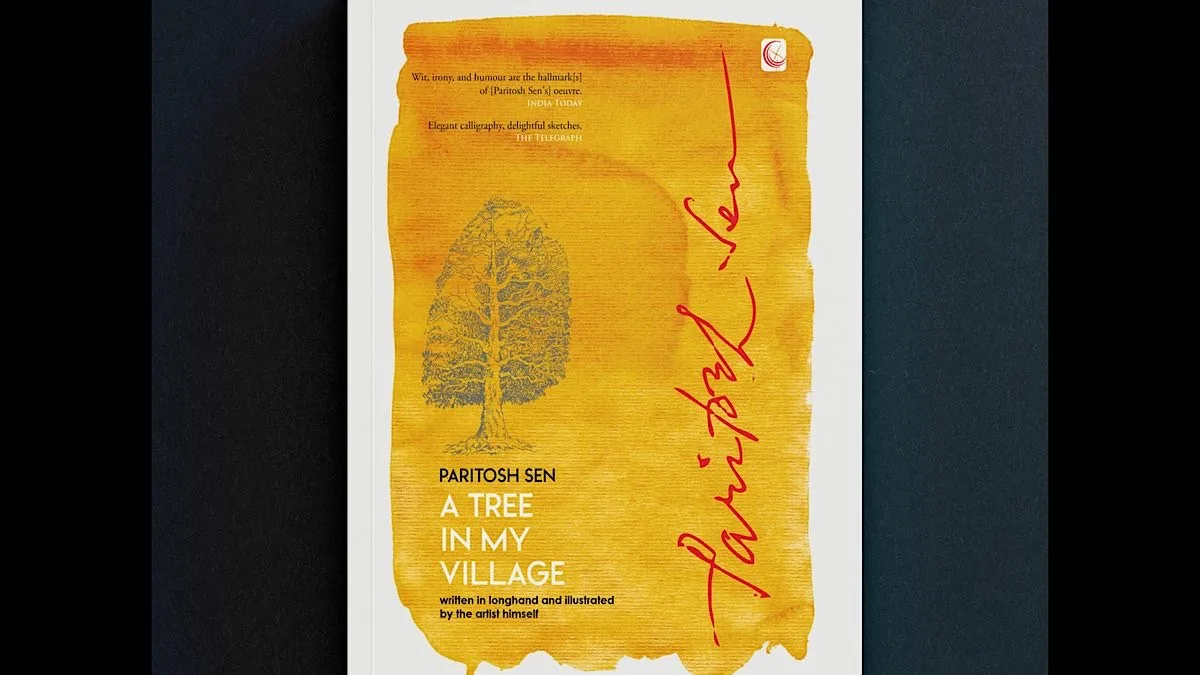
Photo:SNS
The elegance of cursive writing and fine calligraphy, interwoven with hand-drawn images, can create a wondrous text dramatically different from modern publications. A selection from Paritoh Sen’s autobiographical vignettes, A Tree in My Village, has been charmingly produced by Hawakal Publishers, maintaining the fluid stream of Sen’s original handwriting a long with parallel pages in typescript.
The impact is that available facsimile edition to be held with tender care a n d enjoyed with visual delight. Paritosh Sen is known as an artist of high repute who established the Calcutta Group and turned innovative under the influence of French masters. Not too many people refer to Sen’s autobiographical notes in Bengali, titled Jindabahar, that present a fascinating integration of word, image, and text. A Tree in My Village is a condensed unit from this self-narrative and recalls his childhood years spent in a neighbourhood in Dhaka. Interestingly, Jindabahar Lane still exists in the central city area of Dhaka, Bangladesh.
Advertisement
The Tree at the centre of the story is a gigantic and flourishing Arjuna whose root, trunk and branches host a microcosm of the avian and animal world, which in its own way, replicates the travails of human society. The large and powerful birds occupy the topmost branches just as the richest members of a community buy into penthouses. Further down the middle, the smaller birds find their abode, and closer to the soil around the roots are the snakes, ants and earthworms. The description masks the essential philosophy of this book, in Paritosh Sen’s words, “It was under the Arjuna tree, I first became aware of the mysteries and wonders of creation. It was there also that I learnt another fundamental truth – the inalienable right of all life to coexist.”
Advertisement
Some episodes vividly demonstrate this philosophy of environmental balance. One relates to the ‘deafening cacophony’ of birds as they congregate to nestle in the evening. Unexpectedly, one time, Paritosh hears a babble of distraught and panic-stricken cries and watches the birds flying in disarray. Looking closer, he notices two langur monkeys aggressively swinging from the branches and brutally destroying nests and fledglings. In a while, the scene changes. Perhaps the strategy emerged in bird language—the flock starts flying in concentric circles, furiously swooping down on the wicked langurs. The monkeys hastily beat a retreat.
Though they have wreaked havoc and caused injuries and death, the community spirit of the Arjuna tree residents is restored. This is surely Paritosh Sen’s commentary on inter-species enmity, human warfare and conflict. Another vivid battleground has armies of tiny black ants and large red ants. The booty is a dead beetle that the black ants are painstakingly carrying to their burrow. The red ants decide to snatch the beetle in a seemingly uneven battle. However, once again, strategy wins over brute force.
A horde of tiny ants overwhelms the smaller group of reds and triumphantly bears home their edible trophy. Imagine these scenes through a child’s eyes, and then reimagine the memory as captured by the adult, now famous Paritosh Sen. With admiration, one notices the authenticity of the report on nature but also the sophistication of theme taphorictransfer to modern times of senseless destruction. Re-memorising creates this double vision, and the entire book moves through such layered interpretations. Not only is environmental harmony advocated through plants and animals, but a ghostly dimension is added to it by a cousin’s experience. On a dark night, he has to use the outdoor toilet near the Arjuna tree when he is shocked by the sight of a headless woman baiting fish in the adjacent pond.
With a cackle, she invites him to join a feast to be cooked by a village woman who was known to be dead! The youngster faints. One may conclude that Arjuna stands witness to multiple dimensions of existence, which, in Sen’s vision, are interrelated. With obliquity, the book pleads for peaceful coexistence and dissolving the boundaries between human and non-human. Among the many reasons for choosing an Arjuna tree as the prime actor is that its bark is reputed to heal the heart. The marvellous tale is accompanied throughout with Sen’s endearing sketches of many creatures, line drawings textured into the calligraphy or placed independently. Each page is a pictorial wonder. The handwriting is like a string of pearls, muktor mala, as said in Bengali.
Those addicted to digital texts can read the typed pages, but that would be a sad loss, I believe. Acclaimed Indian poet Kiriti Sengupta’s informative preamble reveals this book to break in of family archive—the more precious because heist he great-nephew of Paritosh Sen. The stunning cover and production details are a befitting tribute to a great artist and ancestor. The Arjuna Tree rightly proclaims, “I was, I am, and I shall ever be.”
(THE WRITER IS AN ACADEMIC, POET, EDITOR AND ANTHOLOGIST. SHE HAS 25 BOOKS TO HER CREDIT.)
Advertisement