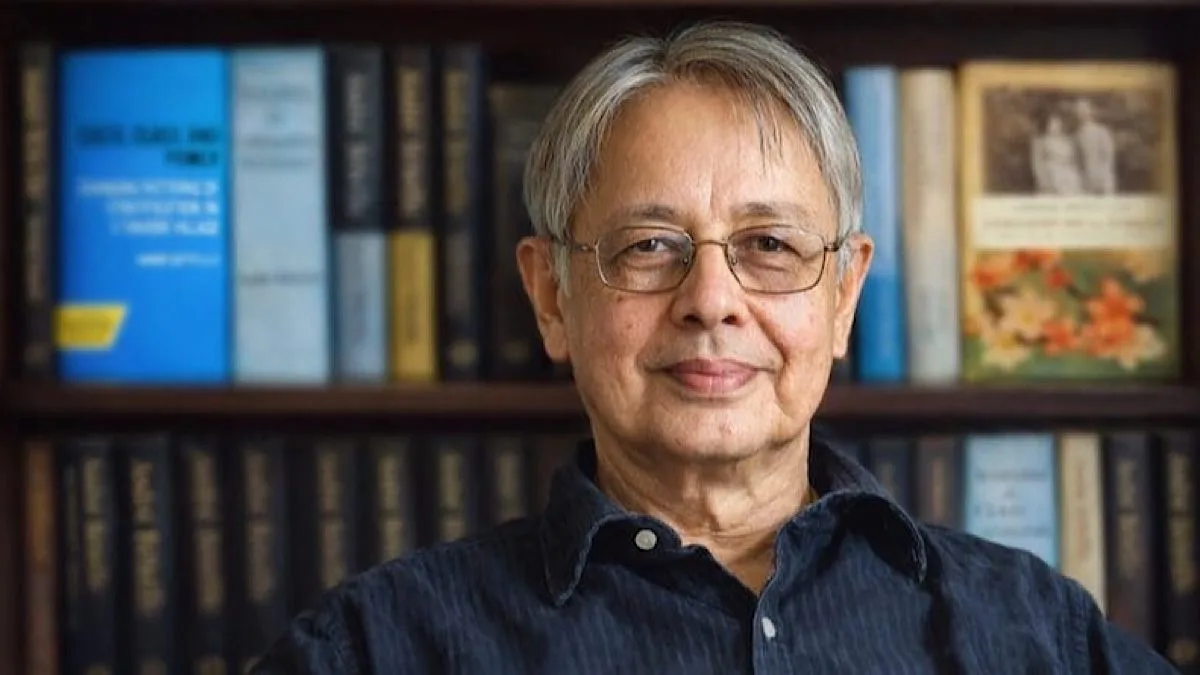
India lost one of its most luminous social thinkers on Tuesday with the passing of world-renowned sociologist and social anthropologist André Béteille, whose lifelong engagement with caste, class and power reshaped the understanding of inequality in modern societies. Béteille died at his Delhi residence on 3 February at the age of 91, leaving behind a rich intellectual legacy rooted in rigorous fieldwork, ethical scholarship and an unwavering commitment to academic humility.
Born on 30 September, 1934, in Chandannagore, West Bengal, Béteille grew up in a culturally diverse, middle-class household ~ his mother was Bengali and his father French ~ an early exposure that perhaps sensitised him to questions of identity and social difference. His formal training began at the University of Calcutta, where he studied anthropology under legendary scholars such as Nirmal Kumar Bose and Tarak Chandra Das, who profoundly shaped his empirical and humanistic approach to social research.
Advertisement
Béteille later completed his doctoral studies under the supervision of the eminent sociologist MN Srinivas and went on to join the celebrated department of sociology at Delhi University, where generations of students encountered a rare blend of intellectual rigour and moral clarity in the classroom. It was during this phase that he produced his most influential work on caste, class and power—research that earned him global recognition.
At the heart of Béteille’s intellectual journey lay a persistent concern with inequality ~ its causes, its manifestations, and the moral challenge it posed to human societies. His scholarship was animated by a deeper normative question: how might societies move closer to equality and dismantle entrenched forms of discrimination?
Béteille’s connection with academic institutions across the country was marked by warmth and intellectual generosity. Recalling his visit to Vidyasagar University in 2004, Professor Abhijit Guha, former professor of anthropology at the university, remembered the scholar’s presence at a convocation ceremony and an informal adda with faculty members. “From him, we learnt how to become scholars and teachers with humility and compassion,” Guha said.