Missing Gesture
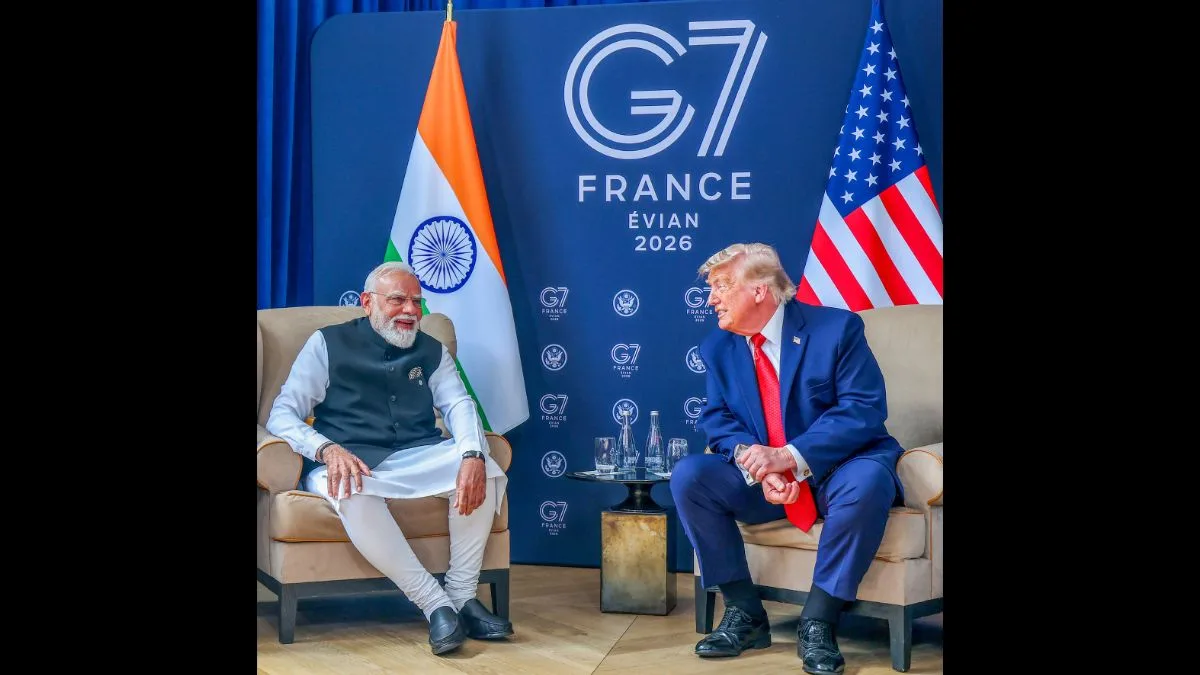
Strategic partnerships are not tested when leaders exchange compliments, announce visits or promise trade deals.
The first major victory of the Bengali language movement came in 1956. Following a prolonged struggle in Purulia, the district was reclaimed from Hindi domination under Bihar and merged with West Bengal on 1 November, 1956.





(Photo:AI)
The first major victory of the Bengali language movement came in 1956. Following a prolonged struggle in Purulia, the district was reclaimed from Hindi domination under Bihar and merged with West Bengal on 1 November, 1956. Much of the credit for this achievement goes to the leader known as the “Mother of Manbhum”, Labanyaprabha Ghosh, who hailed originally from Hooghly district.
Labanyaprabha Ghosh’s ancestral home was in Sugandha village in Hooghly. The legacy of the Basuray family still endures there, where Durga Puja and Dol festivals are celebrated annually. Historian Sudhir Kumar Mitra, in his history of Hooghly district, noted that Labanyaprabha belonged to the Basuray family.
Advertisement
She was born on 14 August, 1897 in a village in Purulia, at the home of freedom fighter Nibaran Chandra Dasgupta, who also served as the headmaster of Purulia Zilla School.
Advertisement
Like many girls of her time, she was married at the age of eleven. Her husband, Atul Chandra Ghosh, was sixteen years her senior and a prominent Congress leader and freedom fighter in Purulia. Although her household changed, her ideological convictions deepened. Purulia became the centre of numerous political activities led by Atul Chandra and Nibaran Chandra.
Labanyaprabha was not destined for obscurity. She became an active participant in the freedom movement and emerged as one of the leading figures in the anti-British struggle in Purulia.
In 1925, Nibaran Chandra Dasgupta founded a Bengali newspaper, Mukti, which played a significant role in documenting the regional history of the freedom struggle. After his time, Atul Ghosh assumed responsibility for the publication, and Labanyaprabha began contributing articles on various social and political issues.
Although Independence was achieved in 1947, accompanied by the trauma of Partition, peace did not follow immediately. In the Manbhum region of Purulia, where Bengalis and tribal communities had long coexisted harmoniously, efforts were made to impose Hindi on the local population. Labanyaprabha strongly opposed this policy.
Thus began another movement ~ the struggle to safeguard the Bengali language in Manbhum and Purulia. Labanyaprabha Ghosh stood at its forefront. The Bihar government imprisoned her three times, yet the movement persisted. Mukti became a powerful voice of protest. Ultimately, the demands were met. In 1956, Purulia was separated from Bihar and merged with West Bengal. From then on, Labanyaprabha Ghosh was revered as the “Mother of Manbhum.”
Advertisement