A petition has landed in the Supreme Court demanding that police and paramilitary forces be stopped from using pellet guns on crowds altogether. The argument is straightforward: these guns can leave people permanently injured, and there’s no place for that kind of weapon at a peaceful protest.
The plea was filed under Article 32 by a former IPS officer, Yashovardhan Azad, along with two others — Prasant Kumar Singh and Sheikh Irshad Mansoori. It’s come in as a PIL, framed around protecting the constitutional rights of citizens, particularly young people who show up at protests.
Advertisement
What happened on July 20
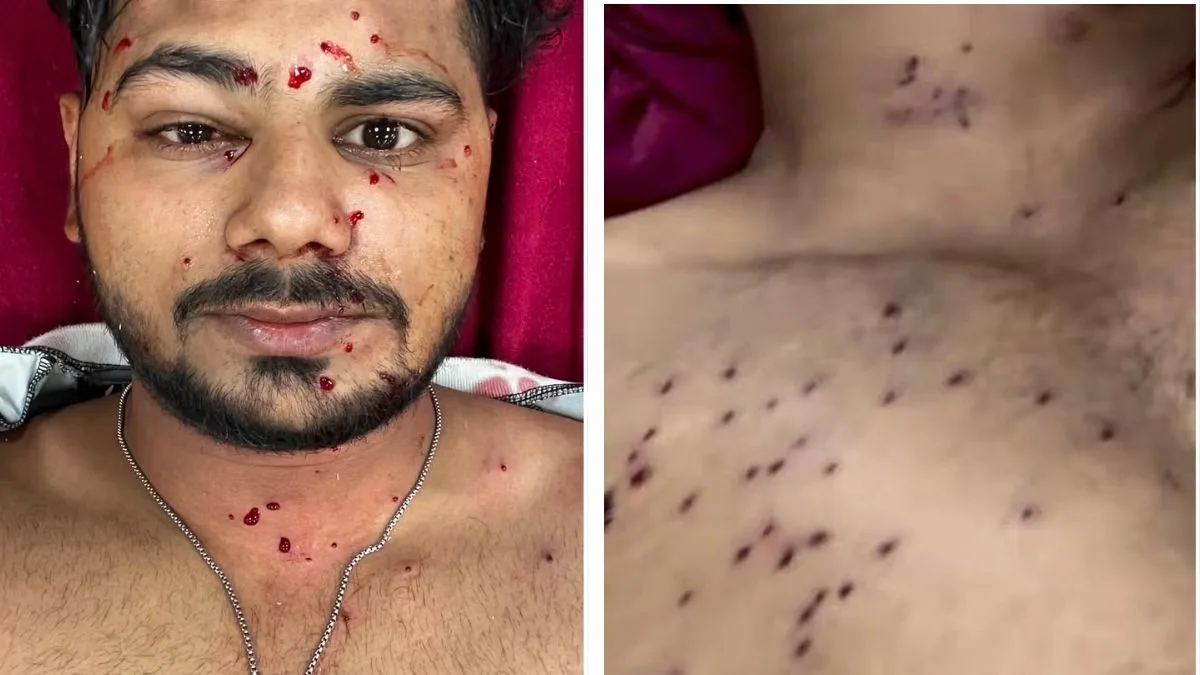
Singh and Mansoori say they were both hurt during the “Sansad Chalo” march on July 20, organised by the Cockroach Janata Party over the exam paper leak issue. Their petition claims that Rapid Action Force personnel fired a pump-action pellet gun straight into the crowd, and that the pellets — small metal splinters — tore into people standing there.
Both men say they ended up at Lady Hardinge Medical College, where surgeons had to go in and remove pellets that had lodged in their bodies. Singh has also said he saw another injured person come into the same hospital with comparable wounds.
Compensation is part of the ask
It’s not just about banning the guns going forward — the petitioners also want the Court to order compensation for everyone hurt that day. They’re asking for full medical treatment, ongoing care, rehabilitation, and what they call exemplary compensation for the injured, on the basis that people who suffer because of excessive force from the State shouldn’t be left to fend for themselves.
The core constitutional argument
The petition’s central claim is that firing metal pellets into a crowd amounts to a violation of fundamental rights. Their reasoning: these projectiles can cause injuries that are severe, disabling, and often permanent, which makes them a poor fit for crowd control by any reasonable standard. State action is supposed to be proportionate and necessary — and the petitioners say pellet guns fail that test outright. The whole case, as they put it, is about safeguarding “the constitutional and fundamental rights of India’s youth protestors and civilian assemblies.”
RAF has already ordered a check
Interestingly, the petition notes that the RAF itself has ordered a verification into claims that excessive force was used that day. It cites a news report that apparently drew on the RAF’s own logbook, which recorded seven pellet gun rounds fired during the protest. The petitioners use this as evidence that the incident is serious enough to warrant the Court’s attention.
The legal hook: Section 148 BNSS
They lean heavily on Section 148 of the Bharatiya Nagarika Suraksha Sanhita, 2023, which lays out how an unlawful assembly is supposed to be handled — first a direction to disperse, then an attempt using civil force, and only after that, anything stronger. Their argument is that pellet guns skip straight past this ladder of escalation and can’t be called the “least force necessary,” which is what the law actually requires.
Why pellet guns specifically are a problem
The petition goes into some detail on how these weapons work — typically a .12 bore pump-action shotgun loaded with cartridges carrying somewhere between 250 and 400 tiny metal pellets. Once fired, they don’t hit one target; they spray across a wide area, and there’s no real way to control exactly where each pellet ends up. That randomness, the petitioners argue, is precisely why the weapon shouldn’t be used on crowds — it puts bystanders at risk just as much as anyone directly involved in unrest.
They also push back on the idea that these are “less lethal” or “non-lethal” weapons, calling that label misleading. Fired into a dense crowd, especially at close range, pellets can cause injuries that are genuinely life-threatening. The petition points to one case in particular — 19-year-old Sahil Lochab, who suffered an eye injury during the same July 20 protest — as proof of just how serious the damage can be. Given how widely pellets scatter, the petitioners say, there’s a real risk of them hitting eyes or other vital areas.
Backing it up with international standards
To bolster their case, the petitioners also cite the UN’s 2020 Human Rights Guidance on Less Lethal Weapons in Law Enforcement, which advises against using pellet-firing weapons on crowds precisely because of how unpredictable and risky the injuries can be.
Precedent they’re relying on
Finally, the petition draws on string of Supreme Court rulings dealing with proportionality, rights protection, and compensation.
Those include K.S. Puttaswamy vs Union of India, Ramesh Chandra Sharma vs State of Uttar Pradesh, DK Basu vs State of West Bengal, Nilabati Behera vs State of Orissa, and Rudul Sah vs State of Bihar.