The United States on Friday outlined plans to expand cooperation with Southeast Asia in artificial intelligence (AI), liquefied natural gas (LNG) and small modular nuclear reactors (SMRs), a move that aligns with India’s rapidly expanding civil nuclear ambitions and broader Indo-Pacific technology partnerships.
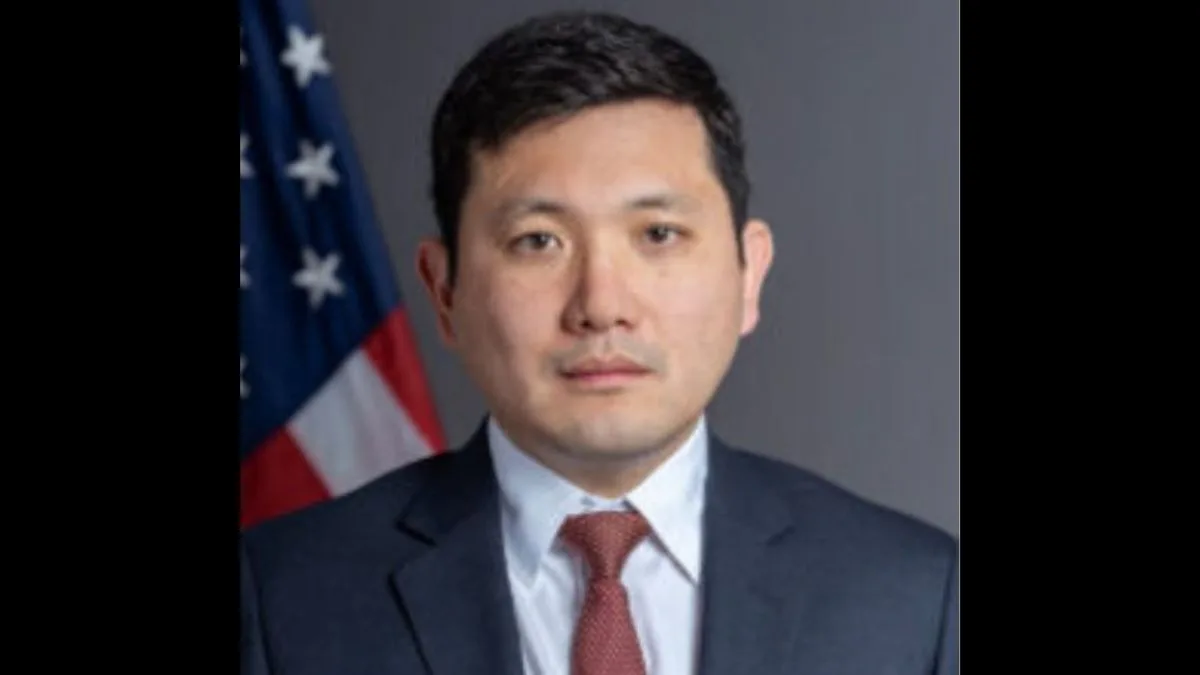
Speaking after Secretary of State Marco Rubio’s participation in the 59th ASEAN Foreign Ministers’ Meeting in Manila, U.S. Ambassador to ASEAN Kevin Kim in a virtual media briefing said Washington was prioritising advanced technologies and energy security across Southeast Asia.
Advertisement
“There’s a big emphasis on advancing technologies of the future in Southeast Asia, given the region’s interest in digital economy development, whether it’s in AI or data centers and so forth.”
Kim announced the U.S.-ASEAN AI SPARK initiative, saying it “will support American AI exports in the region by providing financial and technical support to Southeast Asian governments interested in deploying the U.S. AI stack for public sector applications.”
On energy cooperation, Kim said the United States was “investing $1.5 billion in an investment platform to facilitate the buildout of energy security infrastructure across the Indo-Pacific,” describing it as “the largest single project investment in the history of the Development Finance Corporation.”
He added that Washington wanted “to work with Southeast Asia by providing access to the American LNG market development, the deployment of U.S. grid technologies, as well as providing and working with ASEAN and Southeast Asia on small modular nuclear reactors as well.”
On advanced nuclear energy, Kim described SMRs as a strategic priority.
“‘This is a growing industry in the United States. Given the energy demands of this region as well as within the United States and throughout the world, SMRs will play a critical role in supplying energy in the future.'”
He said the United States was holding discussions with several Southeast Asian governments on deploying the technology, but declined to identify specific countries, saying the talks remained sensitive.
Although Kim did not mention India directly, the focus on AI, LNG, energy security and SMRs mirrors key pillars of the expanding U.S.-India strategic partnership and broader Indo-Pacific cooperation in emerging technologies and clean energy.
The U.S. push comes as India accelerates its own nuclear energy programme. New Delhi recently enacted the SHANTI Act, 2025, opening the civil nuclear sector to private and foreign participation to facilitate the deployment of SMRs and support its target of achieving 100 GW of nuclear power capacity by 2047.
The initiative also follows Prime Minister Narendra Modi’s recent visit to Australia, where the two countries finalised arrangements for Australian uranium exports to India. The agreement is seen as more than a new fuel supply arrangement, reinforcing India’s long-term civil nuclear strategy as it seeks to reduce dependence on imported hydrocarbons and strengthen energy security. With rising electricity demand from artificial intelligence, data centres and advanced manufacturing, SMRs are expected to become an important pillar of India’s clean energy transition and deepen opportunities for collaboration with partners such as the United States under the Indo-Pacific framework.







![‘Beginning of accountability’: Sonam Wangchuk reveals 3 written assurances from Centre before ending fast [VIDEO]](https://www.thestatesman.com/wp-content/uploads/2026/07/Sonam-Wangchuk-1-1-300x200.webp)
![‘Beginning of accountability’: Sonam Wangchuk reveals 3 written assurances from Centre before ending fast [VIDEO]](https://www.thestatesman.com/wp-content/uploads/2026/07/Sonam-Wangchuk-1-1.webp)