All eyes on NDA’s ‘Mangal Milan’ meeting on Tuesday
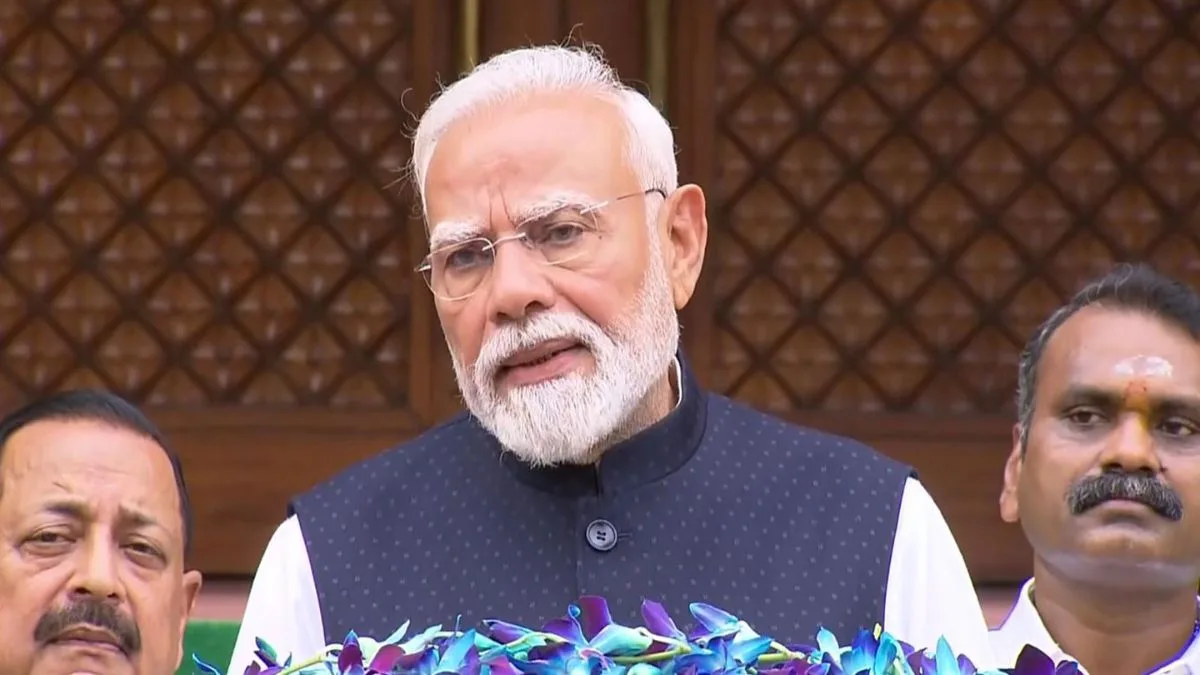
The National Democratic Alliance (NDA) Parliamentary Party meeting, now called 'Mangal Milan', will be held on Tuesday at Parliament House.
The public debate about whether an Indian passport proves citizenship has brought back an important legal question.




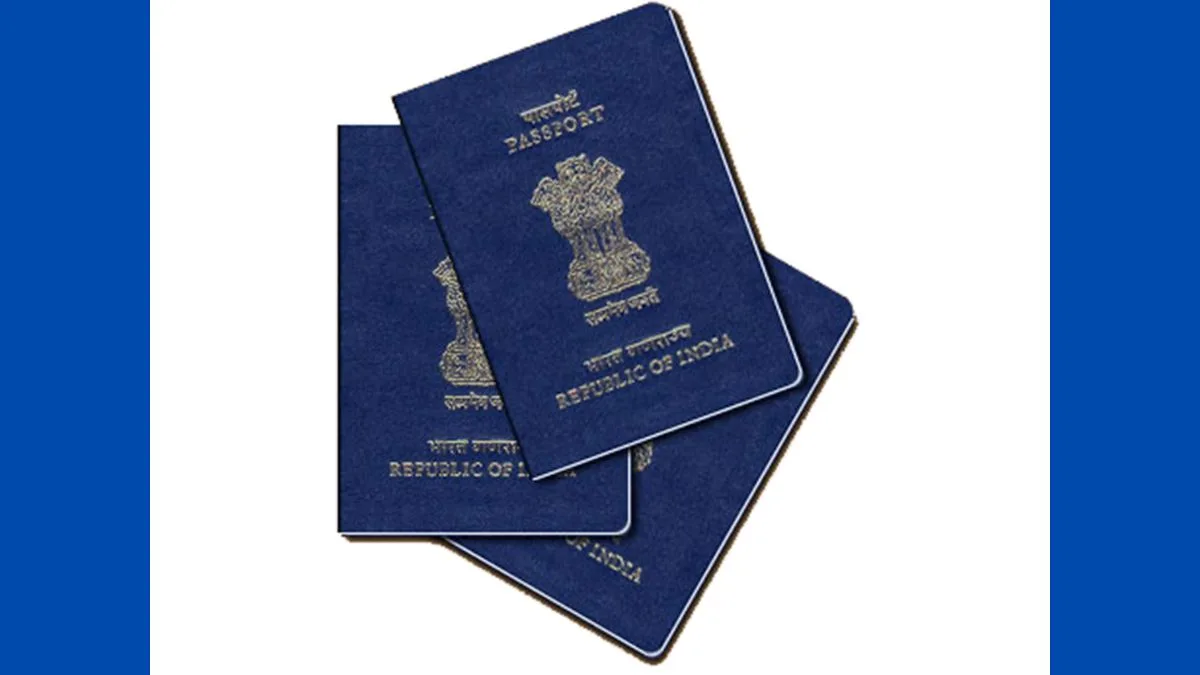
Indian Passport
The public debate about whether an Indian passport proves citizenship has brought back an important legal question. This issue matters not only during controversies but also in everyday life. Many people assume that an official document confirms their identity without any doubt. The Constitution established the basis for Indian citizenship in Part II, especially through Article 5 and related provisions. When it was adopted, citizenship was defined by constitutional criteria.
During the debates in the Constituent Assembly, it was clear that anyone born in India would be considered a citizen, and Parliament was empowered to enact laws as needed. In this context, the Citizenship Act, 1955 was created to cover citizenship by birth, descent, registration, and naturalisation. Over the years, many citizens have come to think that documents like passports, PAN cards, voter IDs, and sometimes Aadhaar are enough to prove their identity as Indian citizens, without considering how the law actually works today. Undoubtedly, a passport is an important document issued by the government.
Advertisement
It is issued only after careful examination and generally indicates that the holder has the right to travel abroad as a citizen of India. However, the legal system does not regard it as conclusive proof of citizenship in every situation. Although this distinction may seem technical, it is crucial. Citizenship, identity, residence, and travel are interconnected concepts, but they are not the same. This is why the debate cannot be simplified into a slogan.
Advertisement
The Ministry of External Affairs has confirmed that a passport cannot serve as definitive proof of citizenship; it is only a travel document for movement between India and other countries. This view has its basis in the Passports Act, 1967. However, issuing a passport usually assumes Indian citizenship, which makes the practice seem self-contradictory at first glance. The challenge is that the law treats a passport as a travel document, not as a final certificate of citizenship. This difference is why public understanding remains split on the issue.
Documents like Aadhaar, PAN, and voter identity cards are important in their own aspects, but they serve different uses and purposes. Aadhaar is an identity document for residents. PAN mainly serves as a tax identification number, and a voter ID enables a person to participate in elections. However, none of these documents alone determines legal citizenship in every situation. This distinction has been recognised in official statements and judicial reasoning.
The Gauhati High Court in its recent judgement in Aminul Hoque vs Union of India &Ors held that neither the PAN Card nor the Voter ID serves as a proof of citizenship; The Bombay High Court in Babu Ashraf Ruf Sardar vs State of Maharastra also opined on similar lines that an Aadhar Card, PAN card, or a Voter ID cannot be considered sufficient enough to prove citizenship in India. The Unique Identification Authority of India (UIDAI) had stated in its Press Release dated 18.02.2020 that the Aadhaar Card has nothing to do with confirming citizenship and cancelling the same is in no way related to the nationality of any resident.
Even in the Special Intensive Revision Rules, an Aadhaar Card was made optional to be produced as an identity. At the same time, it would be unfair to ignore the practical reality faced by many citizens. In India, a large number of people still do not possess complete documents going back to birth. Records may be missing, schools may not have been attended, municipal registration may have been delayed, etc. For such persons, the law’s insistence on proof can sometimes feel distant from lived reality. What is needed now is not alarm, but lucidity.
The public should not be left to guess whether a passport proves citizenship, whether Aadhaar does, or whether some combination of records is required. If the present framework is not sufficiently clear for ordinary citizens, then Parliament may consider whether further legislative precision is necessary. In a mature democracy, identity should not become a source of anxiety for honest citizens. The law must be firm enough to prevent misuse, but clear enough to protect the ordinary person who simply wishes to prove who he or she is.
Countries like the United States of America, the United Kingdom, Australia and European Countries treat a passport as the conclusive proof of citizenship for domestic employment. India need not muddle with this question, but needs an uncluttered and humane framework that respects both legal doctrine and the practical realities of life. Therefore, there must be certitude of Citizenship in India, with clear documentary rules and official records that work together to serve the citizen rather than confounding him. A passport may accompany a person, but citizenship must rest on a clearer legal foundation.
(THE WRITERS ARE ADVOCATES.)
Advertisement