Ramakrishna Mission in Bengal’s Jalpaiguri launches value education programme for students
The initiative combines motivational sessions, personality development workshops, meditation and environmental awareness activities.
Admissions will be made through a common entrance examination, bringing West Bengal in line with the national EMRS model.




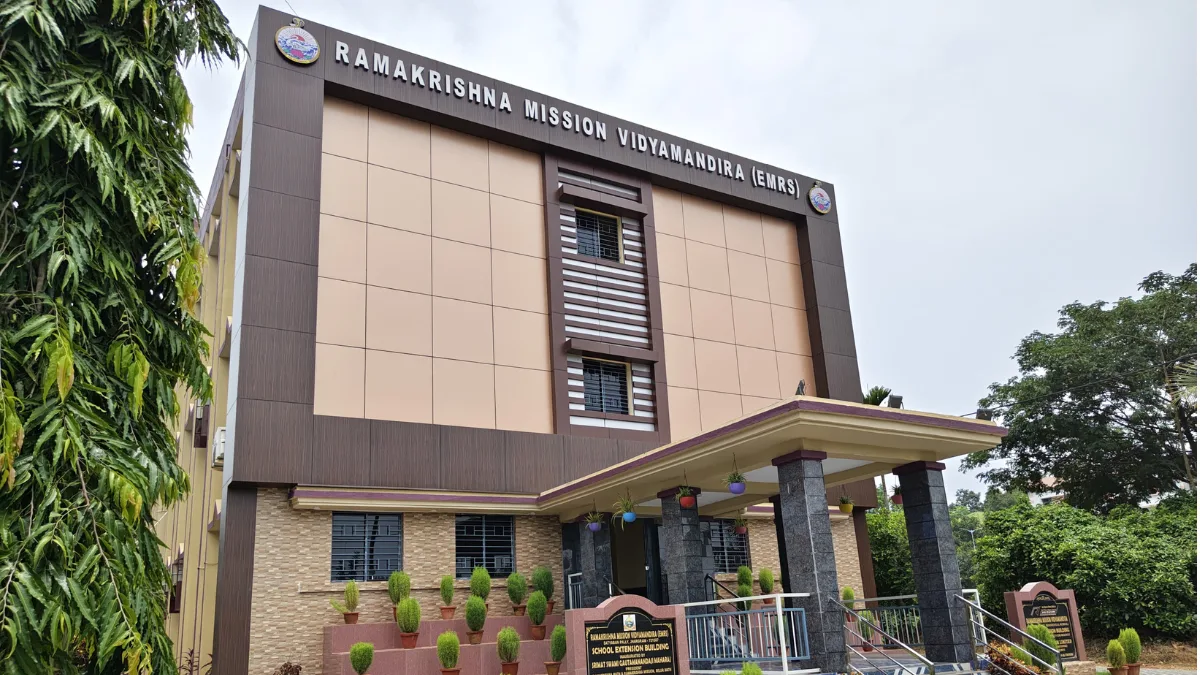
Photo: SNS
West Bengal’s eight Eklavya Model Residential Schools (EMRS) are set for a major structural overhaul, bringing their administration under the National Education Society for Tribal Students (NESTS). This ushers in CBSE education, entrance-based admissions, centralised recruitment and a sharp increase in per-student funding starting from the 2027-28 academic session.
The transition process has begun following the signing of a Memorandum of Understanding (MoU) between the West Bengal Tribal Welfare and Education Society and NESTS, an autonomous body under the Union Ministry of Tribal Affairs. While officials expect the move to align West Bengal’s EMRS network with the national model, it has also raised questions over the future administrative structure of the Ramakrishna Mission-run EMRS at Jhargram—the only such school in the state managed by the Mission.
Advertisement
Unlike the remaining seven EMRS institutions, which the state government runs directly, the Jhargram school has been administered by the Ramakrishna Mission since 2016 under an agreement with the West Bengal government. Although funded by the government, the Mission has so far exercised control over teacher recruitment, financial management and day-to-day administration.
Advertisement
Speaking to The Statesman, Swami Bedpurushananda Maharaj of Ramakrishna Mission, Jhargram, said the institution has not yet received any official communication on how the new arrangement under NESTS will affect its existing administrative autonomy.
“We have an agreement with the state government under which teacher recruitment, financial control and internal administration remain with the Ramakrishna Mission. As of now, there has been no communication from the department regarding any change. Until such instructions are issued, we expect the existing arrangement to continue,” he said.
The monk added that discussions, if required, would take place at the level of the Ramakrishna Mission headquarters at Belur Math and the government.
“The earlier agreement was signed by Belur Math. Any future decision regarding our role under NESTS will also be taken at that level. No discussion has yet been held,” he said.
One of the biggest changes under the new system will be the admission process. At present, students are selected through a lottery. Under the NESTS framework, admissions will be made through a common entrance examination, bringing West Bengal in line with the national EMRS model.
The proposal has drawn mixed reactions. Some educationists have expressed concern that students from remote tribal areas, including those belonging to Particularly Vulnerable Tribal Groups (PVTGs)—many of whom are first-generation learners—may find an entrance examination more challenging than the existing lottery system.
Swami Bedpurushananda, however, dismissed the apprehension, saying tribal students in several other states have already adapted successfully to the system.
“Odisha has around 125 EMRS institutions and Jharkhand has nearly 80. They follow the CBSE curriculum, English-medium education and entrance-based admissions. If tribal students there can succeed, there is no reason why students in West Bengal cannot,” he said.
He pointed out that the EMRS scheme is intended to provide quality residential education to talented children from economically weaker Scheduled Tribe families. “There are income criteria. The objective is to identify bright students from poor tribal families and provide them with the best possible education,” he added.
The transition will also significantly enhance government support. The annual allocation per student is expected to increase from around Rs 61,000 to nearly Rs 1.47 lakh, enabling better academic and residential facilities.
However, uncertainty remains over the future of contractual and guest teachers currently serving in the schools. According to the Mission, no decision has yet been conveyed on whether existing staff will be retained after NESTS assumes control.
“Under the new system, teachers are expected to receive salaries broadly comparable to Central government scales. But there is still no clarity on whether the present contractual and guest teachers will continue,” Swami Bedpurushananda said.
He also argued that West Bengal has considerable scope to expand its EMRS network. Under NESTS norms, blocks with more than 50 per cent tribal population are eligible for EMRS institutions.
“In districts like Jhargram, several blocks satisfy this criterion. More schools would mean more tribal children receiving quality education and enjoying the same opportunities already available to students in other states,” he said.
From the 2027-28 academic session, all EMRS institutions in West Bengal will shift to the CBSE curriculum, marking the state’s full integration into the national EMRS framework administered by NESTS.
Advertisement