‘Selective activism’: BJP questions AAP, Kejriwal’s silence over recruitment scam in Punjab
Amit Malviya has asked why Arvind Kejriwal is not speaking up over the recruitment exam "scam" that is unravelling in Punjab.
The case, which investigators describe as one of the most technologically advanced examination frauds uncovered in Punjab, has revived concerns over the state’s recruitment process and intensified demands for political accountability.





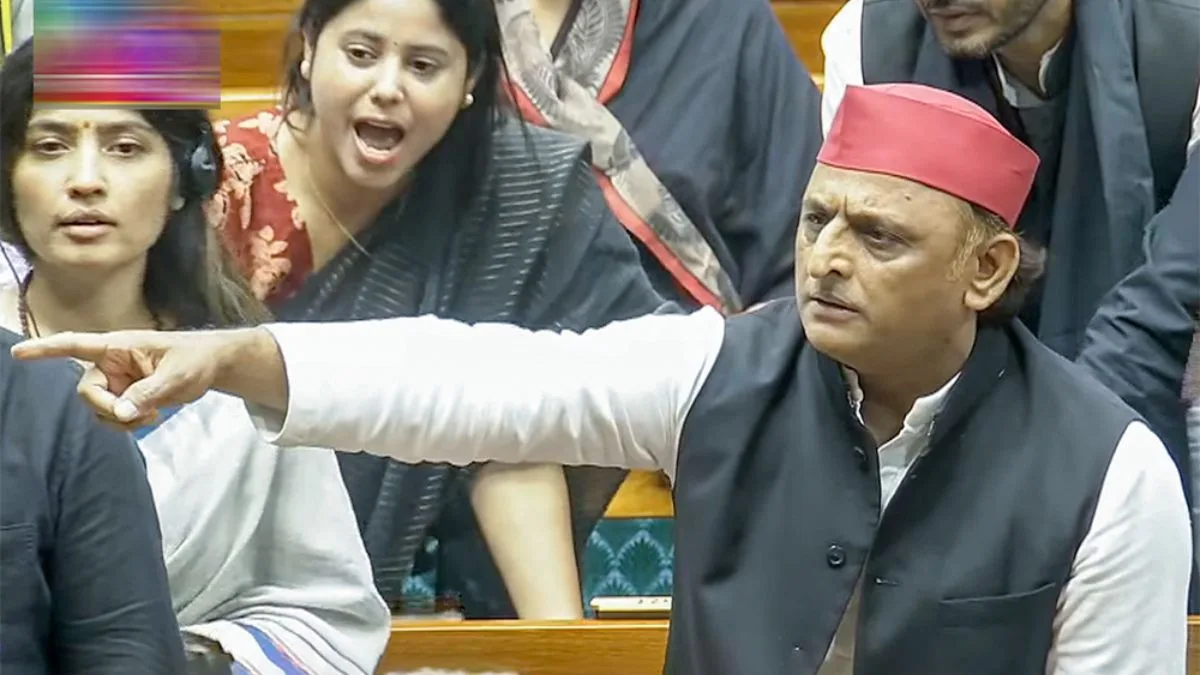
Image: IANS
A sophisticated cheating racket uncovered during Punjab’s Pharmacy Officer recruitment examination has snowballed into a major political controversy, with the opposition accusing the Aam Aadmi Party (AAP) government of failing to safeguard the integrity of public recruitment, while the ruling establishment maintains that the incident was not a traditional paper leak but a case of technology-enabled cheating detected in time.
The case, which investigators describe as one of the most technologically advanced examination frauds uncovered in Punjab, has revived concerns over the state’s recruitment process and intensified demands for political accountability. Congress and the Bharatiya Janata Party (BJP), despite their differences on national issues, have both targeted the Bhagwant Mann government over the episode.
Advertisement
Congress seeks resignations
Advertisement
Punjab Congress president Amarinder Singh Raja Warring demanded the resignation of Chief Minister Bhagwant Mann and Education Minister Harjot Singh Bains, arguing that repeated examination controversies under the present government have eroded public confidence.
Drawing a parallel with the controversy surrounding the NEET examination at the national level, Warring said that if political accountability is expected from the Centre over recruitment-related irregularities, the same principle should apply in Punjab.
He also referred to earlier remarks by senior AAP leader Manish Sisodia, who had maintained that ministers should take responsibility if examination papers are leaked. Warring questioned whether the same standards would now be applied in Punjab.
According to the Congress leader, the state has witnessed multiple recruitment-related controversies during the current government’s tenure, including alleged irregularities involving the Punjab Group-B recruitment examination, the Class XII English examination, PSTET and the latest pharmacy recruitment test. He alleged that despite repeated incidents, no meaningful accountability had been fixed.
Warring further criticised the government’s handling of protests by pharmacy job aspirants, alleging that demonstrators seeking answers were subjected to police action instead of being heard.
BJP accuses AAP of ‘selective activism’
The BJP also sharpened its attack on AAP, questioning what it described as the party’s “selective activism” on examination-related issues.
BJP national IT department head Amit Malviya said the party, which has aggressively criticised the Centre over the alleged NEET paper leak, has remained silent over developments in Punjab.
In a social media post, Malviya questioned why AAP leaders had not launched similar protests despite police uncovering what investigators describe as an organised interstate cheating network involving candidates, middlemen and technology specialists. He also asked whether the Punjab government would enforce the same standards of accountability that AAP had earlier demanded from political opponents.
How investigators say the network operated
Punjab Police believe the operation was carefully planned across multiple states using surveillance gadgets and wireless communication.
According to investigators, candidates who had allegedly paid between ₹3.5 lakh and ₹13 lakh were supplied with miniature Bluetooth earpieces capable of being concealed inside the ear. Before the examination, participants reportedly gathered at a hotel, where they received the electronic devices and were trained in their use.
Once the examination began, a candidate allegedly used a hidden pen camera to capture images of the question paper. Investigators say the images were transmitted through WhatsApp to an associate in Haryana, who then forwarded them to another member of the network operating from a temporary control room in Faridkot.
Police allege that individuals stationed at the control room solved the questions in real time and dictated answers to candidates inside examination halls through wireless transmitters connected to concealed Bluetooth devices.
Officials say the network functioned almost like a professional operation, with dedicated logistics, communication channels and technical support spread across Punjab, Haryana and Rajasthan.
Intelligence-led operation exposed the racket
Authorities said the breakthrough came after Counter Intelligence units received inputs about a possible interstate examination fraud network.
Technical surveillance teams reportedly monitored suspicious wireless activity during the examination before conducting coordinated raids in Faridkot and Ferozepur.
Police subsequently arrested key operators allegedly running the control room and detained several candidates suspected of receiving answers electronically during the examination. Wireless communication devices, pen cameras and other electronic equipment were seized during the operation.
Multiple FIRs have been registered, while investigators continue searching for additional suspects believed to be linked to the network.
Paper leak or organised cheating?
While the political debate has largely centred on allegations of a “paper leak”, investigators and Baba Farid University of Health Sciences (BFUHS) have made a distinction between a conventional leak and what they describe as real-time electronic cheating.
Senior police officers have maintained that the question paper was not leaked before the examination. Instead, they say the paper was photographed after the test commenced and transmitted outside the examination centre, allowing answers to be relayed back to selected candidates during the exam itself.
The university administration has echoed this assessment, saying the incident involved the use of unfair electronic means rather than a pre-examination compromise of the question paper.
Registrar Dr Arvind Kumar said the university’s flying squad first detected suspicious activity involving Bluetooth devices, following which police action was initiated. He added that a detailed report would be submitted to the Punjab government and future recruitment examinations may include electronic jammers to prevent similar incidents.
Larger questions over recruitment transparency
Although investigators insist the examination system itself was not breached before the test began, the episode has reignited wider concerns over recruitment transparency in Punjab.
With opposition parties demanding political accountability and the government defending its handling of the case, the controversy has evolved beyond a criminal investigation into a broader debate over governance, examination security and public trust in state recruitment processes.
As the investigation expands across state borders and more arrests are expected, the Pharmacy Officer recruitment controversy is likely to remain one of the most closely watched political and administrative issues in Punjab.
Advertisement