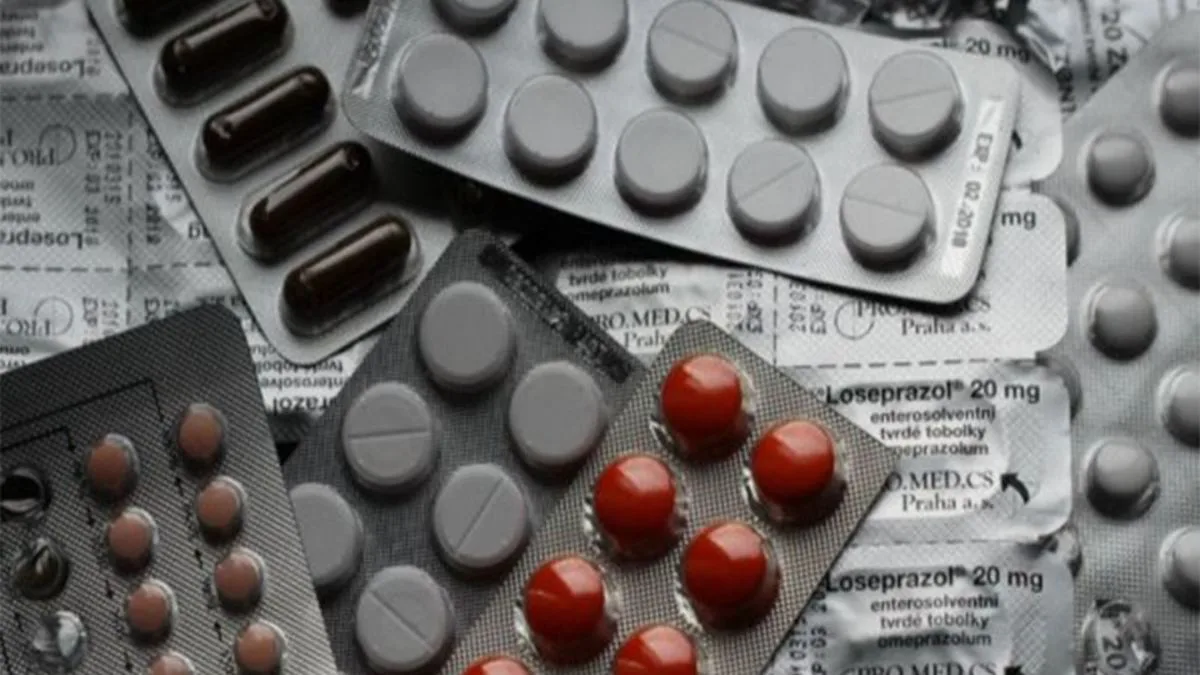
Indian pharmaceutical stocks fell in early trade on Wednesday after US President Donald Trump announced a phased tariff regime on imported generic medicines, signalling a push to bring pharmaceutical manufacturing back to the United States.
The proposed policy will keep tariffs on imported generic drugs at zero from August 1, 2026, for two years. Duties will then rise to 100 per cent for one year before increasing to 200 per cent thereafter, according to a post by Trump on Truth Social.
Advertisement
He said the policy is intended to encourage companies to establish manufacturing facilities in the US, while the existing framework for patented, branded and innovative medicines will remain unchanged.
“Effective August 1st, 2026, all Generic Drugs being brought into the United States will continue to have a TARIFF of ZERO PERCENT for a two year period of time, after which the TARIFF will be raised to 100% for a one year period of time, and 200% thereafter,” Trump said.
He added that the objective of the policy is to protect Americans and claimed pharmaceutical manufacturing facilities are already being built across the country at an unprecedented pace.
Indian pharma shares decline
The announcement weighed on Indian pharmaceutical stocks during opening trade.
The Nifty Pharma index dropped nearly 2 per cent, while Sun Pharmaceutical Industries, Cipla, Dr Reddy’s Laboratories, Lupin and Aurobindo Pharma were among the major losers, declining by around 2-2.5 per cent as investors assessed the proposed tariff regime.
Analysts see limited impact on Indian drugmakers
Despite the initial market reaction, Motilal Oswal Financial Services believes the proposed tariffs are unlikely to have a material impact on Indian companies supplying generic medicines to the US.
Tushar Manudhane, Senior Vice President and Institutional Research Analyst (Healthcare) at Motilal Oswal Financial Services, said several Indian pharmaceutical companies already operate US subsidiaries and products typically enter the US market at transfer prices that differ significantly from their final retail prices.
“The tariff is presumably at pricing at which it enters US market,” he said.
He also noted that nearly 90 per cent of generic prescriptions in the United States are imported, meaning any tariff would apply to suppliers from multiple countries rather than targeting India alone.
“Secondly, 90 per cent of generic prescription is imported by US, effectively increasing the tariff for everyone (as and when it happens) supplying to US market and it is not India specific,” he said.
According to Manudhane, India’s manufacturing cost advantage remains substantial, with production costs estimated to be 40-60 per cent lower than in the US.
He added that establishing manufacturing facilities in the United States would involve significant investment and lengthy regulatory approvals.
“Even if the manufacturing plant is set up (which itself takes two years at least), it would be required to undergo plant inspection and subsequent product approval cycle of at least 12-15 months, further prolonging any competition to kick in,” he said.
“Above factors questions the economic viability of setting up a manufacturing plant in US for generics.”
He concluded that the overall impact on Indian pharmaceutical exporters is likely to remain minimal.
Trump also tightens aluminium import policy
In a separate move, Trump signed a proclamation under Section 232 of the Trade Expansion Act of 1962 to adjust aluminium imports, citing national security concerns.
According to the White House, the measure is intended to strengthen the US defence industrial base. The proclamation also directs the Commerce Secretary to create an incentive programme for companies investing in the construction, expansion or refurbishment of aluminium smelters in the United States.