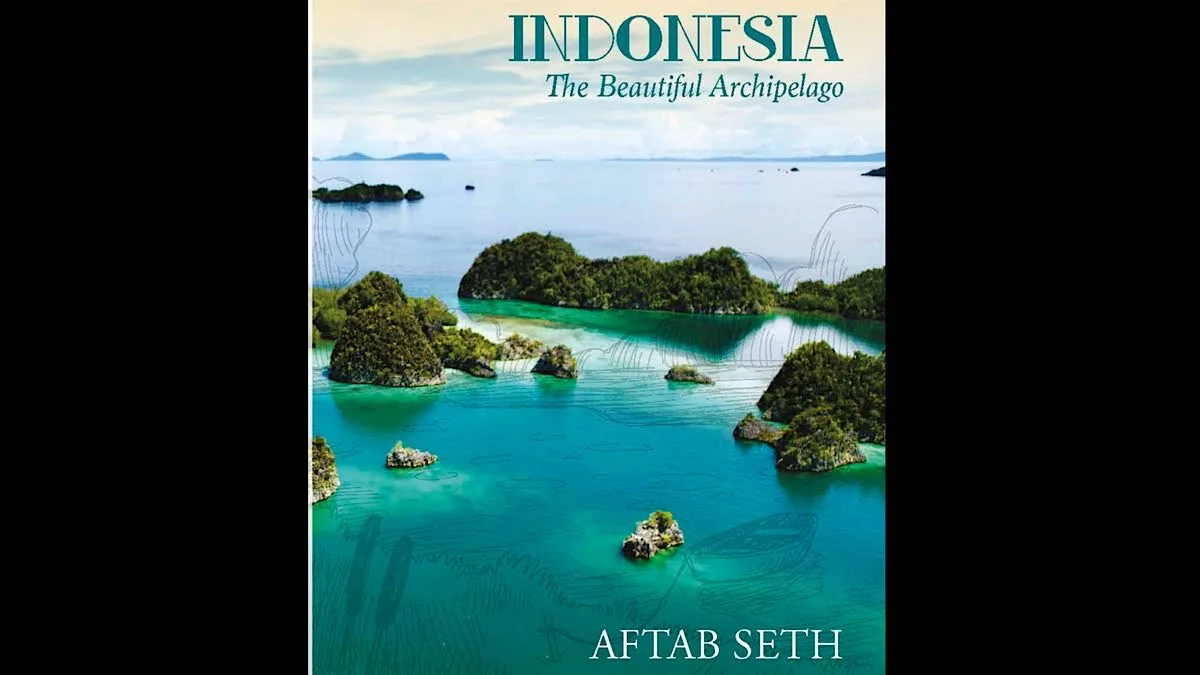
This text comprises three sections, the first of about 100 pages mainly about Islam and governance, the second and third of slightly over 20 pages each on regions and culture and literature and comparisons with India. As the author says, ‘many elements relating to Indonesian culture and religion retain a relevance that endures to this day.’ Presidents Sukarno and Suharto (1945-67 and 1967-98) shaped the Islamic dimension of Indonesian identity, its relationship with religious minorities and the role of Muslim organisations.
Panchsheel’s five principles as adopted by Sukarno were pronounced the bedrock of the state; clashes between ‘opposed mentalities’ – religion and communism, Java’s mysticism and Sumatra’s pragmatism, syncretism and dogmatism have been reconciled to the extent that there have been few major inter-community clashes of the type seen in India, although the state appeared ‘incapable of both totalitarianism and stable constitutionalism’. Islam was less aggressive than elsewhere because it came through trade and not by arms and violence, and terror had little appeal for most Indonesians.
Advertisement
Suharto, ‘a man of limited general culture but of high intelligence and broad political awareness’ highlighted religious strife abroad to discredit religious extremism at home. He was ‘first a Javanese, then an Indonesian and lastly a Muslim.’ The majority of the bureaucracy and military were of a similar stock and ideology. The army as in many other third world countries, is ubiquitous and politically central, while the parliament is less powerful but more representative of Indonesia’s diverse regions and ethnic groups.
A bonus for Indonesian unity and nationalism is that Javanese themselves are religiously divided, Islam is trans-ethnic, and the common language is not the preserve of any major cultural group. The last chapter on some comparisons with India is by far the more important and of contemporary relevance to the Indian reader. There might be 5 million practicing Hindus and 110 million ‘cultural’ Hindus, but the affinities penetrate much deeper. Whie many Balinese and Javanese may look up to India with respect, they expect, Seth states unambiguously, to be treated as equals.
Both in India and Indonesia – and particularly in Java — many traditions have been preserved from ancient times to the present day with scant interr uption. These include attitudes towards life and power; continuity of cultural traditions, strong manifestation of humanity, cheerfulness, love of children, environmental harmony and the concept of coexistence including with animal life. This ‘essentially optimistic’ attitude generates a ‘spirit of supreme affirmation’, patience, tolerance and detachment. Syncretism in the Indonesian personality tends to the belief that all religions are of equal validity and command respect.
Islam in Indonesia arrived late and into an already well- established non-Arab civilization. Hence in most parts of Indonesia, as in India, cultural traditions and social customs have their roots in pre-Islamic times. In Indonesia’s spiritual and religious synthesis there is both vitality and resilience; the influence on personality arises from religious foundations; ‘it is this capacity for synthesis and for expressing traditions in syncretic form’ that enables Indonesians to combine aspects of western-style education with ‘deeply mystical elements of the Javanese tradition’. Unity in diversity is an appropriate description for ‘an archipelagic nation not only in geography but in culture.’
The book’s copy editing is excellent and the photographs are pertinent, but the layout with numbered paragraphs gives a text book or lecture notes impression and is very distracting. The extent of detail is also suited for the scholar but burdensome for the general reader. The section on foreign policy, though readable, is anachronistic and comes across rather like a diplomatic dispatch to headquarters. Some maps would have been a useful, even a necessary, addition. Aftab Seth himself had a relatively short personal acquaintance with Indonesia, having visited at age 10 in 1954, on diplomatic assignment there from 1983 to 85, and a further visit in 1992.
This text, published decades after Seth’s personal eye-witness knowledge, says much about his memory and note keeping that he was able to produce this important and often penetrating introduction to one of the most fascinating countries in India’s close vicinity. Ambassador Seth is India’s acknowledged expert on Japan, a nation that is the very antithesisof India in most if not all respects.
But in this book, he has ironically chosen to deal with a country he finds compatible with India in many fundamental aspects. Then again, we might question whether the India that he writes about of so many years past is still the all-embracing and syncretic country he describes. Considering the prevailing de jure and de facto polarisation in India, one would justifiably harbour serious doubts about that proposition.
(THE WRITER IS A FORMER FOREIGN SECRETARY. VIEWS EXPRESSED ARE PERSONAL)