Degrees in uniform: Sikh Regiment’s landmark GNDU pact opens new future for Agniveers
The Memorandum of Understanding (MoU) was formally signed on June 16 by the Commandant of the Sikh Regimental Centre on behalf of the regiment.
The Agnipath scheme, launched in 2022, began the process of inducting its first batch of Agniveers at the end of the same year, continuing into early 2023.




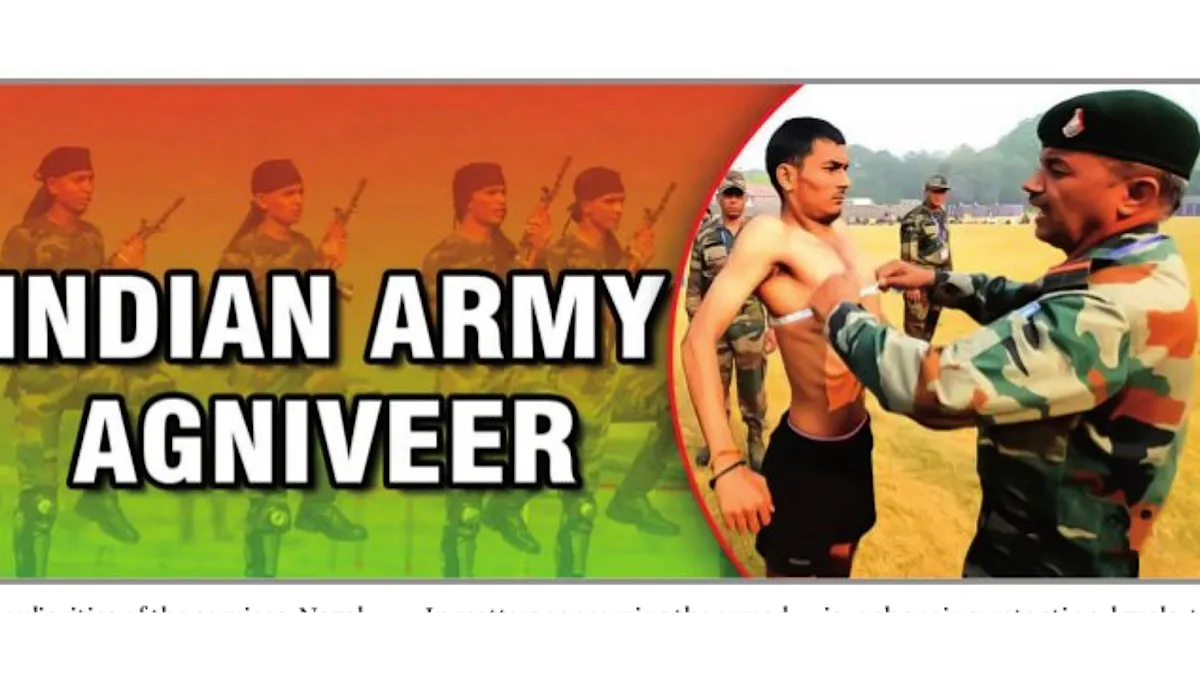
Photo:SNS
The Agnipath scheme, launched in 2022, began the process of inducting its first batch of Agniveers at the end of the same year, continuing into early 2023. They finish their service at about the end of this year, after which they will be discharged with a Rs 11.71 lakh ‘Seva Nidhi’ package. The government has attempted to coordinate with central organizations and states to earmark vacancies for Agniveers, thereby ensuring that those seeking a second career will get an opportunity.
One fourth of Agniveers, from those interested in rejoining the forces, would be recalled to enrol in the permanent cadre and be eligible for a minimum pensionable service of 15 years. How the resettlement of the others pans out is to be seen. Success of the scheme would depend on those seeking a second career being provided an opportunity. The government had multiple reasons for coming out with this scheme. These included reducing the age profile of soldiers, which had risen to 32, bringing down the pension bill thereby enhancing funds for modernization without impacting development and social welfare and releasing motivated, disciplined, fit and skilled individuals back into society while enabling youth from all corners of the country to join the forces.
Advertisement
The scheme had been criticised from the time it was announced. Many veterans believed that it would damage the esprit de corps and bonding within units as also create an armed force of conscripts. General M M Naravane, who was army chief when the scheme was introduced, is said to have written in his yet to be published book, ‘Four Stars of Destiny,’ that the Agnipath scheme was thrust down the throat of the services and largely came as a surprise. However, in an article published in The Hindu on 9 November 2022, apart from backing the scheme to the hilt, Naravane took a position quite different from his claim that the scheme came as a surprise.
Advertisement
He mentioned in the article that since its formulation phase, service chiefs discussed the scheme with foreign counterparts and military delegations to evaluate re duce d training methodologies and short service of soldiers in fighting formations, implying that the armed forces were involved from the initial phases itself. Backing the scheme he wrote, “(the scheme) will be of benefit to the nation, the Armed Forces and the individual.” Further, on and bonding, he mentioned that it was upto the units to ensure the bond remains. The scheme has matured over the past four years with minute changes being made to suit the needs of the day. Inputs flowing from the first few batches has been positive.
Levels of technical knowledge has been high as has been the motivation and desire to excel. This is beneficial as the nature of warfare becomes more dependent on technology. Reduction in training periods has had no impact on performance at ground levels as ‘on the job’ training continues. Now, when the first batch is close to finishing service and sufficient feedback is available, the forces are planning to seek a tweak to the retention system. The army and the air force are looking at enhancing retention rates to 50 per cent, while the navy seeks 75 per cent. The difference between the force’s proposals is largely dependent on peculiarities of the services. Naval operations are platform-centric, which in itself are based on sophisticated systems covering multiple domains.
Training takes time. Once an individual specializes, it is preferable to exploit his expertise. The air force is seeking larger retention in its technical trades. For the army it is a combination of enhancing retention levels in its technical trades and maintaining continuity in non-technical units. With increased retention levels, the blockage on recruitment from Nepal may also be lifted. While basic training periods have been reduced, technical training cannot be. Thus, at the end of four years, an individual would be well into the final stages of being able to independently handle select equipment when his service concludes.
Enhancing retention levels would benefit both the individual as well as the organization, as availability of trainers for future batches would increase. Further, as recruitment into this scheme increases by the year, the percentage of Agniveers in a unit would also increase. By enhancing levels from now, the right ratio between experience and Agniveers could be maintained. In matters concerning the armed forces there should never be sudden changes, especially in India, where forces are employed in a permanent ‘no-war, no-peace’ scenario alongside anti-terrorist operations.
Change should be steady and modifications made once current ones are absorbed. The forces have accepted the scheme, modified their systems and adapted accordingly. Enhancing retention would ensure continuity and availability of trained manpower. The government has been aiming to sell the scheme to the youth of the country. On the contrary, opposition political parties have been working to discredit the scheme by claiming that it would leave trained youth unemployed. Some political parties have promised to scrap the scheme altogether. Currently, recruitment into the forces draws those unable to join the Central Armed Police Forces, which is a reverse trend, mainly because the Agnipath service period is only four years.
Earlier the best lined up for the armed forces. If the armed forces still seek to retain the edge, then two aspects become paramount. The first is re-settlement of those not retained in service and the second is enhancing retention levels to at least 50 per cent. With the first batch likely to complete its tenure by the end of the year, the time available for decision making is less. Any change in the proposal needs approval of the Cabinet Committee on Security (which approved the scheme), which would mean processing the proposal through various layers of the government.
A positive approach to the proposal would, apart from boosting the confidence of those in service, also give a push to the scheme across the country. It would also reduce numbers needed to be absorbed by other government organizations, and reduce criticism of the scheme. With elections coming up early next year in states which contribute the largest numbers to the armed forces, it appears that the government has little choice. Turning down the demand would play into the hands of the opposition, while supporting it would be a benefit. Most likely, enhanced retention will be accepted, not because the armed forces need it, but for political gains.
(The writer is a retired Major-General of the Indian Army)
Advertisement