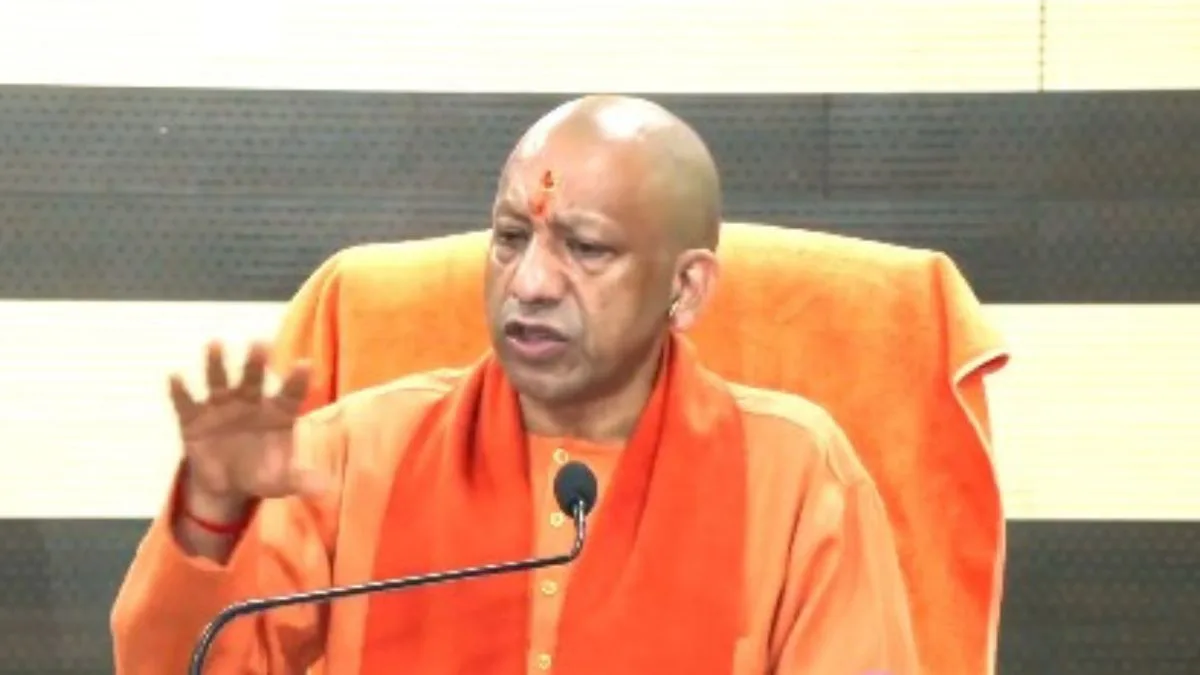
Uttar Pradesh has set a benchmark in water conservation by creating a new model for the entire country. On the directions of Chief Minister Yogi Adityanath, a record 20,000 Amrit Sarovars have been created, and nearly 1.75 lakh ponds have been constructed and rejuvenated over the past five years.
Uttar Pradesh ranks first in the country in the construction of Amrit Sarovars and accounts for around 27 percent of all Amrit Sarovars in the country.
Advertisement
Over the past five financial years, works worth more than Rs 16,000 crore have been carried out in the water sector, transforming the landscape of rural areas across the state. The impact of this extensive water conservation campaign is now clearly visible in agriculture, groundwater levels, the environment, and the rural economy.
Earlier, out of a total of 266 permissible works under MNREGA, 78 were related to water conservation. Now, under VB-GRAM-G, there are 318 permissible works, of which 107 are related to water security and water conservation. These include the construction of check dams, soak pits, rooftop rainwater harvesting structures, ponds, restoration of reservoirs, construction of embankments, field bunding, and plantation.
In the field of water conservation, Uttar Pradesh has outperformed other states by a wide margin. Madhya Pradesh ranks second in the construction of Amrit Sarovars, while Uttar Pradesh is nearly three times ahead. This achievement is not limited to government construction works alone but is the result of linking the conservation and rejuvenation of water sources in villages with public participation.
The UP government has transformed the Amrit Sarovar Yojana from merely a construction project into a public participation campaign. The rejuvenation of old ponds, construction of new water bodies, rainwater harvesting, and conservation of water sources are being carried forward on a large scale in villages. This has increased water availability in rural areas and provided lasting solutions to regions facing water scarcity.
The construction of Amrit Sarovars and ponds has provided the greatest benefit to the agriculture sector. Increased availability of water for irrigation has brought relief to farmers, while groundwater levels have improved significantly. Green cover around water bodies has increased, biodiversity has been promoted, and environmental conservation at the local level has gained fresh strength.
The water conservation campaign has also had a positive impact on rural livelihoods. Amrit Sarovars have created new opportunities for fisheries, animal husbandry, irrigation, and other livelihood activities. Through VB-GRAM-G, large numbers of people have gained employment, while improved water availability has significantly increased agricultural production and farmers’ incomes.
By integrating water conservation with development, environmental protection, and the rural economy, Uttar Pradesh has created a model that is now being adopted by other states across the country. The creation of Amrit Sarovars, rejuvenation of ponds, and extensive water conservation works have demonstrated that a lasting solution to the water crisis is possible through well-planned policies, public participation, and effective implementation. Under the leadership of Chief Minister Yogi Adityanath, Uttar Pradesh has today emerged as an inspiring example for the country in the field of water conservation.