TMC’s oppression surpassed those of British: Suvendu at Bankura’s Hul festival
"It's shocking that in 2025-26, the previous government allocated a meagre Rs 6 crore for the entire 75 blocks of Junglemahal districts," Suvendu Adhikari said.
The constitutional debates of the 1920s acquired a new urgency after the Communal Award of 1932 and, more decisively, the Government of India Act of 1935.




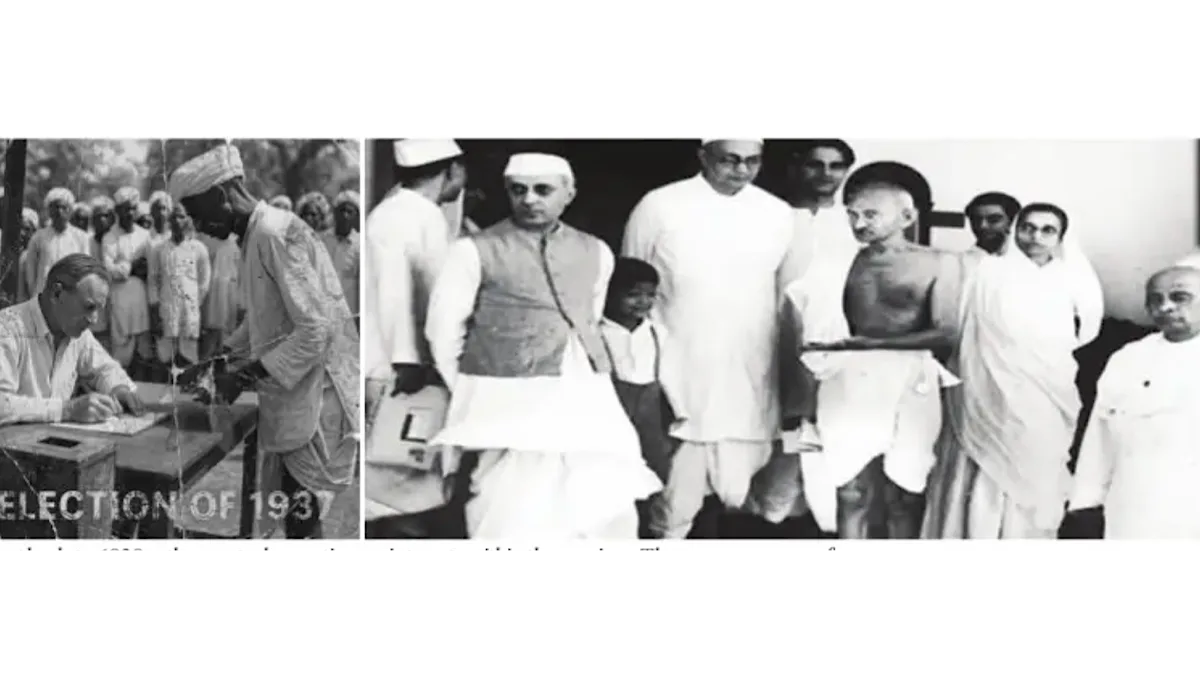
Photo:SNS
The constitutional debates of the 1920s acquired a new urgency after the Communal Award of 1932 and, more decisively, the Government of India Act of 1935. Whatever the intentions of British policymakers, these measures fundamentally altered the character of provincial politics. Representative institutions ceased to be peripheral constitutional experiments.
They became the principal arena in which Bengal’s political future would be negotiated. Electoral success now required political organisations to translate broad ideological commitments into durable representative coalitions. The provincial elections of 1937 marked the culmination of this long constitutional evolution. They were far more than the first elections under provincial autonomy. They revealed that Bengal had entered a new political age. No single political organisation could plausibly claim to represent the province in its entirety. Coalition governments became a structural necessity rather than a temporary expedient.
Advertisement
Every major political party ~ the Congress, the Krishak Praja Party, the Muslim League and the Hindu Mahasabha ~ found itself compelled to rethink its political strategy within a constitutional order that rewarded negotiation no less than mobilisation. This transformation fundamentally changed the nature of political leadership. Leaders were no longer judged solely by their nationalist credentials or ideological commitments. They were increasingly required to reconcile competing representative claims within institutions whose legitimacy depended upon constitutional rather than revolutionary politics. By the late 1930s, the central question confronting Bengal was no longer simply how British rule would end. Increasingly, it was how political authority would be organised after British rule.
Advertisement
That constitutional question would dominate the final decade of colonial rule. The decade after 1937 has usually been narrated as the final act of colonial rule in Bengal. Ministries rose and fell, the Second World War disrupted political life, famine devastated the countryside, the Lahore Resolution transformed constitutional debate, communal violence scarred the province, and Partition finally brought British rule to an end. Each of these events deserves its place in history. Yet taken individually they obscure the larger historical process that connected them.
The defining feature of this decade was not simply political instability. It was the emergence of competing constitutional visions for Bengal’s future. The elections of 1937 had already demonstrated that representative government in Bengal could not easily produce a stable political consensus. Provincial autonomy expanded democratic participation, but it also exposed the limits of existing constitutional arrangements. Electoral politics compelled every major political organisation to think simultaneously about governance, representation and political security. Questions that had once appeared constitutional in form now became political in consequence.
This transformation affected every political tradition. For A. K. Fazlul Huq, representative politics required the construction of a broader provincial coalition rooted in the aspirations of rural Bengal. For the Congress, the challenge lay in reconciling its all-India nationalist vision with the distinctive constitutional realities of a Muslim-majority province. The Muslim League, particularly after 1940, increasingly sought to organise Muslim political opinion around the constitutional future of India itself. The Hindu Mahasabha, whose influence grew in Bengal during the 1940s, argued that representative democracy based solely upon numerical majority could not adequately safeguard Hindu political interests within the province.
These responses differed profoundly. Yet they arose from the same constitutional dilemma. The Second World War intensified rather than interrupted this process. Wartime administration, the weakening of imperial authority and the catastrophic Bengal Famine accelerated political realignments throughout the province. By the middle of the decade constitutional speculation had become constitutional urgency. British withdrawal was no longer a distant possibility but an increasingly immediate political reality. The central question therefore changed. It was no longer whether constitutional change would occur.
It was what constitutional order would replace the Raj. Seen from this perspective, the political debates of the 1940s appear in a different light. They were not merely arguments about communal identity or nationalist strategy. They were competing answers to a common constitutional problem: how should political authority be organised in Bengal once imperial authority disappeared?By 1946-47, at least four constitutional futures remained politically conceivable. The first envisaged a united India in which Bengal would remain an undivided province within a federal democratic framework.
This position, despite its internal differences, continued to influence significant sections of nationalist opinion. The second accepted Pakistan as the constitutional destination of Muslimmajority Bengal, arguing that representative democracy required political arrangements reflecting the demographic realities of the province. The third proposed an independent and undivided sovereign Bengal, an idea associated most prominently with the final constitutional negotiations of 1947. Whatever its practical limitations, the proposal demonstrated that alternatives to both India and Pakistan continued to command serious political attention until remarkably late in the transfer of power.
The fourth concluded that the partition of Bengal itself had become constitutionally unavoidable. Its advocates argued that no representative arrangement could permanently reconcile competing claims to political security within a single province. Partition, in this view, represented not an ideal constitutional solution but the least unsatisfactory among increasingly limited alternatives. It is here that the political careers of figures such as Fazlul Huq, Sarat Chandra Bose, H. S. Suhrawardy and Syama Prasad Mookerjee become historically intelligible. Their disagreements were undoubtedly ideological. But they were equally constitutional.
Each offered a different answer to the same historical question. To reduce these differences simply to communalism or nationalism is to overlook the constitutional reasoning that informed their political choices. This, perhaps, is where much of the subsequent historiography requires reconsideration. Partition should not be understood only as the triumph of one political programme or the failure of another. It should also be examined as the outcome of a prolonged constitutional crisis in which successive attempts to reconcile democracy, representation and political confidence proved increasingly difficult to sustain.
This does not diminish the importance of ideology, leadership or political mobilisation. It restores them to the institutional setting within which they acquired historical significance. Most importantly, it restores historical contingency. Looking backwards from August 1947, it is tempting to regard Partition as inevitable. Yet history rarely unfolds with such certainty. The actors themselves confronted possibilities rather than predetermined outcomes. They debated constitutional futures that later disappeared from public memory because they failed, not because they were historically insignificant. To recover those abandoned constitutional possibilities is not to challenge the eventual course of history. It is to recover history itself.
(The writer is Professor of History, Rabindra Bharati University)
Advertisement