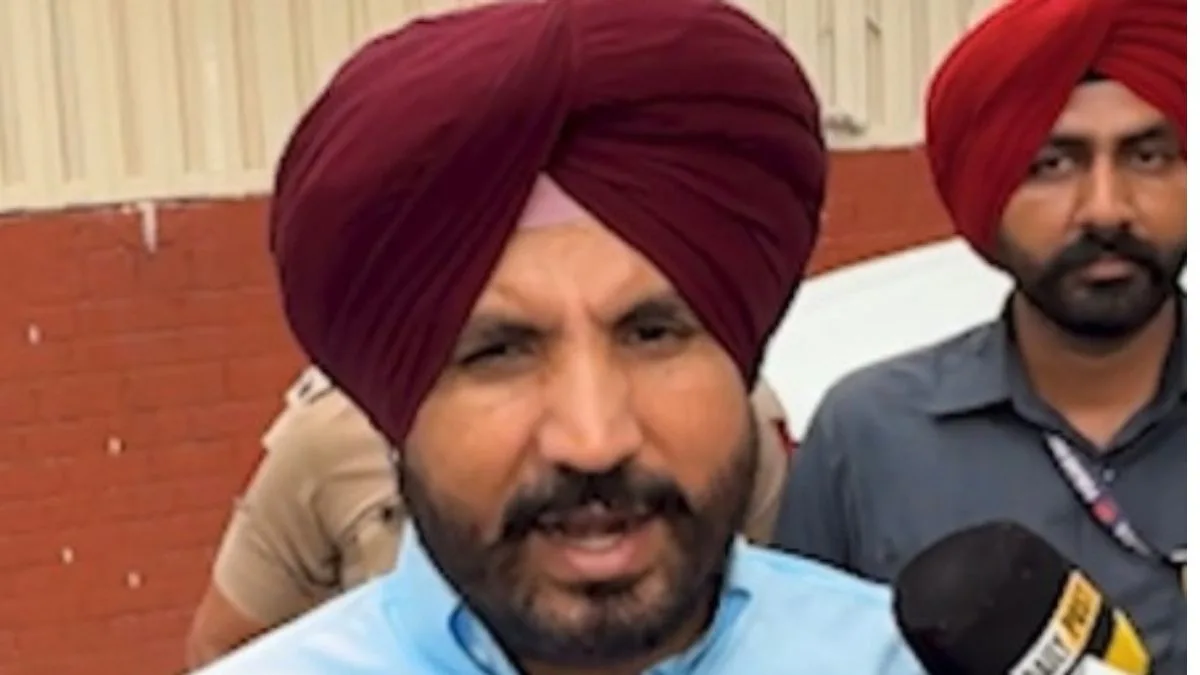
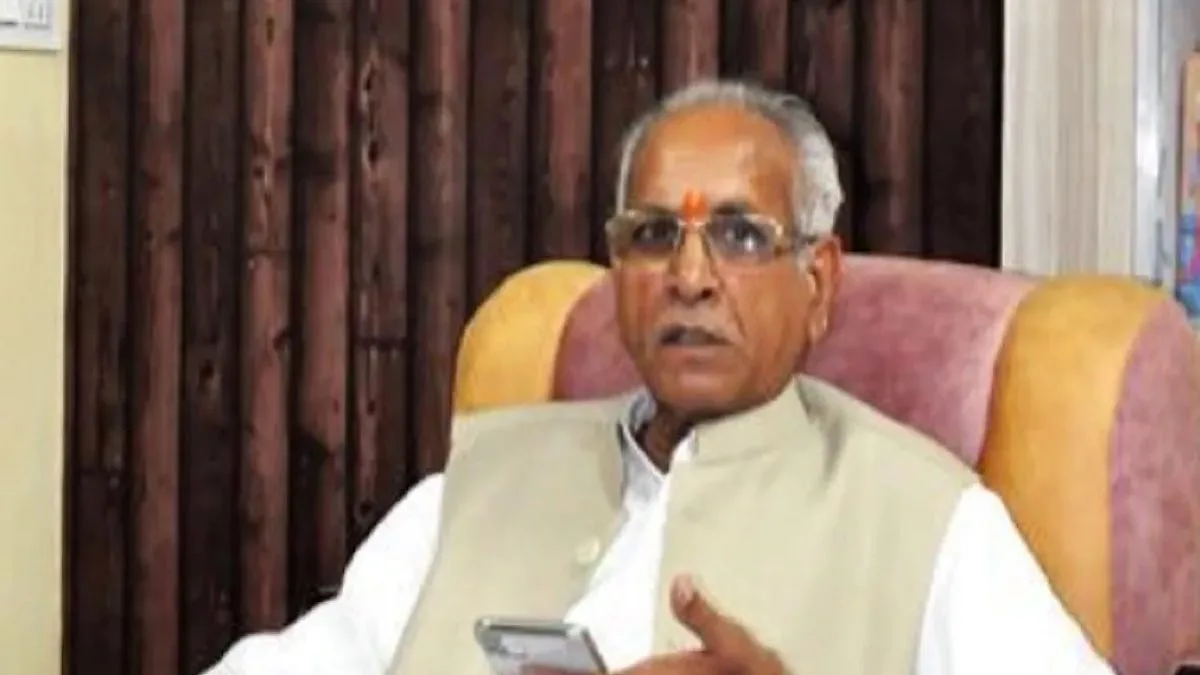
The internal political landscape of the Punjab Congress has once again entered a phase of intense activity, turning the spotlight firmly on the evolving equations between Punjab Pradesh Congress Committee (PPCC) president Amrinder Singh Raja Warring and former Chief Minister Charanjit Singh Channi.
Although the All India Congress Committee (AICC) leadership has publicly maintained that the state unit remains fully united, recent developments tell a more complex story.
Advertisement
The deep-seated differences regarding leadership roles, foundational organizational control, and the overarching strategy for the 2027 Punjab Assembly elections have become increasingly visible.
Unlike previous structural crises within the state unit, the current friction is not merely a clash of prominent personalities.
It represents a fundamental disagreement over who will shape the party’s institutional future at a time when Congress is desperately attempting to recover ground and reclaim state power following its crushing electoral defeat in 2022.
At this critical juncture, available political indicators suggest that Raja Warring enjoys a substantially stronger organizational position than Charanjit Singh Channi.
This assessment is rooted not in speculative political gossip, but in the rigid realities of the party’s formal structure, recent high-stakes decision-making by the central leadership, and the strategic distribution of responsibilities across competing factions.
The structural divide within the state unit became explicitly defined during the party’s comprehensive organizational revamp in July 2026.
In an intricate effort to manage internal dissent while aggressively building an apparatus for the 2027 electoral battle, the Congress high command executed a carefully calibrated balancing act.
Under this new operational blueprint, the party leadership chose to retain Raja Warring as the state unit chief, thereby prioritizing institutional continuity at the grassroots level.
Concurrently, senior stalwart Partap Singh Bajwa was maintained as the Leader of the Opposition in the state assembly to ensure a strong legislative voice.
To placate the opposing camp, Charanjit Singh Channi was formally designated as the Chairman of the election Campaign Committee, a role designed to capitalize on his widespread public recognition.
Furthermore, to balance complex regional and social dynamics across Malwa, Doaba, and Majha, the high command introduced three new Working Presidents. Sukhwinder Singh Danny, Raj Kumar Verka, and Sangat Singh Gilzian.
While the central leadership officially framed this distributed model as a harmonious division of labor, the reality of the arrangement has instead drawn sharper lines between the distinct power structures each leader commands.
In the theater of Punjab politics, the position of the PPCC president carries immense structural leverage.
The state chief directly regulates the operation of district units, oversees the appointment of local block leadership, manages daily cadre mobilization, and crucially, maintains a primary say in the final screening and selection of electoral candidates.
By preserving Warring in this pivotal administrative post despite persistent internal lobbying for a change, the high command has sent an unambiguous political message.
It indicates that the central leadership, wary of repeating the disastrous structural chaos that completely dismantled the party’s prospects just before the 2022 assembly polls, prefers structural predictability and continuity rather than another volatile transition with less than two years left for the state elections.
This organizational preference for stability is substantially validated by the party’s tangible performance during the 2024 Lok Sabha elections.
Under Warring’s organizational stewardship, Congress defied political expectations in Punjab, emerging as the single largest party by securing seven out of the state’s thirteen parliamentary seats.
Warring’s personal victory in the fiercely contested Ludhiana constituency significantly enhanced his credibility, establishing him as an aggressive, resourceful ground manager capable of executing complex election machinery against both the ruling Aam Aadmi Party (AAP) and an ambitious BJP. For the central leadership, this performance provided crucial organizational confidence, demonstrating that the party still possesses a resilient core cadre that can be converted into a winning coalition in 2027 if disciplined leadership is maintained.
Conversely, writing off Charanjit Singh Channi remains a profound political miscalculation. As Punjab’s first Dalit Chief Minister and the current Member of Parliament from Jalandhar, Channi remains an indispensable mass leader with an undeniable personal vote base. His grassroots political identity and unique ability to connect with ordinary voters continue to resonate deeply, particularly within Punjab’s substantial Dalit demographic, which comprises nearly one-third of the state’s total electorate. His massive victory in Jalandhar during the 2024 general elections proved that his personal electoral appeal remained intact despite the party’s historic provincial defeat under his face in 2022.
However, Channi’s primary challenge does not stem from public acceptance, but from his limited leverage over the party’s formal internal apparatus. Following the July 2026 reshuffle, the political undercurrents turned sharper as Channi’s camp began pushing for a broader institutional role. In recent weeks, Channi’s strategy has expanded beyond mere public outreach; his residence has effectively transformed into an operational center for an alliance of veteran leaders who are openly dissatisfied with Warring’s centralized command structure. Prominent state stalwarts, including former Deputy Chief Minister Sukhjinder Singh Randhawa and leader Pargat Singh, have aligned closely with Channi, organizing private strategy meetings to challenge the state presidency’s decisions. This collective pushback has elevated Channi from a standalone campaign head into the figurehead of a powerful, parallel alternative power center within the state unit.
The gravity of this growing organizational divide recently prompted a direct firefighting intervention from senior Congress leader Bhupesh Baghel, who has been entrusted with the responsibility of handling Punjab affairs. Baghel’s multi-day consultations in Chandigarh came at a sensitive moment when reports of absolute non-cooperation between the two factions began impacting initial poll preparations. While the anti-Warring faction sought to demonstrate its collective strength by holding separate discussions before the high-level meeting, the formal outcome underscored the resilience of the existing hierarchy. Although Baghel carefully avoided endorsing either faction publicly and focused his statements entirely on unity, the fact that the established state structure remained untouched post-consultation has effectively shielded Warring’s presidency. In professional political terms, the continuation of the status quo after a formal high command review functions as a tacit endorsement, signaling that the central leadership is unwilling to alter its core organizational alignment.
This ongoing struggle highlights a classical political dichotomy between institutional authority and raw mass appeal. Warring functions efficiently as the “system candidate,” the individual who commands the official party machinery, holds the statutory seals of organizational legitimacy, and enjoys direct structural alignment with the central high command. Channi, on the other hand, operates purely as a “mass leader,” relying on his personal popularity, demographic alignment, and historical legacy as a former Chief Minister. This fragmentation of power is further complicated by Punjab Congress’s traditional nature as a multi-layered entity, where separate regional satraps like Partap Singh Bajwa exercise independent legislative influence, ensuring that no single leader can claim total dominance over the state unit.
Amidst these unresolved internal frictions, recurring media speculation has surfaced suggesting that Channi might be exploring external political alternatives, including unverified rumors regarding potential overtures toward the BJP. In the high-stakes environment of Punjab’s shifting political alignments, such tactical rumors frequently emerge as leverage points during intense intra-party negotiations. In the absence of any official confirmation from Channi or the BJP, these reports must be treated strictly as unverified political speculation, yet they underscore the fragile nature of the current truce within the Congress organization.
Ultimately, the true test for both leaders and their competing strategies will be the 2027 Punjab Assembly elections.
The party faces a highly competitive, multi-cornered contest against an entrenched AAP administration, a consolidating Shiromani Akali Dal (SAD), and a politically aggressive BJP.
To mount a successful comeback, Congress cannot afford a fractured campaign where the organizational machinery and the electoral vanguard pull in opposite directions.
At this specific juncture, the structural balance remains tilted toward Raja Warring, whose hands remain firmly on the levers of the party hierarchy.
However, the coming months will determine whether the high command can successfully synthesize Warring’s rigorous organizational discipline with Channi’s potent mass appeal, or whether this deepening internal rivalry will hobble the party before the first ballots are cast for 2027.