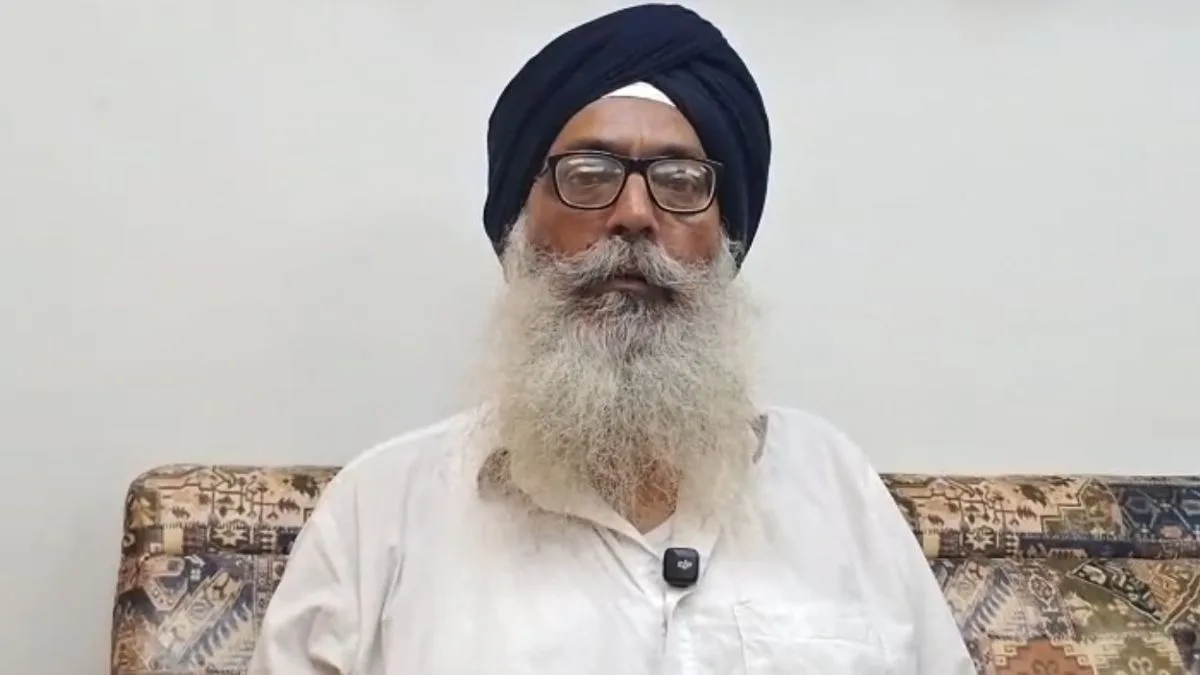
Amid the ongoing controversy surrounding the Punjabi film ‘Satluj’, Rajiv Singh Randhawa, a close associate of late human rights activist Jaswant Singh Khalra who claims to have witnessed his alleged abduction in 1995, has opposed the film’s removal and called for an open discussion on Punjab’s past instead of suppressing historical narratives.
Speaking to the media, Randhawa recounted the events of September 6, 1995, describing them as part of a sensitive chapter in Punjab’s history that, he said, should not be erased. According to him, ‘Satluj’ attempts to portray aspects of that period, and preventing people from watching such a film would be detrimental to democratic values.
Advertisement
Randhawa claimed that he was present at Khalra’s residence in Kabir Park, Amritsar, on the morning of September 6, 1995. He alleged that while Khalra was outside washing his vehicle, a light blue van followed by a police vehicle arrived at the house. According to Randhawa, men in plain clothes forcibly took Khalra away despite objections raised at the spot.
“I came out immediately and requested them that if they wanted to question Bhai Jaswant Singh Khalra, he was willing to appear before the SSP himself. But they did not listen. I was pushed aside, and he was taken away in the vehicle before my eyes,” Randhawa alleged.
He further claimed that immediately after the incident, he accompanied Khalra’s wife, Paramjit Kaur Khalra, to Islamabad Police Station in Amritsar to lodge a complaint.
However, he alleged that an FIR was not registered immediately and that the case was initially recorded as an abduction by unidentified persons posing as police personnel. Randhawa said the matter was later taken to the Supreme Court, following which the Central Bureau of Investigation conducted an inquiry.
Referring to the controversy over ‘Satluj’, Randhawa said the film had undergone a prolonged certification process under different titles before being released. He claimed that although it was later removed from an OTT platform in India, it continued to remain accessible on various platforms outside the country.
“If India is the world’s largest democracy, historical events should be discussed openly instead of being buried. Films, books and documentaries dealing with difficult chapters of history should encourage debate rather than face restrictions,” he said.
Randhawa maintained that Khalra never believed in violence and instead pursued constitutional and legal means to expose alleged human rights violations. “His struggle was rooted in the rule of law. His sacrifice deserves recognition, and history should remember his contribution through facts, not silence,” he said.
He also reiterated the demand for the constitution of a Truth and Reconciliation Commission to examine events that took place in Punjab between 1984 and 1994. According to Randhawa, such a commission should impartially investigate the deaths of all innocent people during that period, irrespective of their community or background.
“Only by acknowledging the truth and understanding history objectively can Punjab move towards lasting peace, reconciliation and mutual trust,” Randhawa said.
There was no immediate response from the authorities regarding Randhawa’s remarks or his allegations.