Bengali ideologue Syama Prasad Mookerjee’s 125th birth anniversary was observed across north Bengal with a series of programmes held from the gram panchayat level to district headquarters on Monday.
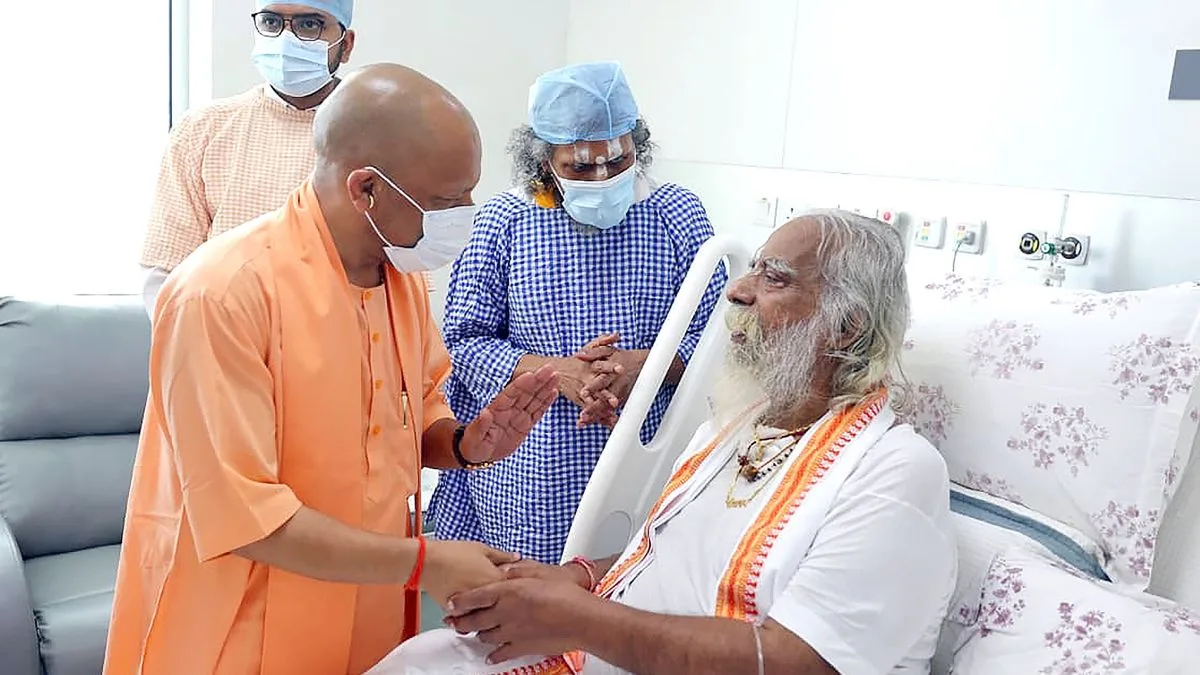
One of the most significant highlights of the day was the participation of 97-year-old Makhan Lal Sarkar of Suryanagar in Siliguri, who had accompanied Mookerjee during his historic journey to Jammu and Kashmir in 1953, from which the Jana Sangh founder never returned.
Advertisement
Sarkar attended several commemorative programmes in and around Siliguri over the past few days, urging the younger generation to embrace patriotism, discipline and moral values.
Recalling the ideals that shaped his life under the inspiration of Mookerjee and the Rashtriya Swayamsevak Sangh (RSS), Sarkar said true education should inspire citizens to serve and protect the nation. He lamented the erosion of Indian cultural values and observed that corruption had increasingly crept into politics.
However, he maintained that adherence to principles, proper education and disciplined practice had enabled many individuals to remain untainted.
A veteran swayamsevak and long-time ideological guide to several BJP leaders in the region, Sarkar remains a respected figure in Siliguri’s public life.
Prime Minister Narendra Modi had publicly paid his respects to him during the formation of the present government, while former Prime Minister Atal Bihari Vajpayee had also visited his residence during a political tour of Siliguri.
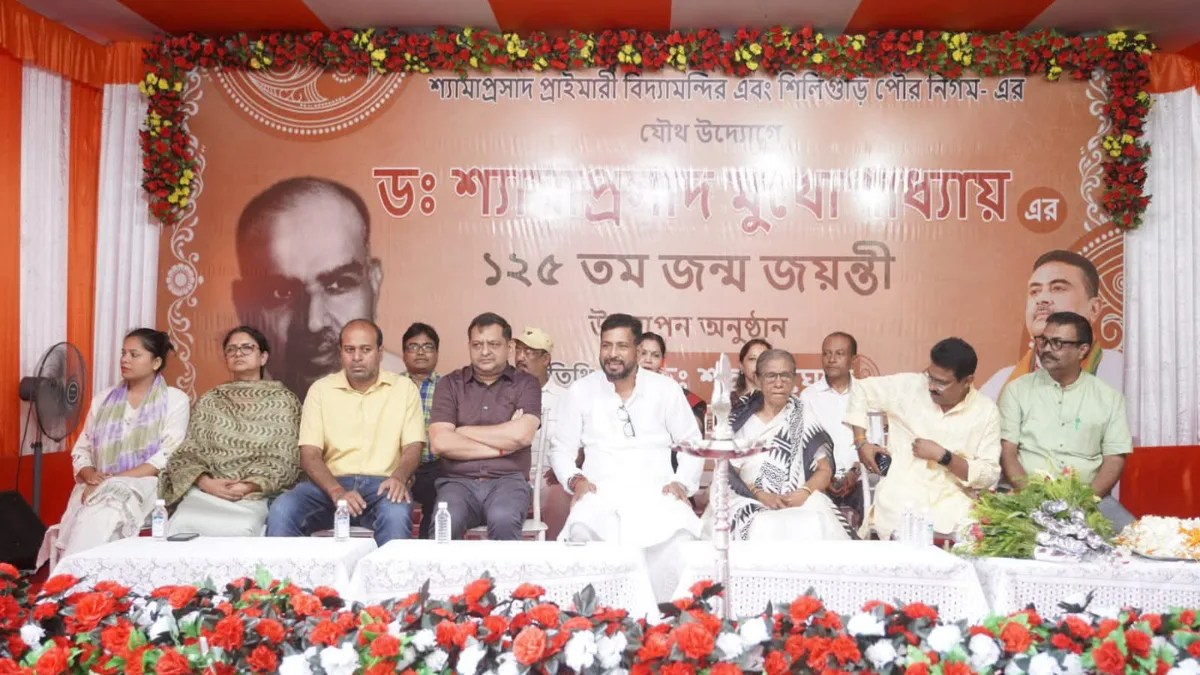
Another notable programme was organised at Syama Prasad Vidyamandir, a primary school in Siliguri, under the initiative of state Tourism Minister Shankar Ghosh.
Addressing the gathering, Ghosh recalled that he had studied at the school for two years during his childhood but knew little then about the leader after whom the institution was named.
Ghosh said he came to understand Mookerjee’s contribution only after entering public life and joining his present political party. He alleged that for decades an influential section had deliberately downplayed Mookerjee’s role in securing a separate West Bengal for the Hindu-majority population during Partition.
Had he not fought for the creation of West Bengal as a separate state, Ghosh claimed, many people living in the region today might have found themselves on the other side of the international border.
Referring to the state’s decision to observe West Bengal Day on 20 June and commemorate Mookerjee’s birth anniversary through programmes from 23 June to 6 July, the minister said such observances would continue in the years ahead to familiarise younger generations with the leader’s legacy.
Commemorative events were organised across Cooch Behar, Jalpaiguri, Uttar Dinajpur, Dakshin Dinajpur and Malda districts. Blood donation camps, drawing competitions, seminars and cultural programmes formed part of the celebrations.
In Siliguri, the state Information and Cultural Affairs Department has organised a special programme at Dinabandhu Mancha featuring thematic musical presentations, dramatic performances and scripted productions based on Mookerjee’s life and ideals.
One of the featured presentations highlighted the historic correspondence between poet Kazi Nazrul Islam and Syama Prasad Mookerjee, adding a literary dimension to the commemorative event.
The birth anniversary was observed with special significance in English Bazar, Malda, where Mookerjee’s role during Partition continues to be remembered with deep gratitude. Although India attained Independence on 15 August 1947, parts of Malda, including areas of English Bazar, formally became part of India only two days later following the final demarcation of the Radcliffe Line.
Mookerjee is widely credited with playing a pivotal role in ensuring that Malda remained within India, making the occasion particularly meaningful for the district.
To mark the occasion, North Bengal University organised a programme titled ‘Khet Bachao’ on its campus. The initiative aimed to promote natural farming, improve soil health, enhance farmers’ prosperity through sustainable agriculture and crop diversity, and protect the environment for future generations.
The programme witnessed enthusiastic participation and highlighted the importance of eco-friendly agricultural practices while paying tribute to the vision and legacy of Syama Prasad Mookerjee.