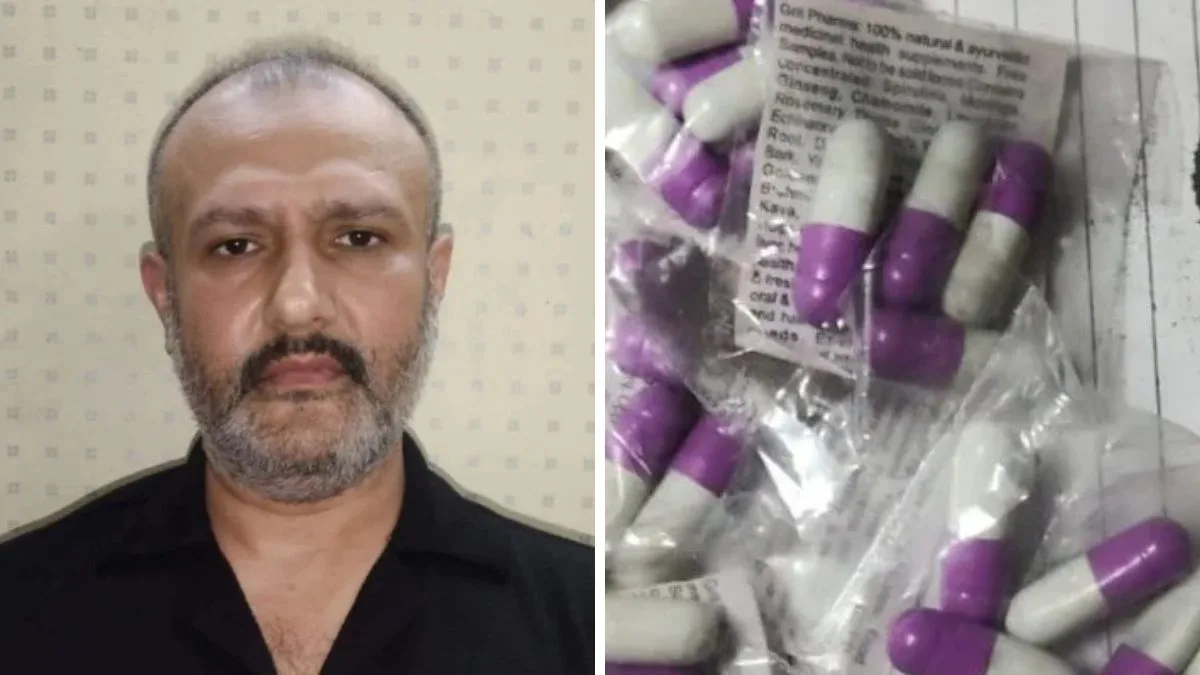
The Mumbai Police have alleged that a Pune-based man meticulously planned a mass poisoning during a Muharram procession by using rat poison-filled capsules, online purchases and artificial intelligence tools to research the toxic effects of the chemical.
According to investigators, the accused intended to distribute thousands of capsules among devotees by falsely presenting them as health supplements. The investigation is now examining whether he acted alone or had assistance, while forensic experts analyse his digital footprint and financial records.
Advertisement
Police claim accused planned to target thousands
Police identified the accused as 39-year-old Fayaz Premji, a resident of Pune, who was arrested near Rahmatabad graveyard in Mumbai on June 27.
According to police sources, Premji allegedly told investigators during questioning that he wanted to kill around 15,000 people.
Investigators said he rented a room in Mumbai’s Dongri area and allegedly converted it into a makeshift facility where poison-filled capsules were prepared over several days.
Police claim he purchased nearly 50 kg of zinc phosphide, a toxic substance commonly used as rat poison, along with around 30,000 empty capsules through online platforms. Each capsule allegedly contained about one gram of the chemical.
During searches, investigators recovered around 15,000 filled capsules and additional quantities of zinc phosphide. Police believe the accused intended to prepare nearly 30,000 capsules before distributing them during the Muharram procession.
AI searches and digital trail under scrutiny
Investigators have also alleged that Premji used an artificial intelligence tool on his mobile phone to study the effects of consuming zinc phosphide in different quantities.
His mobile phone has been sent for forensic examination. Cyber experts are analysing his browsing history, Internet searches and digital communications to reconstruct the alleged planning behind the case.
Officials from Mumbai Police, assisted by the Anti-Terrorism Squad (ATS) and central agencies, are also examining financial transactions, call records and digital contacts to determine whether anyone else was involved.
Police are simultaneously investigating how such a large quantity of zinc phosphide was procured and delivered.
Volunteers allegedly misled about capsules
According to investigators, the accused allegedly convinced several volunteers to distribute the capsules by claiming they were vitamin supplements, immunity boosters or painkillers.
Police said the volunteers were unaware of what the capsules allegedly contained.
Investigators said at least 11 people consumed the capsules before falling ill.
Victims, including Salman Syed and Ali Abbas, told investigators they had been informed that the capsules would improve immunity. They reportedly began vomiting shortly after consumption and were taken to hospital.
Police said all those affected are now out of danger.
Investigators examine travel history and personal background
According to investigators, Premji is a Bachelor of Business Administration (BBA) graduate who runs a painting business in Pune’s Viman Nagar.
Police have recorded his father’s statement. Investigators said his mother and sister currently reside in Iran.
Officials are also examining his travel history, which shows visits to several Middle Eastern countries between 2019 and 2025, including 19 trips over the past year. They are investigating whether those visits have any connection with the case.
During searches at his Pune residence, police reportedly found a large number of rats. Investigators suspect he may have been familiar with zinc phosphide because of its use as a rodent poison.
Police sources further claimed the accused told investigators he had become deeply frustrated following personal setbacks, including the breakdown of his marriage.
According to police, he allegedly said he wanted to ‘take revenge on everyone in the world’ because he believed everyone had wronged him.
Investigators are also examining whether he had any history of psychiatric treatment or underlying mental health issues.