Will AI kill solar and wind energy?
Global warming policies were expected to drive a rapid shift toward a renewables-based energy system dominated by wind and solar.
Annual conferences organized by UNFCCC to review climate actions like funding poor nations to cover loss and damage inflicted by global warming and transitioning away to green energy have not resulted in concrete actions.





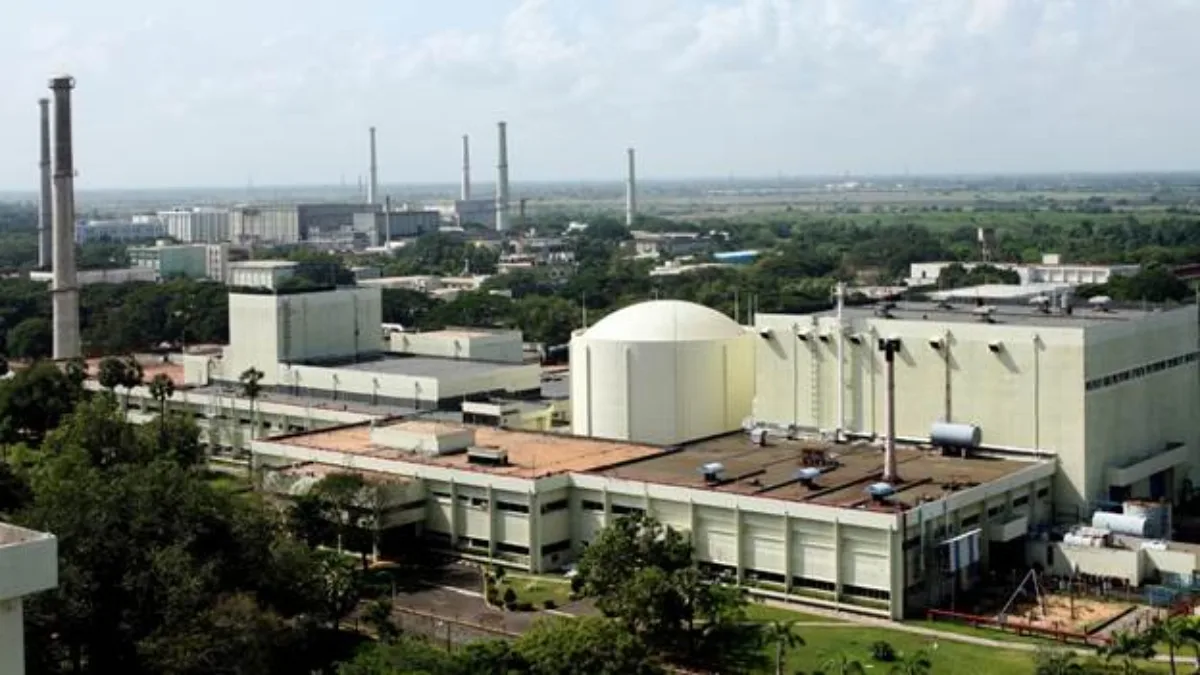
Representative Image (IANS)
Annual conferences organized by UNFCCC to review climate actions like funding poor nations to cover loss and damage inflicted by global warming and transitioning away to green energy have not resulted in concrete actions. Rich nations responsible for the planet’s warming, are not paying any heed to the scientific advice and have not cut down oil, coal and gas burning. The hopes generated after the Paris Climate accord 2015 have been dashed. More than 40 gigatons of CO2 equivalent is being released into the atmosphere annually, and countries are plundering the environment for their self-interest.
Nations at war have been hitting each other’s oil depots and refineries using missiles and drones. The 40-day first phase attacks by US and Israel, and the response by Iran, have released 15,000 metric tons of explosives and made air, water and soil dangerously poisonous in the region. Marshall Burke, an environmental scientist at Stanford University, led a team that conducted a study, published in ‘Nature’ recently, which estimated that the US has caused $10 trillion damage to GDP across the globe due to its planet-heating emissions since 1990.
Advertisement
China is close behind and has caused a damage of $9 trillion in this period. A quarter of GDP dampening has occurred in the US itself. India has sustained damage of $500 billion in this period and Brazil of $330 billion. Poorer countries have undergone disproportionate economic losses. The action of Donald Trump in withdrawing from global climate treaties and permitting a ‘drill, baby, drill’ approach to oil and gas, and taking measures to hobble domestic clean energy projects, has led to the acceleration of the planet’s heating.
Advertisement
Frances Moore, an economist and social-cost expert, University of California, has endorsed the study and has cautioned that the weight of damage suffered by poorer countries is not fully accounted for, adding that the consequences of a poor person losing a dollar is more severe as compared to a rich person. At CoP30 held at Belem, Brazil in November 2025, developing countries repeated their demand to generate $1.3 trillion annually to compensate for their loss and damage. This was shot down by developed nations, who in addition, have also not conceded to transition away from fossil fuel burning. CoP29 at Baku, too, had failed to reach agreement on these counts.
The frustrations at CoP30 led to the world’s first transitioning away from fossil fuels conference co-hosted by Colombia and Netherlands from 24 to 30 April 2026 at Santa Marta, Columbia. Fifty-nine countries that include one-fifth of global fossil fuel producers, EU members, UK, Turkey and Australia (co-host for CoP31) and many small countries vulnerable to extreme climate effects joined the conference. The world’s biggest emitters like China, US, India, Russia, Iran, Japan and petro-states like Saudi Arabia, Qatar and UAE did not attend, while fossil fuel producing countries like Brazil, Mexico, Nigeria, Angola and Canada attended and pledged to develop national ‘roadmaps’ to end the production and use of fossil fuels.
The new coalition of countries represents more than half of global GDP, presently consuming one-third of global energy from fossil-fuels. Participants also agreed to support poorer countries to scrutinize fossil-fuels subsidy and help vulnerable countries tackle debt and raising finance for transition to renewable energy. Right from 2015, countries have not acted upon the nationally determined contributions (NDCs) pledges in response to the Paris Climate accord, and thus average rise in global temperature is projected to breach 1.5° Celsius in the 2030s. Wealthy countries including the US are far away from adhering to the pledges. The Intergovernmental Panel on Climate Change, which provides scientific assessment for guiding the negotiations, has urged 200 member nations to pledge fresh NDC, to be achieved between 2031 and 2035 to ensure substantial emission reduction.
The responses have been lukewarm. How can we save the planet from entering an irreversible phase? Atlantic meridional overturning circulation that brings warm weather to Europe is already collapsing. Boreal and Amazon forests are becoming net emitters of greenhouse gases. The Arctic is warming four times faster and its snow is melting at an unprecedented pace. The longer it takes to phase out fossil-fuels, the greater is the danger. Embarking on the commitment of positive climate actions, India’s cabinet has modified the NDC target for 2031 to 2035. The emission intensity of GDP targeted for 2030 to be cut by 33 to 35 per cent from 2005 levels has been increased to 47 per cent by 2035.
This is a retrogressive step. As GDP goes up by 7 to 8 per cent annually, emission is scheduled to be cut by only 3 per cent. This is a mismatch and is an indication for stepping-up future emissions. The share of electric power from non-fossil fuel resources was to be 40 per cent by 2030 and has been increased to 60 per cent by 2035. As against India’s installed power capacity of 524 Giga Watt, installed renewable energy capacity is 260 GW. Sunshine and wind can limit solar and wind power capacity to one-third. We claim that 2030 targets have been achieved five years early. This is untrue, as usable renewable energy is less than 100 GW, as long as battery and pump storages are in place. Pump storage and hydro-power are often located in environmentally sensitive hilly areas and require sacrificing lakhs of trees in pristine forests.
The Sharavathi pump storage project in Karnataka’s Western Ghats is environmentally non-viable, as the project cost is Rs. 10,000 crore, whereas environmental cost of trees to be axed is Rs. 12,000 crore. Creating a carbon sink for 2.5 to 3 billion tons of CO2 equivalent by 2030 has been increased to 3.5 to 4 billion tons of CO2 equivalent by 2035. India had to afforest 26 million ha degraded lands by 2030; we neither identified the lands nor fixed targets for states and districts. To say that we have achieved it ahead of schedule is incorrect.
Forest Survey of India’s biannual report, as of 2021 reveals that carbon storage in India’s forests has grown from 6.6 Gigatons of CO2 equivalent to 7.2 Giga tons in a decade. Without afforestation, it can at the most add .6 Giga tons of CO2 equivalent till 2030. We have not lived up to our commitment. Promising additional storage is misleading. World leaders must meaningfully enhance climate actions. It is to be seen whether the coalition of ambitious countries that met at Santa Marta, Columbia can break the consensus deadlock that has paralyzed phasing out of fossil-fuels within the framework of UN negotiations.
(The writer is former Head of Forest Force, Karnataka)
Advertisement