When Home Minister Amit Shah directed the commission formed on “Demographic Change” to study the phenomenon in India’s borderlands, he did not speak in the cautious language of policy briefs. Demographic change, he declared, threatens India’s “sovereignty, national security, law and order, and brings about profound changes in social str ucture”. The four-pillar crisis framework has landed like a political grenade and rightly so. Prime Minister Narendra Modi has echoed the warning in sharper register: demographic change, he said, “sows seeds of social tension”, with infiltrators “snatching the bread and butter of the youth” and “targeting the country’s daughters and sisters”.
The unmistakable rise in political temperatures was expected. But behind the rhetoric lies a set of empirical questions that demand honest examination: What does demographic data actually show? Where is illegal immigration documented and at what scale? And what is the verifiable connection between demographic shifts and the law-and-order strain that Shah’s framework posits? India’s Muslim population stood at approximately 14.2 per cent according to the 2011 Census – the last fully published census – up from 13.4 per cent in 2001. The 2021 Census remains unpublished as of mid-2026, making current demographic claims reliant on projections rather than hard counts.
Advertisement
The Pew Research Center’s 2015 projections estimated India’s Muslim population would reach approximately 18-19 per cent by 2050 – a significant shift, though one driven primarily by differential fertility rates that have been narrowing steadily if seen in terms of absolute numbers. The fertility gap is real but shrinking. The National Family Health Survey-5 (NFHS-5, 2019-21) recorded a Total Fertility Rate of 2.36 for Muslims compared to 1.94 for Hindus – a gap of 0.42 children p er woman, down substantially from the gap of 1.1 recorded in NFHS-1 in 1992–93. The convergence trend is consistent and documented. Demographic economists across institutions including the International Institute for Population Sciences note that Muslim TFR declines have been fastest in states with higher female literacy and economic inclusion – the standard socioeconomic pattern seen globally. The fact remains, however, that the gap exists and the projected outcomes are hard to ignore. This is the domestic demographic picture.
It is distinct – analytically and legally – from the question of illegal cross-border migration, which is where Shah’s national security framework is primarily directed. The illegal immigration question centres almost entirely on the India-Bangladesh border – a 4,156-kilometre frontier that is among the most complex in the world, running through riverine terrain, dense habitation, and areas of longstanding economic interdependence. The Border Security Force (BSF) reported apprehending 27,827 Bangladeshi nationals illegally crossing into India in 2022 alone, up from 17,478 in 2021. These are detections – the actual number of successful crossings is unquantifiable, though intelligence assessments cited in parliamentary standing committee reports have historically suggested a multiple of four to six times the detected figures.
The Supreme Court addressed this directly in its landmark 2005 judgment in Sarbananda Sonowal v. Union of India, describing illegal immigration from Bangladesh as an “external aggression” under Article 355 of the Constitution – strong language from the highest court based on evidence presented by the state. The judgment struck down the Illegal Migrants (Determination by Tribunal) Act, finding it made deportation effectively impossible and had enabled large-scale settlement in Assam. Assam remains the epicentre of the documented crisis.
The National Register of Citizens (NRC) process, completed in 2019 after years of litigation, excluded approximately 1.9 million people from the final list – with both Bengali Hindus and Muslims among the excluded, and subsequent legal challenges complicating finality. The NRC’s credibility as a clean demographic instrument was questioned by courts, civil society, and even nationalist political figures in Assam who found the outcomes politically inconvenient. So, what does HM Shah’s Four-Pillar Framework based on evidence audit look like? The first pillar is predicated on sovereignty arising out of legal grounding. The Supreme Court’s 2005 judgment explicitly invoked sovereignty concerns.
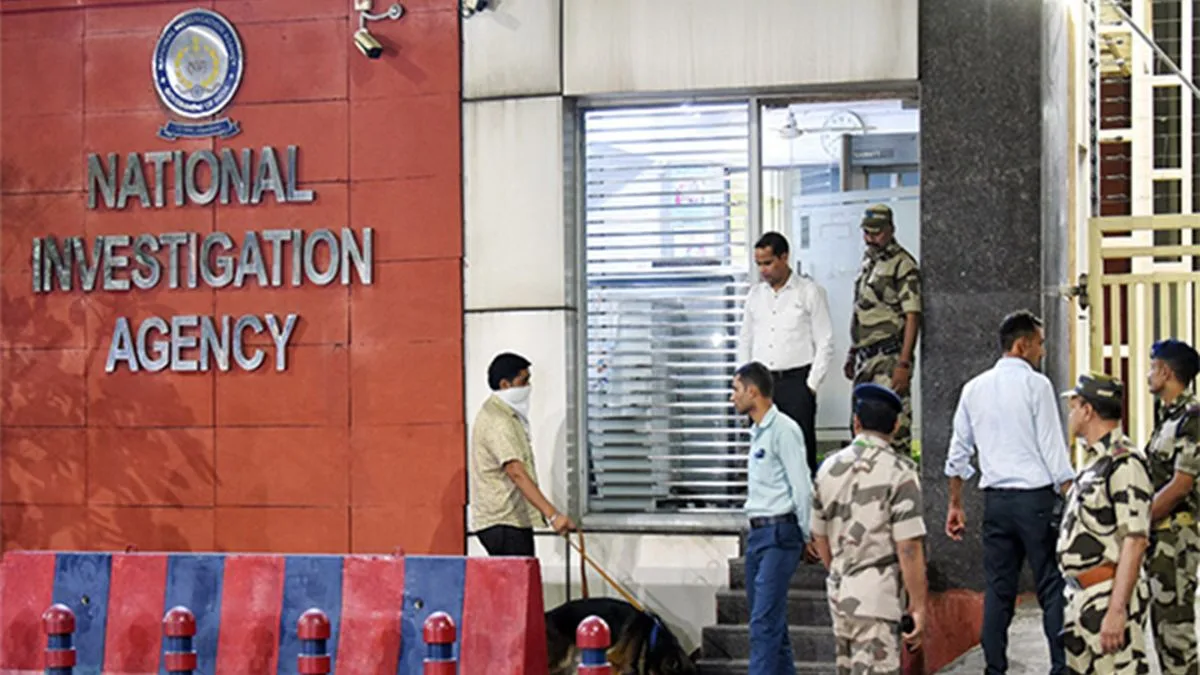
The Citizenship Amendment Act of 2019 was partly designed to address the documentation status of religious minorities from neighbouring countries while the NRC addressed illegal migration. Pillar II invokes concerns of national security. Intelligence assessments have long flagged border districts as areas of predicament for document-fraud networks, smuggling routes, and, in cited cases, linkages to Islamist networks. The National Investigation Agency has filed charge sheets in cases involving forged Aadhaar cards and voter IDs in West Bengal and Assam. However, while the scale of security threat attributable specifically to Bangladeshi illegal immigration – as distinct from other security challenges – is difficult to disaggregate from classified intelligence assessments, recent reports of global jihadist groups like Hamas taking keen interest in India’s neighbourhood have complicated matters.
The conundrum regarding law and order remains the third pillar of HM Shah’s strategy. It is also the site where the evidentiary picture is most granular and contested. The BJP and allied nationalist organisations have cited specific communally motivated cases as illustrative – among them the Tarun Khatik case in Delhi and the Surya Pratap Chauhan case in Ghaziabad – where unchecked demographic change was alleged to intersect with violent crime. Since the verification of the documentary status of accused individuals in such cases runs through judicial processes that are often slow and complex; treating individual criminal cases as demographic data points might be methodologically unreliable but unmistakably indicative.
What is more robustly documented is the strain on law enforcement in high-infiltration districts: a 2019 report by the Assam Police cited significantly elevated caseloads in border districts of Dhubri and South Salmara-Mankachar, with constabularies operating at 60-70 per cent of sanctioned strength relative to population. The argument around demographic change driving the deterioration of social relations (Pillar IV) might appear facetious at first but as layers of criminality surrounding more recent cases of well-oiled and foreign-funded conversion rackets founde d on cross-religious romantic relationships, coercion, and in a few cases abject physical and mental torture of the victims, unravelled, they underscored the urgent need for an unbiased assessment of demographic change impacting social relations.
PM Modi’s framing – infiltrators “targeting daughters and sisters” – is therefore not unfounded but the clarion call of a culture striving to protect its ethos. The Chhangur case in UP and the TCS “love jihad” case in Nashik point towards a more consequential malaise, one that requires a keener view of the manner in which demography, criminality and international terror funding networks operate. Border district data reveals genuine administrative strain. West Bengal’s Murshidabad, Malda, and North 24 Parganas districts – all along the Bangladesh border – show population densities and infrastructure pressures that development economists have tracked for decades.
Murshidabad, with a population exceeding 7 million and a Muslim majority of approximately 66 per cent, has per capita income significantly below the state average and has appeared repeatedly in reports on job competition and economic migration. The political economy of border districts creates conditions where economic migration, identity document fraud, and electoral registration irregularities can intersect – and where political actors of all parties have incentives to exploit or ignore the problem. The Enforcement Directorate and the Election Commission have both documented voter-roll irregularities in border constituencies. BSF detections of illegal crossings rose from 17,478 in 2021 to 27,827 in 2022. Intelligence assessments have suggested crossings may be four to six times higher than detected figures. Shah’s four-pillar framework, however, cannot be read outside its core focus – national security.
While illegal immigration from Bangladesh – particularly Muslim infiltration – has become a cornerstone of electoral strategy in Assam, West Bengal, and in states like Jharkhand, the concerns related to security, demography, and cultural change are real. The analytical challenge lies in distinguishing legitimate documented concerns about illegal immigration and its administrative consequences supported by court judgments, BSF data, and parliamentary committee findings and the negation of such legitimacy by voices politically opposed to the BJP, turning the issue into an electoral boxing match.
The sovereignty and administrative strain arguments made by HM Shah rest on a foundation of documented fact. The Supreme Court, the BSF, and parliamentary oversight mechanisms have all validated core concerns about the scale and consequences of illegal immigration. PM Modi’s warning that demographic change “sows seeds of social tension” is also empirically supportable in terms of population pressure, resource competition, and rapid ethnic change where they do intersect to heighten social tension. Significant modifications have been ushered into the policy responses – border management, document verification infrastructure, development investment in border districts – borne out clearly by the immediate post-poll measures taken by the BJP governments in West Bengal and Assam and the centripetal energy that they derive from the PM Modi-HM Shah combine at the Centre.
Since India’s demographic challenges are uncontestably real, documented, and deserve serious policy engagement, the four-pillar framework promulgated by Shah demands serious empirical study, a politics-agnostic approach, and policy reformulation on a massive scale.
(The writers are, respectively, National Spokesperson, Bharatiya Janata Party and professor of politics at IILM University Gurugram.)